A blend of microorganisms and mycorrhizal fungi to prevent seed rot and enhance growth for corn, legumes, grasses, potatoes, garlic, and other veggies. Recommended if you cut your own seed potatoes!
A light-textured potting soil with extra perlite, screened to ½". Recommended for the smallest flower and herb seeds. Transplant to a more nutrient-rich blend to grow out. Made in Maine.
Coix lacryma-jobi (100 days) Open pollinated. Sets pendulous sprays of globular pearly purple-grey seeds, which may be strung as beads for necklaces. Spiky 2–3' stalks good for planters or as filler in dried fall arrangements.
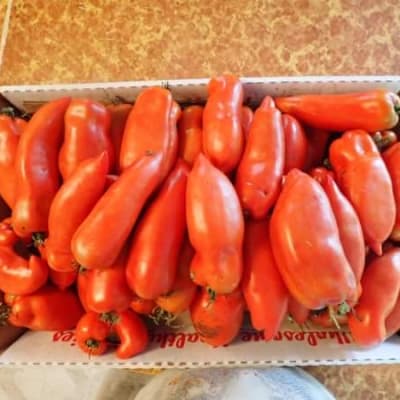
Solanum lycopersicum Red skin. (82 days) Open pollinated. 3x5" massive solid bull’s horn–shaped red fruits with dry texture, few seeds, and round mellow flavor. Dries well.
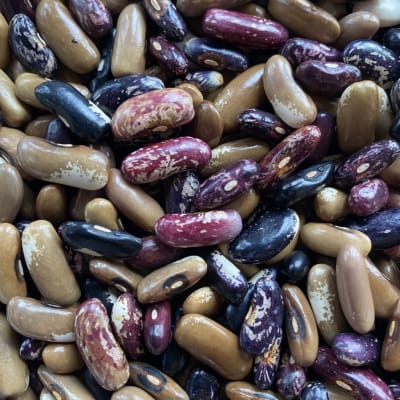
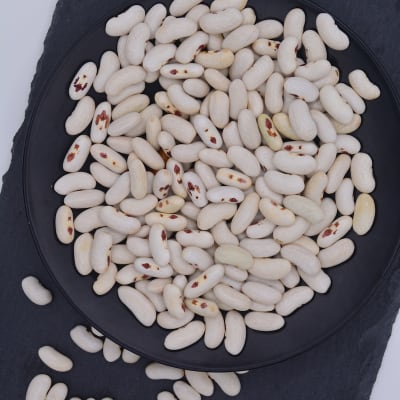
Phaseolus vulgaris (60 days) Open pollinated. Dubbed “weirdo beans,” by the student seed keepers at Troy Howard Middle School, these glorious mutts spin out a ragtag rainbow of patterns, habits and ancestral forms.
Hordeum vulgare Open pollinated. An historic 6-rowed barley selected by Luther Burbank from California hulless barley. In his final seed catalog he called it “one of [his] greatest grain creations.”
A premium high-test potting soil recommended for indoor growers, container gardening, soil-blocking, or slow-growing seedlings that will be in the greenhouse for six weeks or more. Made in New York.
Sorghum bicolor (105 days) Open pollinated. Sprays of ornamental seedheads in gold, bronze, brown, black, burgundy, red and cream are great for making natural straw brooms and classic autumnal displays. Small shiny seeds are beloved by birds.
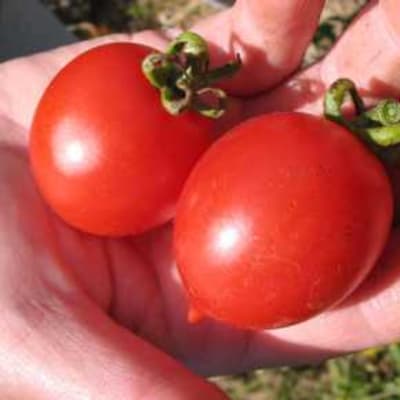
Solanum lycopersicum Red skin. (75 days) Open pollinated. Red Italian heirloom cherry used for dried tomatoes. Rich, meaty, few seeds. Bears prolific clusters over a long season. No cracking.
Citrullus lanatus Red flesh. (82 days) Open pollinated. Modern classic. Red flesh with few seeds. Round-to-oval 8-12 lb fruit with dark green stripes on light green base.
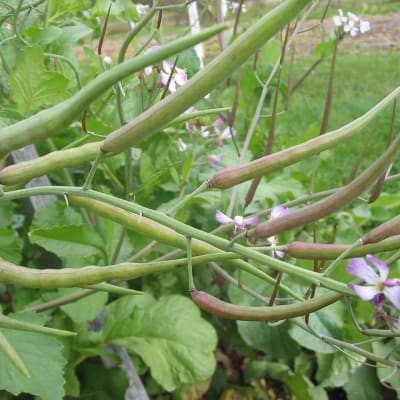
Raphanus sativus var. caudatus (50 days) Open pollinated. Asian heirloom, Specialty. Grown for its immature purple-green pungent seed pods. Harvest young for best quality.
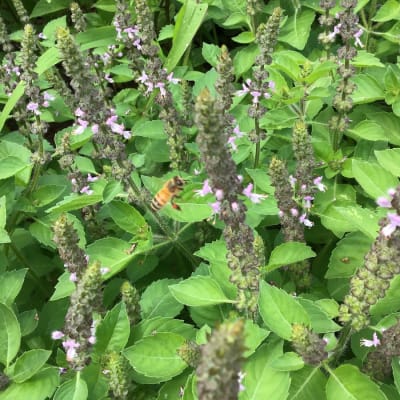
Ocimum africanum (100 days) Open pollinated. A superior strain of Tulsi or Sacred basil, with a more compact growth habit and more pungent sweet flavor.
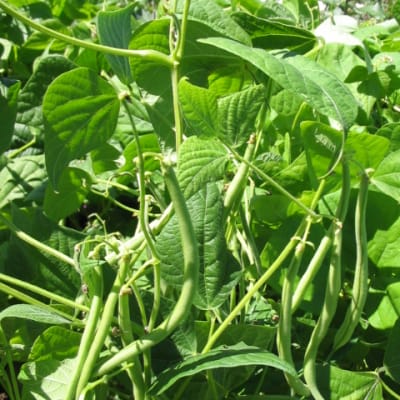
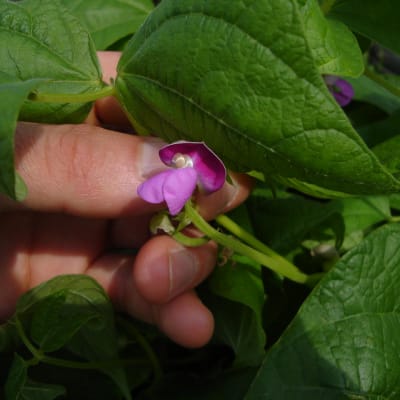
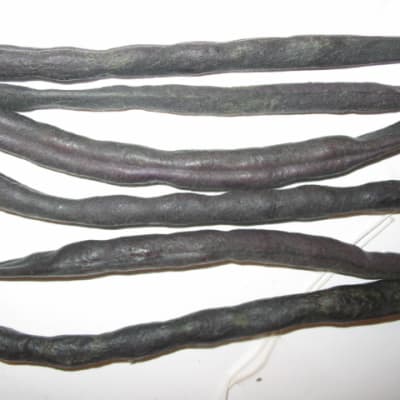
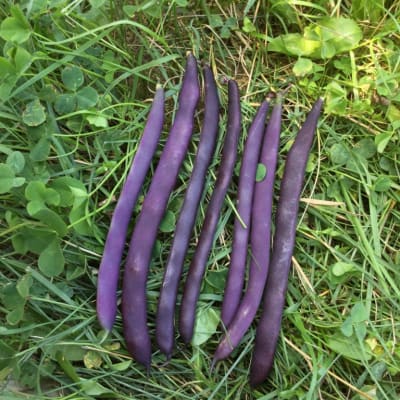
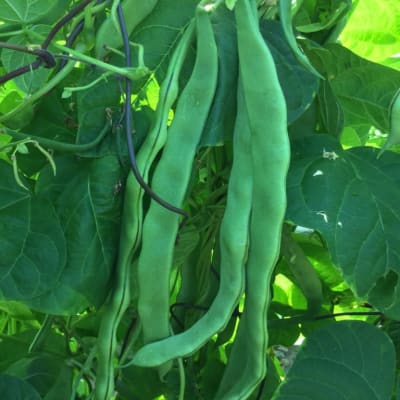
Phaseolus vulgaris (72 days snap) Open pollinated. Bluish-purple pods and green leaves tinged with purple. Harvest at 3-5". Can serve as a snap, shell or dry bean. Chocolate-colored seed.
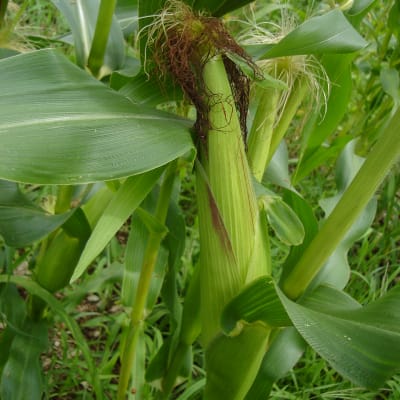
Zea mays (72 days) Open pollinated. Bred by Fred Ashworth. 5' stalks, 6-7" yellow ears, good flavor. Harvest at milk stage; does not hold in the field. Starts well in cool soil.
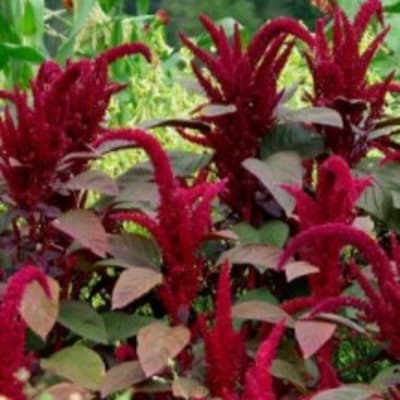
Amaranthus hybridus (65 days to flower, 125 days to seed) Open pollinated. Is it a green vegetable? An ornamental? A gluten-free grain? Why, yes! No wonder Amaranth was sacred in pre-Columbian Mexico.
Pennisetum glaucum (120 days) Open pollinated. Ornamental grass with deep-purple foliage and large purple seed spikes. Popular in arrangements. 4-5' tall.
Avena nuda (100 days) Open pollinated. Grain that’s easier to thresh than most other oats, though it still has a small hull that must be removed. A good variety to re-introduce growing grain on home ground.
Hablitzia tamnoides (45 days) Open pollinated. Perennial spinach-like green. Hardy vine from the Caucasus grows 6-9' long for 2-3 months beginning very early spring. Heart-shaped attractive leaves.
Bunias orientalis Open pollinated. Perennial, Zones 4-8. Tender spicy mustard greens and florets for stir-frying. Drought-tolerant with a deep taproot.
Brassica oleracea (acephala group) (60 days) Open pollinated. English heirloom. Extremely hardy and vigorous. Rounded slightly savoyed leaves are tender even when large.
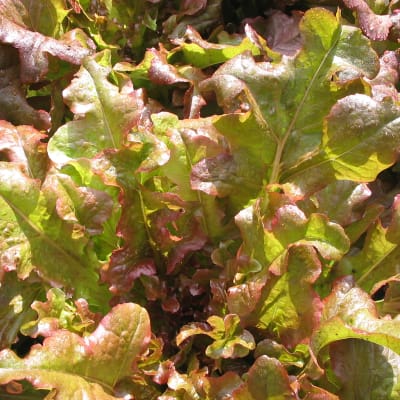
Lactuca sativa (48 days) Open pollinated. Very large vigorous oakleaf lettuce with extra-frilled bright pink and bronze leaves. Withstands some heat. Start in early spring for an amazing show.
Urtica dioica Open pollinated. Perennial. Grows 3-6'. Young shoots and leaves are delicious steamed as spring greens, very high in minerals and protein.
Codonopsis pilosula Open pollinated. Perennial to Zone 4. Used in Chinese medicine like ginseng, but considerably easier to grow than true Panax ginseng.