Phaseolus vulgaris (60 days shell, 85 days dry) Open pollinated. Plump shiny black beans! Can be harvested as a shell or dry bean. Dry pods resist shattering, yet are easy to shell.
Phaseolus vulgaris (90 days) Open pollinated. Produces 4-5 beautiful black-and-white beans per pod, with a texture similar to Yellow Eye. Doubles in size when cooked.
Vigna unguiculata (65 days shell, 90 days dry) Open pollinated. Cowpeas for the North! Small white bean matures quickly. Easy-to-pick yellow pods. Beautiful yellow flowers on bushy semi-erect plants.
Phaseolus vulgaris (60 days shell, 85 days dry) Open pollinated. Similar in shape, color and taste to baby limas, except much easier to grow in our climate and sweeter with a buttery texture. Excellent both as a shell and a dry bean.
Phaseolus vulgaris (85 days) Open pollinated. Dense foliage produces medium runners, lavender flowers and good yields of thin delicate pods each containing 5-6 lustrous black seeds.
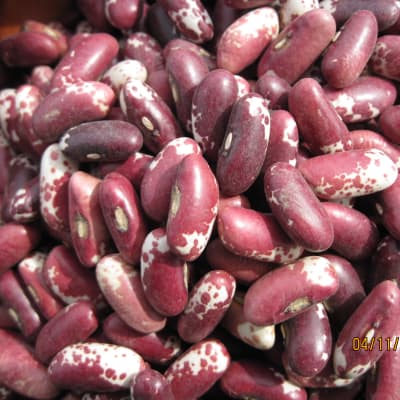
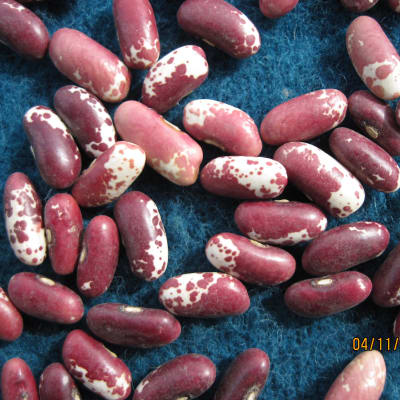
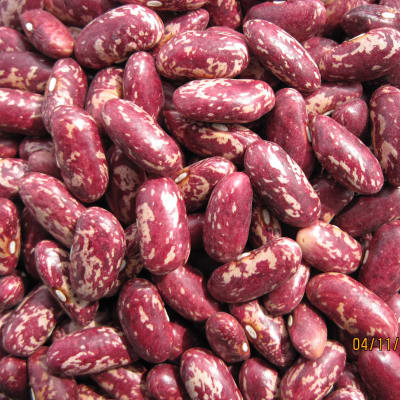
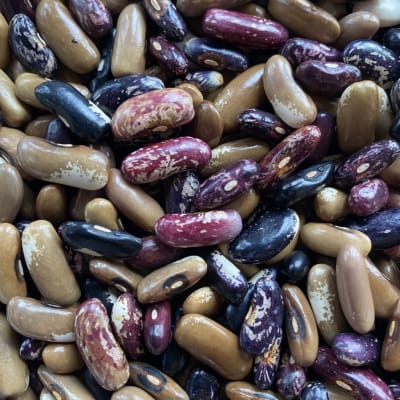
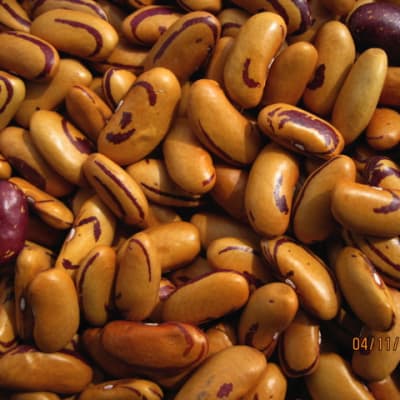
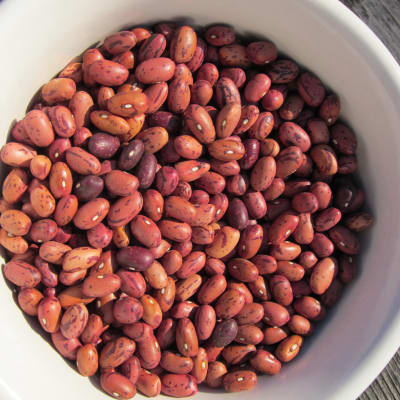
Phaseolus vulgaris (60 days) Open pollinated. Dubbed “weirdo beans,” by the student seed keepers at Troy Howard Middle School, these glorious mutts spin out a ragtag rainbow of patterns, habits and ancestral forms.
Phaseolus vulgaris (106 days) Open pollinated. Large speckled tan beans with good yields, even in stressful conditions. Creamy texture for great comfort food.
Phaseolus vulgaris (106 days) Open pollinated. Large speckled tan beans with good yields, even in stressful conditions. Creamy texture for great comfort food.
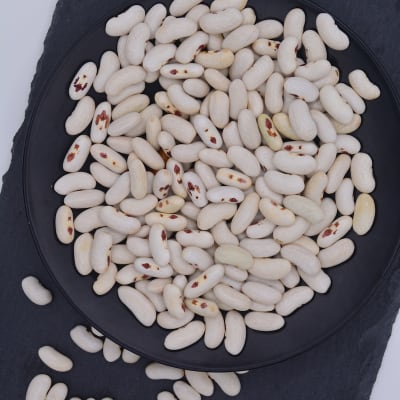
Phaseolus vulgaris (88 days) Open pollinated. White bush bean with good yields and mild flavor. Pale sibling of golden Gaucho.
Loading...
Shell and Dry Bush Beans
About 70-190 seeds/oz packet. Seed size varies widely by variety.
Culture: In conditions of high nitrogen fertility some bush beans may develop vines in moist hot weather. Tender, will not survive frost. Plant 3–4 seeds/ft in rows 24–30" apart. Pick frequently for maximum yields, but avoid disturbing foliage in wet weather to prevent spread of fungal diseases.
Harvest at shelling stage when beans are plump inside pods. For dry beans let pods dry hard on the vine until pressing the beans with your fingernail leaves no indentation. If heavy rains or hard frost threaten before full dry maturity, either pull plants by the roots and hang them in a dry place to finish; or pick pods into mesh or paper bags and finish drying them indoors before threshing.
Beans
All beans are open-pollinated.
Days to maturity are from seeding date.
Culture: Tender, will not survive frost. Inoculate with a legume inoculant, then plant seeds 3–4" apart in rows 24–30" apart after all danger of frost has passed and soil has warmed. Minimum germination soil temperature 60°; optimal range 70–80°. White-seeded beans are generally more sensitive to cold soil temps than dark-seeded varieties. Legumes have moderate fertility needs and can fix their own nitrogen.
Saving Seed: Saving bean seed is easy! Leave pods on the plants to dry. Hand shell, or stomp pods on a tarp. To ensure true-to-type seed, separate varieties by 30 feet.
Diseases:
ANTH: Anthracnose
BBS: Bacterial Brown Spot
CBMV: Common Bean Mosaic Virus
CTV: Curly Top Virus
DM: Downy Mildew
HB: Halo Blight
NY 15: NY 15 Mosaic Virus
PM: Powdery Mildew
PMV: Pod Mottle Virus
R: Rust
SC: Sclerotina
White mold, Sclerotinia sclerotiorum, affects more than 300 plant species. In beans, low humidity, good air circulation and wider spacing, both between plants and between rows, reduce the likelihood of this soil-borne infection.

 Limelight Shell and Dry Bush Bean - ECOSeedsnot available yet, check back later