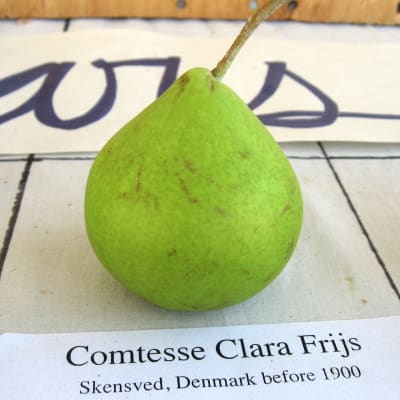
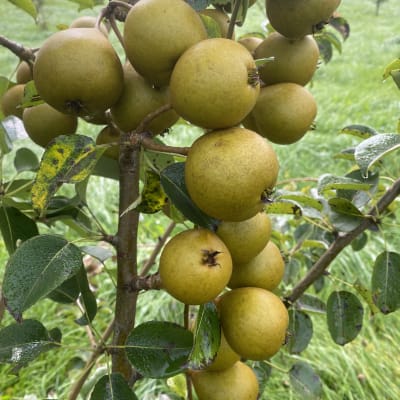
Pyrus communis Late summer, greenish yellow skin. For that classic pear look and taste! Adaptable to many climates and soils. Full reliable annual crops. Z4.
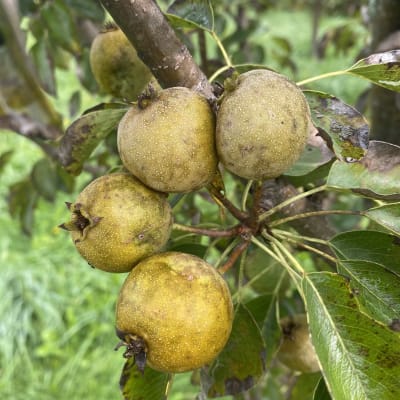
Pyrus communis Fall, russeted dark yellow skin. Distinctive sweet rich spicy buttery flavor. Melting juicy tender white flesh. Bears huge crops annually. Good pollinator for other varieties. Z4.
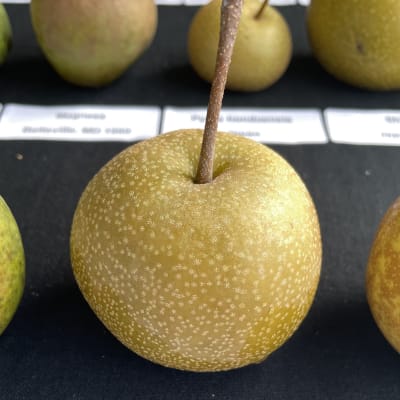
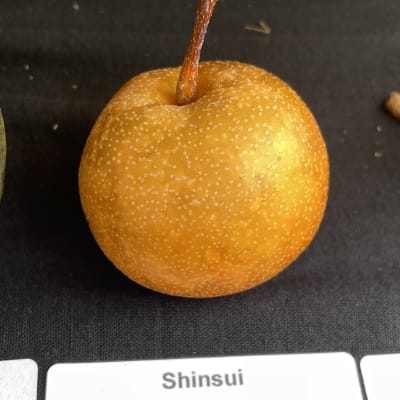
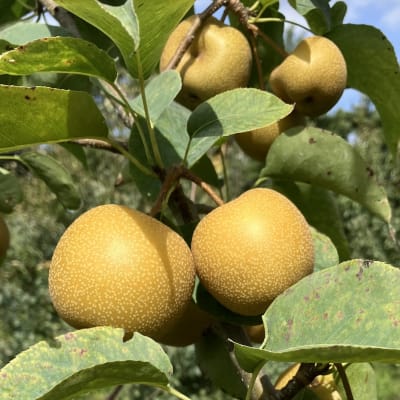
Pyrus communis Winter, russeted golden-yellow skin. Intensely sweet highly aromatic tender storage pear; possibly the best eating of all winter pears. Similar to Seckel. Keeps extremely well. Z4.
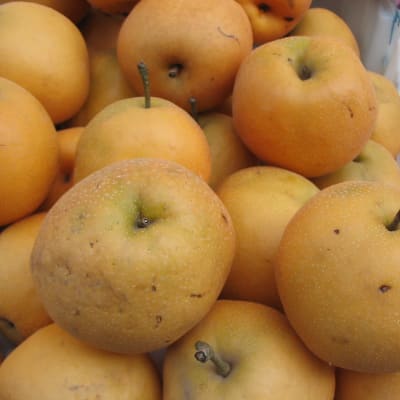
Pyrus communis Late summer, yellow skin. Firm with few grit cells and a good balance of sweetness and acid. Holds shape when canned. Stores 2 months. Z4.
Pyrus communis Late fall-winter, mottled blushed green skin. Frankendorf, Germany. Coarse flesh, good flavor. Great storage pear. Can keep until April in the root cellar. Z4.
Pyrus communis Late summer, green skin. Large dessert pear with melting juicy flesh, smooth creamy texture and thin skin. Wonderful dessert pear. Great for canning. Z3.
Pyrus communis Summer, pink-blushed yellow skin. Very large fruit with melting flesh and few grit cells. Good fresh eating, drying and canning. Late blooming, but early ripening. Z4.
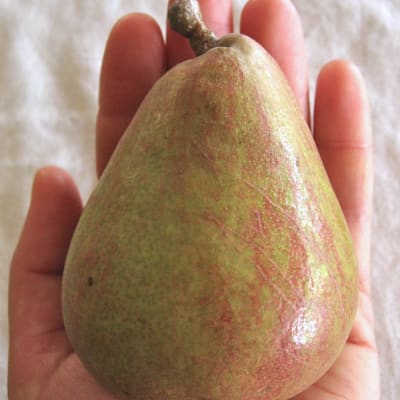
Pyrus communis Late summer, red-blushed greenish yellow skin. The best-quality large hardy pear available. Very good fresh eating with sweet “high flavor.” Good canning. Z3.
Pyrus communis Late summer, red-blushed yellow skin. Often considered the best-flavored of all pears. Juicy, spicy, aromatic. Good fresh and cooked. Z4.
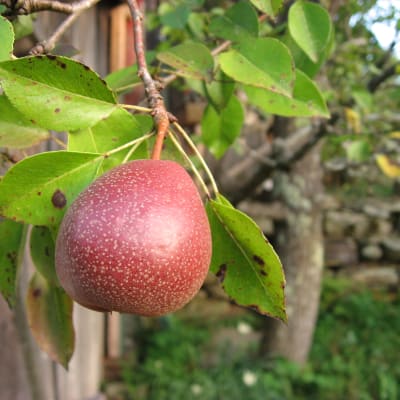
Pyrus communis Midsummer, red-blushed green skin. Sweet dessert and canning pear. Eat them fresh, can them in quarters, and juice the rest. Fireblight resistant. Z3.
Pyrus communis Fall, red-blushed yellow skin. Medium-sharp perry pear. Too bitter for fresh eating but very good for making a strong aromatic perry, and suitable for cooking. Z4.
Pyrus communis Fall. Ancient English perry pear. Small oval yellow-green russeted pear under 2" in diameter. Used for alcohol production; not for fresh eating. Z4.
Paeonia lactiflora Early season blooms. Semi-double to double type. A symphony of coral, peach, melon and pink. Very fragrant and packed with petals. Z3.
Paeonia lactiflora Late season blooms. Fully double type. Fragrant flowers open with narrow red lines shot onto light rose-pink. One of our favorites! Z3.
Diospyros virginiana 35-60' × 20-35'. Native tree produces edible orange fruit used in pies, jams and jelly. Fruit is best after a frost. Plant two or more for fruit. Z4/5.
Prunus americana 15-20' The best pollinator for hybrid plums. Very decent red, yellow and orange 1" plums, suitable for fresh eating, canning and freezing. Z3.
Prunus domestica Late summer, blue skin, golden yellow flesh. A relatively new plum showing promise in commercial and home orchards. Very juicy sweet yellow flesh. Clingstone. Z5.
Prunus domestica Summer, dark blue skin, golden flesh. Sweet balanced firm freestone flesh, with a smaller pit than other European plums. Ripens about 3 weeks earlier than Stanley. Z4.
Prunus spp. Late summer, dark purple skin, greenish yellow flesh. Freestone dessert and processing prune plum. Similar to Stanley, with improved productivity and disease resistance. Z4.
Prunus Late summer, dark bluish purple skin, greenish amber flesh. Famous in Bosnia and Herzegovina for making sweet and creamy preserves, and fermenting into brandy. Z4.
Prunus domestica Fall, dark blue skin, golden yellow flesh. Firm semi-freestone fruit is delicious for fresh eating. Large fruit and heavy annual crops. Z4.
Prunus spp. Midsummer, red-orange skin, dark pinkish red flesh. Delicious medium-sized fruit with soft sweet flesh. Glossy ornamental red foliage all summer long. May be self-pollinating. Z4.
Prunus spp. Late summer, red skin, yellow flesh. Rich juicy sweet flesh is very firm and meaty but tender. Tastes like an apricot. Recommended for cooking and fresh eating. Rare in the trade. Z3.
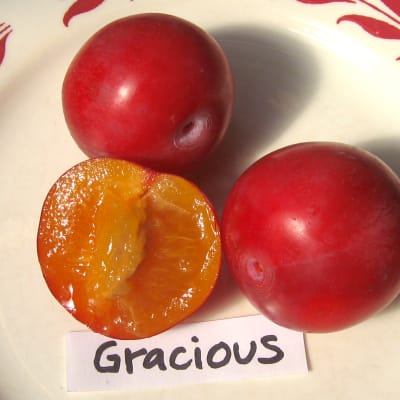
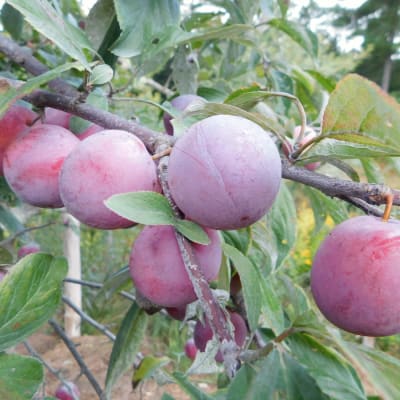
Prunus spp. Mid-late summer, red-purple skin, yellow-orange flesh. Large plums with translucent tart flesh. Clingstone. Good fresh eating or canning. Bears reliably. Z3.
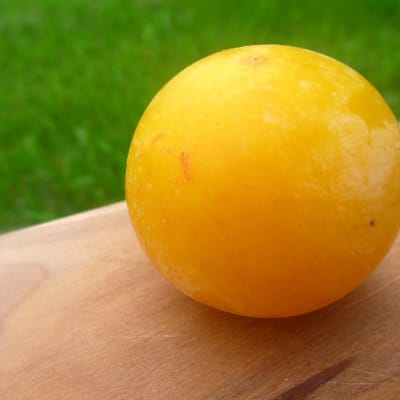
Prunus spp. Late summer, yellow skin, yellow flesh. Roundish tender thin-skinned plum sometimes blushed with a little pink. Tender juicy flesh. Freestone. Z3/4.