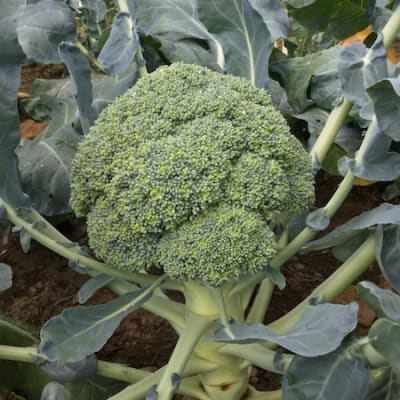
Brassica oleracea (botrytis group) (90 days) F-1 hybrid. Late-summer to fall, delivers a dark green semi-domed 6-8" head with medium-small tight bead. Abundant side shoots, good heat tolerance.
Brassica oleracea (botrytis group) (91 days) F-1 hybrid. Large plants set uniform medium-green 8" domed heads with medium-tight bead. Very few side shoots. Reliable production even under stress.
Brassica oleracea (botrytis group) (94 days) F-1 hybrid. Large deep green heads are finely beaded, high domed with no lobing. Amazing resilience and crazy-weather tolerance.
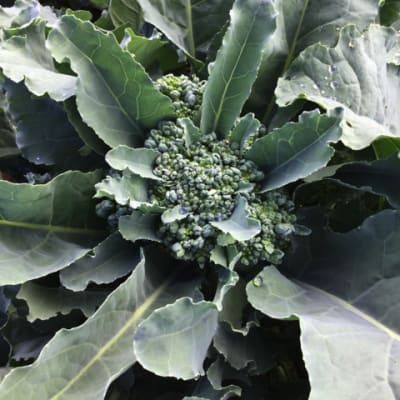
Brassica oleracea (botrytis group) (56 days) Open pollinated. Sweet stalks and stems produce succulent small green loose heads with very large beads. Abundant side shoots. Excellent flavor and heat tolerance.
Brassica oleracea (gemmifera group) (120 days) F-1 hybrid. 1" tightly wrapped sprouts are widely spaced for ease of harvest and good air circulation. Vigorous and sturdy plants showed little aphid damage.
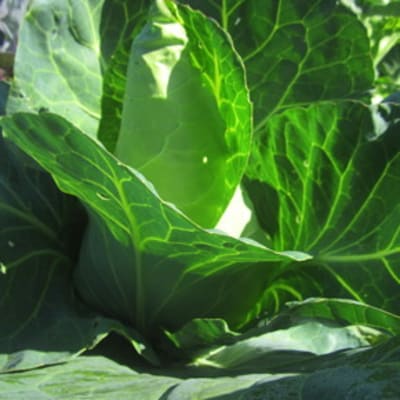
Brassica oleracea (capitata group) (75 days) Open pollinated. Distinctive violet-rose color. Small to medium 3-5 lb heads can be up to 7" across on a compact plant.
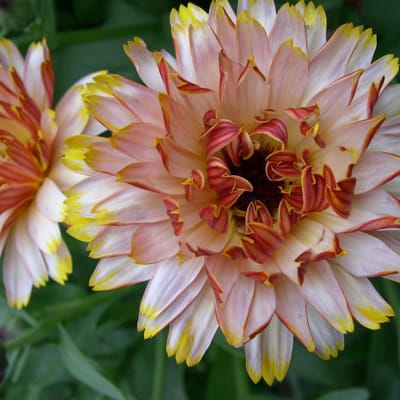
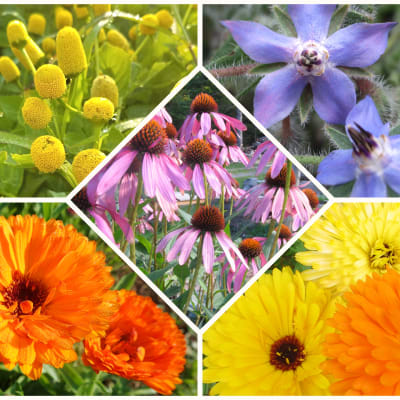
Eschscholzia californica (60 days) Open pollinated. Cheery cup-shaped silky blooms range from light orange to deep rust, opening their faces to the sun each morning and closing up again at night.
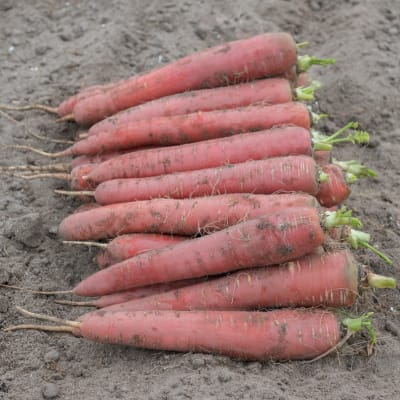
Daucus carota (55 days) Open pollinated. Early coreless translucent pinkish-orange blunt-tip roots. Mild sweetness boosted by “carrot perfume.” Upright tops good for bunching.
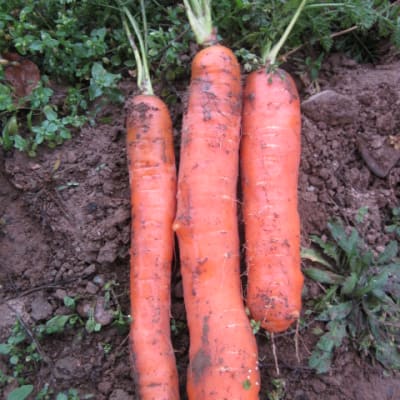
Daucus carota (68 days) Open pollinated. Uniform cylindrical 7" roots with unusually good interior color, crisp texture and fine flavor. Holds well; an excellent keeper too.
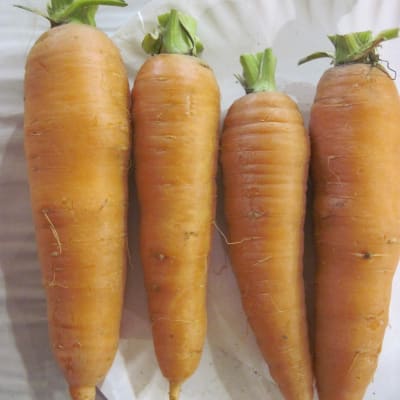
Daucus carota (55 days) F-1 hybrid. Blunt Nantes-type 7-8" orange carrot with strong green tops and a medium core. Snappy, sweet and juicy. Use fresh or store.
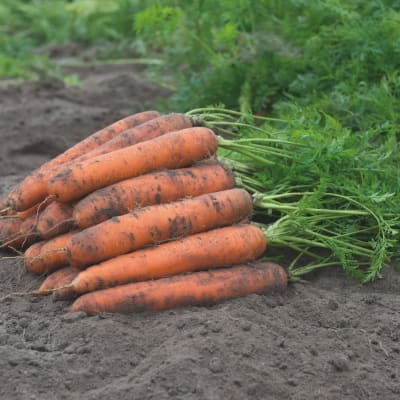
Daucus carota (85 days) Open pollinated. A stalwart storage carrot whose flavor improves with time. Also good for fresh eating and juicing. 7–9" heavy cylindrical roots.
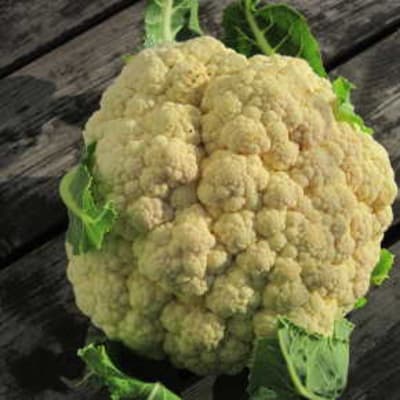
Brassica oleracea (botrytis group) (68 days) F-1 hybrid. Pastel orange uniform heads of dense curds on sturdy plants. Highly adaptable; consistently performs well in a range of conditions, including heat stress.
Brassica oleracea (botrytis group) (93 days) F-1 hybrid. Very large upright plants set dense 2-4 lb attractive white domed heads. Tender with very good flavor.
Apium graveolens (80 days) Open pollinated. Thick crisp stalks have rich flavor, not harsh even in less-than-ideal conditions. Ventura must receive adequate, even moisture for best growth.
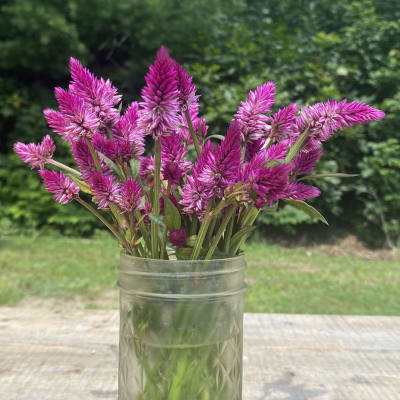
Celosia argentea var. spicata (75 days) Open pollinated. Upright 20-26" tall multi-branched wheat-type celosia produces showy spikes, light pink at the base turning to a deep rose-magenta at the tip. Green foliage starts at ground level.
Prunus avium Summer, dark red skin. Good-quality dark red fruit. Survived –30° with minimal winterkill in central Maine. Vigorous. Requires second variety for pollination. Z4.
Made from a supremely dextrous and comfortable seamless bamboo knit, these grippy, durable, breathable gloves are the go-to gloves for getting the job done when precision matters.
Long-lasting machine-washable gloves with a textured natural rubber-latex palm that offers a solid grip. Comfy, flexible, breathable and suitable for all kinds of weather.
Snug-fitting knit poly-nylon shell is dipped in nitrile, a marvelously gripping soft rubber that latex-sensitive people can use. Snug fit and tacky surface preserve dexterity.
Fine-knit stretchy polyester shell lined with thick acrylic fleece to keep fingers warm and protected in harsh gardening conditions. Latex-dipped palm and fingers for water resistance and grip.
These seamless-knit liners magically transform the Vermonter Work Gloves from summer gloves into winter gloves! Merino wool keeps you warm even when wet.
These rugged goatskin work gloves will outlast other leather work gloves three or four times over. Patented thumb design offers improved comfort and durability. Worth the investment! Made in VT.
You can’t possibly work harder than these top-notch leather work gloves. The 100% goatskin body is rugged yet soft and dexterous. Features exterior seams and patented thumb design.
The all-around best winter chore glove: no more wet cold fingers! Flocked acrylic lining is soft and warm, and the triple-dipped PVC coating remains flexible even at single-digit temperatures.
Slipped over your forearms and gloves, the heavy close-woven canvas protects you from the cuts of rose thorns, thistle spines and other prickly peril, without restricting arm motion or circulation.
These mesh ankle guards have a stretch knit band at the ankle and elastic band at the calf to keep mosquitoes and flies off your socks and legs. A nontoxic and affordable layer of protection.
Got blackflies? Slip on this headnet and work in comfort. Lightweight fine-mesh black nylon lets breezes in and makes the outdoors liveable again with chemical-free insect protection.
These innovative leg gaiters feature a patented mesh-fabric design that slows ticks by 400-800% as they climb up your leg, while exposing them to microencapsulated permethrin to repel them.
This design was featured on some staff-only apparel recently, and it was so well-loved that we decided to release it to the wider world on these 100% certified-organic cotton shirts.
This design was featured on some staff-only apparel recently, and it was so well-loved that we decided to release it to the wider world on these 100% certified-organic cotton shirts.