A wetting agent and spreader-sticker. Increases the longevity and effectiveness of pesticide applications and forces hydrophobic potting media (like dry peat moss) to more readily absorb water.
read more
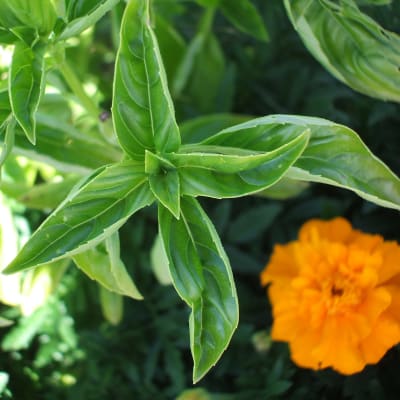
Ocimum basilicum (70 days) Open pollinated. Impressive yields from shapely plants well suited to pots or the field. Classic sweet Genovese flavor and a marvelously potent aroma. Resists powdery mildew.
read more
Ocimum basilicum (70 days) Open pollinated. The choice of many connoisseurs for making pesto. Leaves are slightly smaller and finer than Sweet Basil with more aroma and potency.
read more
Ocimum basilicum (70 days) Open pollinated. The choice of many connoisseurs for making pesto. Leaves are slightly smaller and finer than Sweet Basil with more aroma and potency.
read more
Ocimum basilicum minimum (70 days) Open pollinated. 8" and maintains a compact mound of light green leaves and white flowers. Its leaves are small, thin and strongly scented.
read more
Ocimum basilicum (70 days) Open pollinated. The heaviest-yielding variety, recommended for drying, all-around great eating, and large-scale pesto production.
read more
Ocimum basilicum (70 days) Open pollinated. The heaviest-yielding variety, recommended for drying, all-around great eating, and large-scale pesto production.
read more
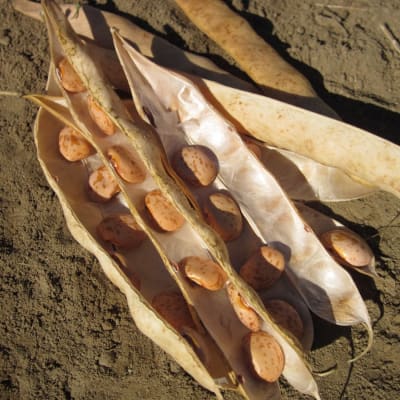
Phaseolus vulgaris (70 days shell, 90 days dry) Open pollinated. Consistently one of the earliest dry pole beans. Chestnut-brown dry beans are wide and flat like limas.
read more
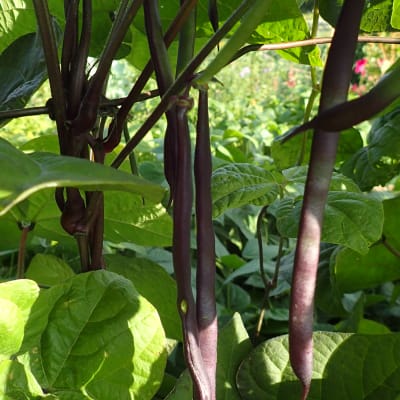
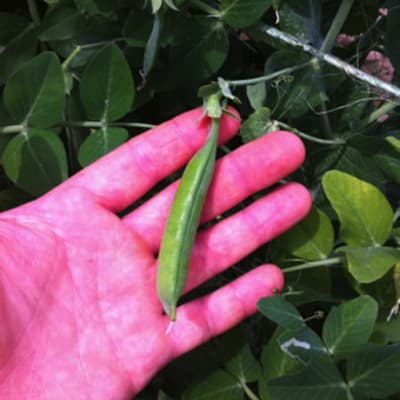
Phaseolus vulgaris (70 days) Open pollinated. Beautiful 6-7" green pods with purple streaking. Tan seed with dark stripes. Also known as Preacher Bean.
read more
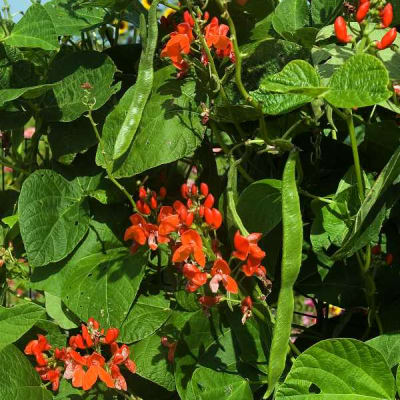
Phaseolus coccineus (70 days snap, 95 days shell) Open pollinated. 10-12' tall. Mottled black and purple seeds. Ornamental brilliant scarlet blossoms. Snap or shell bean.
read more
Phaseolus vulgaris (70 days shell, 90 days dry) Open pollinated. White Cannellini bean. 5-6" short fat pods contain 5 plump seeds. Excellent flavor.
read more
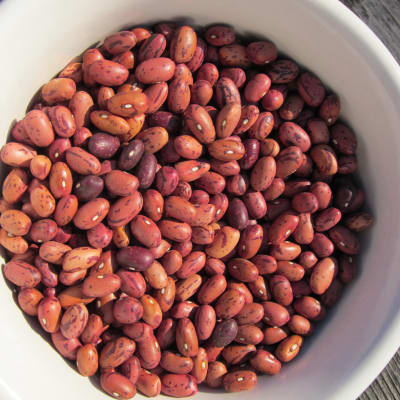
Phaseolus vulgaris (70 days shell, 95 days dry) Open pollinated. Pods contain 5-6 speckled cranberry-colored beans. Reliable and hardy heirloom.
read more
Phaseolus vulgaris (70 days shell, 95 days dry) Open pollinated. Pods contain 5-6 speckled cranberry-colored beans. Reliable and hardy heirloom.
read more
Daucus carota (70 days) F-1 hybrid. 6–7" slender carrot similar to Yaya, but with slightly later maturity and more upright tops. Good for storage.
read more
Daucus carota (70 days) F-1 hybrid. Tapered 7" purple Imperator-type with orange highlights. Red-purple interior with vivid orange core. Very good texture.
read more
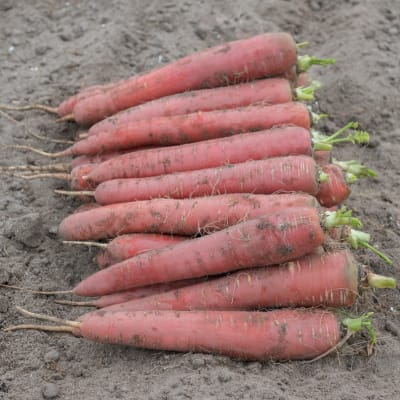
Daucus carota (70 days) Open pollinated. French heirloom. Thick 5-7" long red-orange carrot. Performs well in heavy soil. Excellent flavor and long storage.
read more
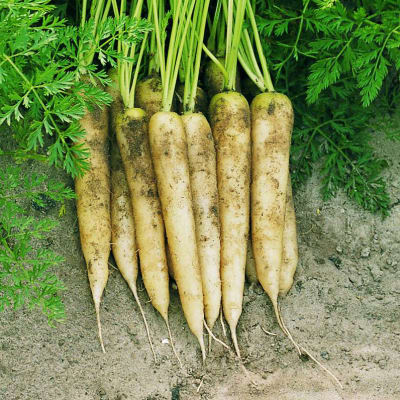
Daucus carota (70 days) F-1 hybrid. Straight 8" creamy-white carrot. Good texture and flavor, both raw and cooked. Develops green shoulders at full-size.
read more
Lactuca sativa (70 days) Open pollinated. 2' tall erect romaine with dark green leaves, slow to bolt in heat but we recommend it for cool to cold weather.
read more
Cucumis melo (70 days) F-1 hybrid. This unusual sweet and sour melon is tart, punchy and refreshing. Unlike most specialty melons, these are easy to grow and can reliably mature in Maine.
read more
Ipomoea purpurea (70 days) Open pollinated. Climbs to at least 8-9' with trellising, rich deep purple bloom with a glowing magenta center and dark 5-pointed star pattern.
read more
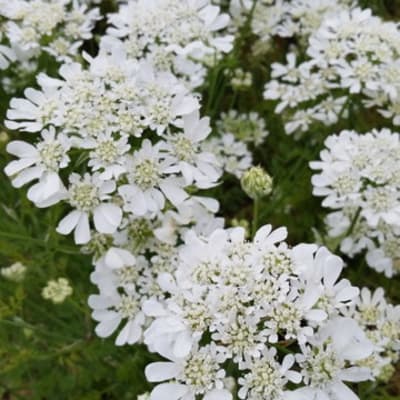
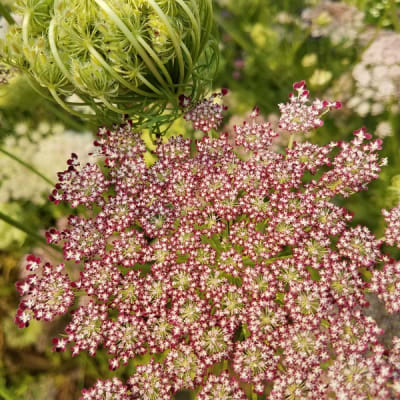
Orlaya grandiflora (65-70 days) Open pollinated. 2-3' with ferny foliage and sturdy stems, dainty delicacy resembling lace-cap hydrangea, with the central florets of a flat-topped cluster surrounded by a ring of larger flowers.
read more
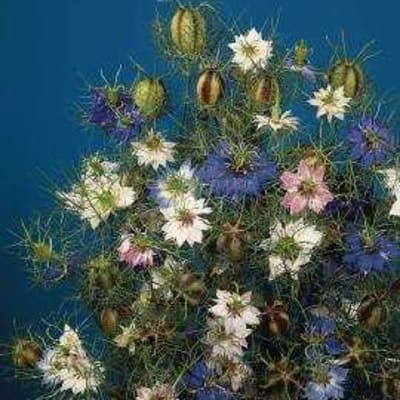
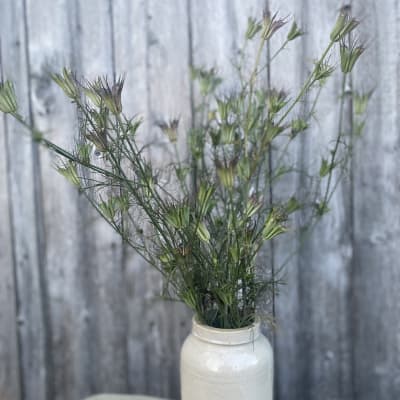
Nigella damascena (70 days) Open pollinated. Mix of pink, blue and white flowers. Spiky decorative seed pods used in dried arrangements. 18".
read more
Sinapis alba (70-85 days) Open pollinated. As easy to grow as the leafy mustards. The variety of mustard most familiar to American palates, but pallid without the addition of turmeric.
read more
Petroselinum crispum (70 days) Open pollinated. Italian heirloom. Flat-leaved parsley with good early seedling vigor and rich sweet flavor. Grows to 1' tall.
read more
Petroselinum crispum (70 days) Open pollinated. Italian heirloom. Flat-leaved parsley with good early seedling vigor and rich sweet flavor. Grows to 1' tall.
read more
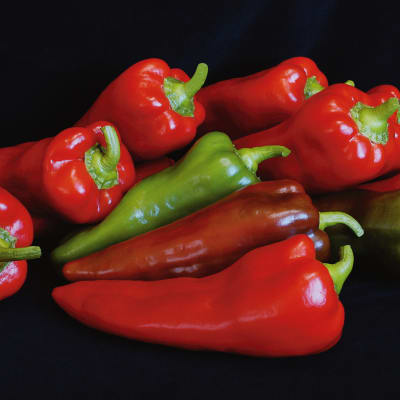
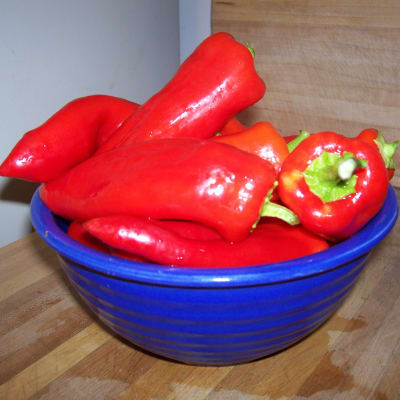
Capsicum annuum (70 days) F-1 hybrid. Deep carmine horn-shaped 2.5x6" fruits. Classic Italian Corno di Toro type. Unusually sweet. Widely adapted and early maturing.
read more
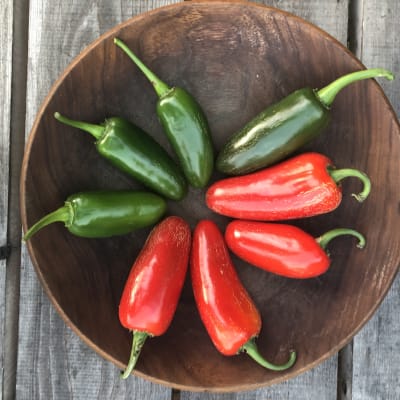
Capsicum annuum (70 days) Open pollinated. Semi-hot and semisweet for perfectly balanced homemade paprika. Thick-walled light yellow to red fruits hold up well in roasting and in the traditional use as a stuffing pepper.
read more
Salvia splendens (70-85 days) Open pollinated. Glowing red tubular flowers grow along spikes on a big bushy low-maintenance shrub-like plant. Pollinators love them. 24" tall.
read more
Helianthus annuus (70-90 days) Open pollinated. Lovely mix of earthen shades: bright yellow to bronze and purples. Blossoms 4-6" across. 6-8' multibranching stalks. A top seller.
read more
Solanum lycopersicum (70 days) Open pollinated. 1¼ x 1" fruits are meaty but not dense; juicy and sweet but tangy, delivering the correct flavor combination that so many yellow cherries and pears lack.
read more
Solanum lycopersicum (70 days) Open pollinated. Bright red ⅞" Aperitif is sized like a huge currant or very small cherry. Sweet little jewels.
read more
Solanum lycopersicum (70 days) Open pollinated. Bright red ⅞" Aperitif is sized like a huge currant or very small cherry. Sweet little jewels.
read more
Solanum lycopersicum (70 days) F-1 hybrid. Vibrant orange, remarkably sweet and juicy 15g fruits crack slightly more than other grapes, but glorious flavor and tender skins more than make up for it.
read more
Solanum lycopersicum (70 days) F-1 hybrid. Plants flower continuously and set fruit throughout the season for abundant harvests of delicious 15–22g shiny red grape tomatoes. Great in the field and a good choice for containers.
read more