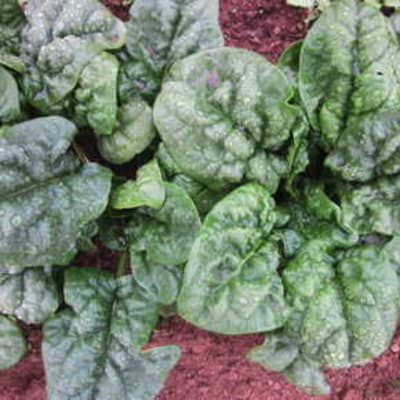
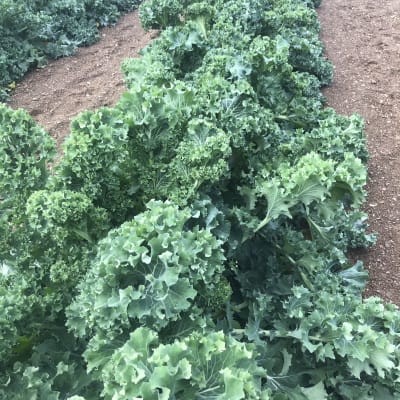
Spinacia oleracea (47 days) Open pollinated. Old variety grows slowly, tolerates low temps. Good spring and fall, and great for overwintering. Deeply savoyed leaves.
Cucurbita pepo (60 days) Open pollinated. Italian heirloom. Cylindrical. Deeply ribbed striped tender fruit. Excellent flavor. Also good for blossom production.
Helianthus annuus (90-100 days) Open pollinated. Rare indigenous heirloom used as a natural dye source for coloring baskets purplish charcoal. Also edible. 8' stalks.
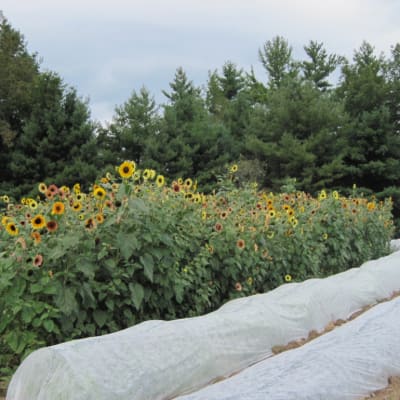
Helianthus annuus (63 days) Open pollinated. These sunflowers have small dark centers and pointed petals in various hues including yellows, golds, maroons and reds. 6–7' tall.
Physalis ixocarpa Purple-blushed green skin. (68 days) Open pollinated. Large sweet 2"+ fruits on sprawling 5' plants blush purple where they are kissed by the sun. Roast for marvelous salsa verde.
Physalis ixocarpa Yellow skin. (60 days) Open pollinated. Sweet and tropical, like a ground cherry, perfect for fresh eating, roasting, grilling and for fruity salsas. A flavor that surprises and delights!
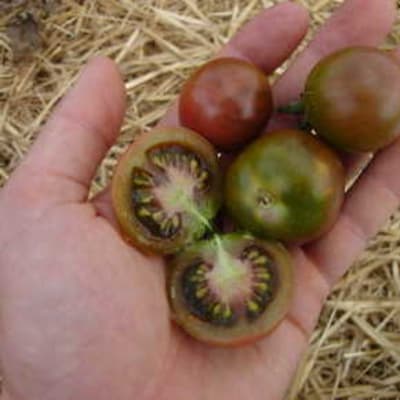
Solanum lycopersicum Dark red-purple skin. (75 days) Open pollinated. Gorgeous two-bite dusky black cherry. Juicy, delicious, complex flavor of black tomatoes. Resists disease; cracks in wet weather.
Solanum lycopersicum Dark purple skin. (75 days) Open pollinated. This fantastic cherry tomato is beautiful, healthy, highly productive, resistant to cracking and not resistant to flavor. 10–20g fruits.
Solanum lycopersicum Red skin. (78 days) Open pollinated. Red 1" cherry. Similar to Sweet 100, bearing gazillions of clusters of sweet fruits. Dependable and prolific.
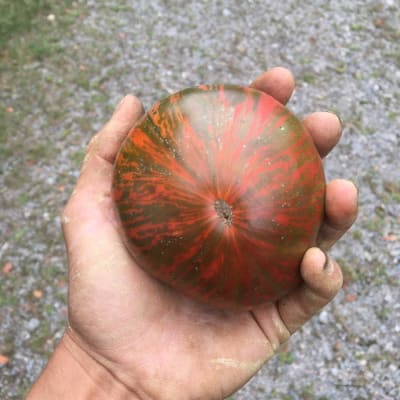
Solanum lycopersicum Green-striped red skin. (75 days) Open pollinated. Brick-red metallic-striped uniformly round medium-large 10–15 oz fruits are delicious, sweet, and earthy. Plants are productive and disease-resistant.
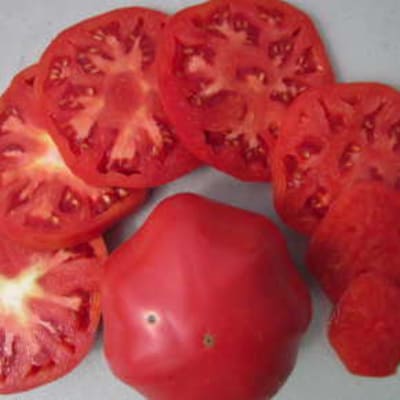
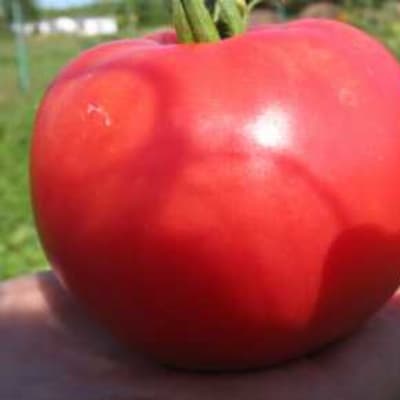
Solanum lycopersicum Pink skin. (80 days) Open pollinated. Pink 5 oz unblemished globes. The Brandywine of continental Europe. Excellent field-to-market variety that doesn't require high tunnels.
Verbena hastata Open pollinated. Perennial. 5-6' plant grows naturally in moist thickets and meadows does well in similar garden conditions, sending up many terminal spikes of bristly blue-violet flower clusters the entire season.
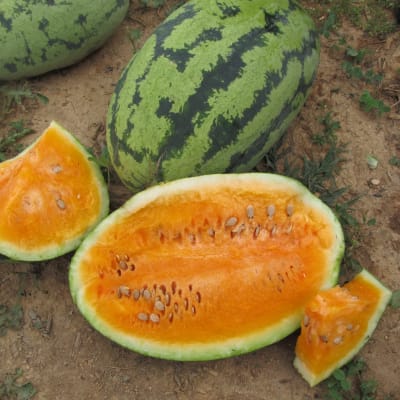
Citrullus lanatus Bright orange flesh. (90 days) Open pollinated. Bright orange flesh is juicy and refreshing with an almost tropical flavor. Adapted to the Northeast.
Cucurbita maxima Slate blue skin. (95 days) Open pollinated. Classic small hubbard. 4-5 lb version of the much larger Blue Hubbard. Compact growth habit.
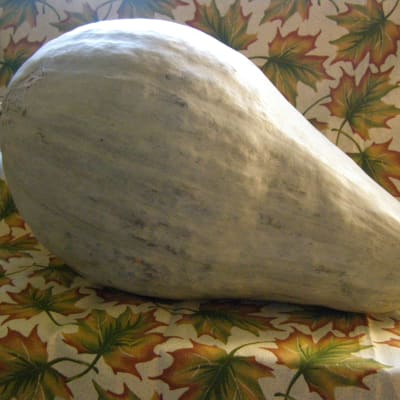
Cucurbita maxima Slate blue skin. (100 days) Open pollinated. Heirloom banana-type. Slate-blue obpyriform 6-8+ lb fruit. Average 12" long. Excellent flavor and good storage.
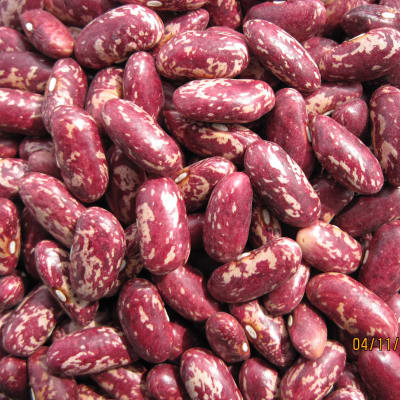
Phaseolus vulgaris (57 days) Open pollinated. A very refined haricot vert for home gardeners. Exquisitely tender, delicately flavored dark green pods are excellent raw with minimal bitterness.
Phaseolus vulgaris (60 days) Open pollinated. Fortex begins producing early and keeps going into fall, long after others have quit. Its flavor and texture reign supreme, a distinctive nutty taste that can be enjoyed raw or cooked.
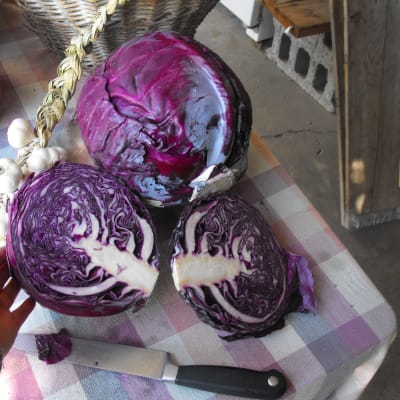
Brassica oleracea (105 days) Open pollinated. Compact deep-burgundy red heads are excellent raw, cooked or fermented. In good storage they'll keep till March.
Daucus carota (55 days) Open pollinated. Early coreless translucent pinkish-orange blunt-tip roots. Mild sweetness boosted by “carrot perfume.” Upright tops good for bunching.
Daucus carota (68 days) Open pollinated. Uniform cylindrical 7" roots with unusually good interior color, crisp texture and fine flavor. Holds well; an excellent keeper too.
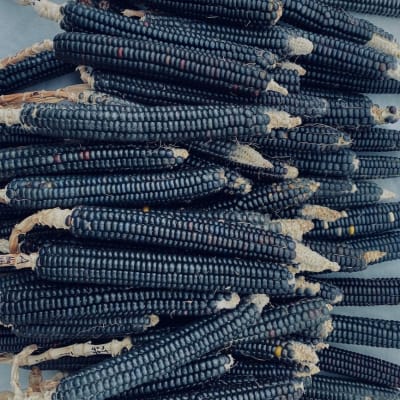
Zea mays (95 days) Open pollinated. A nutrient-dense grain that is fast maturing under harsh conditions, and stands strong for machine harvest. The soft starch makes fluffy cornbread and also binds well for Johnnycakes and tortillas.
Cucumis sativus (62 days) Open pollinated. Extra-long Asian slicer. Uniform slender smooth-skinned 9-12" fruit with crisp non-bitter flesh. Excellent flavor.
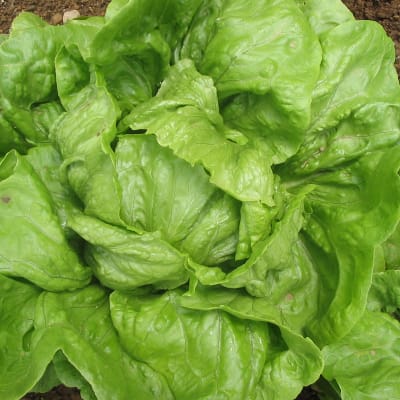
Lactuca sativa (72 days) Open pollinated. Slow-growing compact dark green Batavian with crisp outer leaves surrounding a round tightly-packed heart. Excellent heat tolerance.
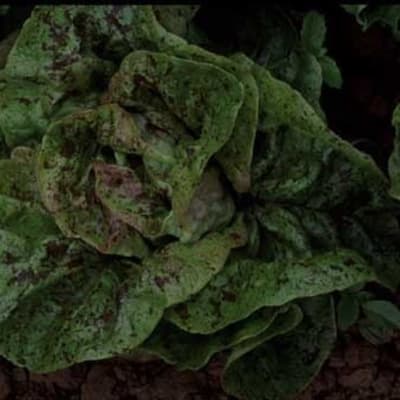
Lactuca sativa (55 days) Open pollinated. Heirloom. Very attractive bibb lettuce has apple-green leaves splashed with maroon-red flecks. Selected for resistance to tip burn.
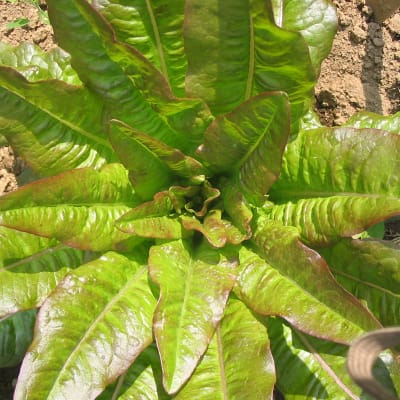
Lactuca sativa (50 days) Open pollinated. Rare. Starlike rosettes of glossy deer tongue-type leaves are tinged burgundy-red. Nutty texture and bitter-free. Very bolt resistant.
Lactuca sativa (46 days) Open pollinated. Folded and blistered light green leaves wrap into a tight crisp whorled 4" head that easily makes a single-serving salad.
Lactuca sativa (60 days) Open pollinated. Slightly ruffled green leaf lettuce is tinged bronze at the tips. Extreme cold tolerance. Fall, winter and spring production.
Lactuca sativa (46 days) Open pollinated. Very attractive oakleaf lettuce forms a green and bronze rosette. Very slow to bolt. Excellent in mesclun and for cut-and-come-again culture.
Cucumis melo Orange flesh. (90 days) Open pollinated. Orange-fleshed heirloom from Colorado. Slightly oval 5x6" fruits average 5 lbs and keep up to 3 weeks in cool storage
Cucumis melo Orange flesh. (88 days) Open pollinated. Firm orange flesh is mild but sweet with just the right amount of musk. 3-lb oval fruits feature exquisite netting.
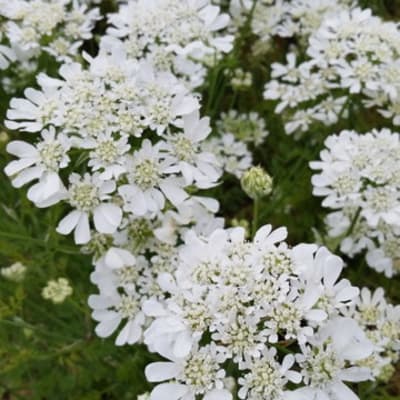
Orlaya grandiflora (65-70 days) Open pollinated. 2-3' with ferny foliage and sturdy stems, dainty delicacy resembling lace-cap hydrangea, with the central florets of a flat-topped cluster surrounded by a ring of larger flowers.
Rubia tinctorum Open pollinated. Ancient and excellent source of red dye. Harvest roots after three years and grind to yield a wash- and light-fast red dye par excellence. 4' plants.