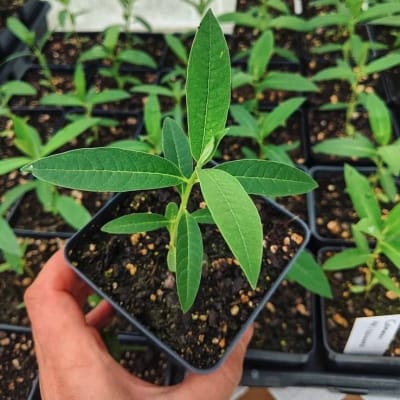
Ceanothus americanus Small compact shrub fixes nitrogen and attracts pollinators. Leaves historically used as tea and medicine. Grows in poor soils. Native to N. America. Z4.
Capsicum annuum Red skin. (60 days) F-1 hybrid. Red thin-walled bell peppers, not consistently blocky. Easy to grow. Consistently early. Good for home gardens.
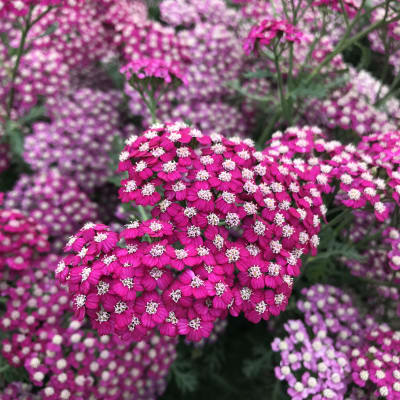
Achillea millefolium 24-28" tall. Charming bright magenta-violet flower clusters. Sturdy and upright, sports its vibrant color for a long bloom season, even in the heat.
A gift to a world disoriented by ecological collapse and haunted by the question of what to do, Eisenstein’s book gets to the heart of the predicament of how to heal our planetary wounds.
Prunus mandshurica Extremely hardy drought-resistant tree native to northeast China, far east Russia and Korea. Useful in breeding new frost-resistant varieties. Fruit is of variable eating quality. Z3.
Symphyotrichum novae-angliae 4-6' tall. North American native. Blooms range from blue-purple to lavender-pink with yellow eyes. Attractive to pollinators. Z3.
Lactuca sativa (51 days) Open pollinated. Large head with red ruffled leaves. Tender and sweet with almost no bitterness. Very bolt resistant and cold tolerant. Popular with market growers.
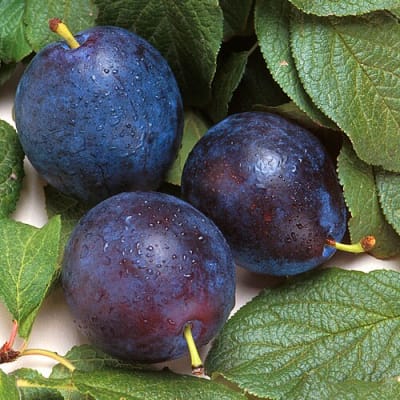
Prunus domestica Blue skin, golden yellow flesh. A relatively new plum showing promise in commercial and home orchards. Very juicy sweet yellow flesh. Clingstone. Z5.
Malus spp. Fall, blushed yellow skin, golden flesh. A new discovery! Tasty dessert apple, more flavorful than its presumed parent Wolf River. Great for fresh eating and cooking. Z4.
Full of inspiration and practical advice for gardeners and professional growers. Contains lunar and astronomical charts correlated with planting data, along with interesting articles and essays.
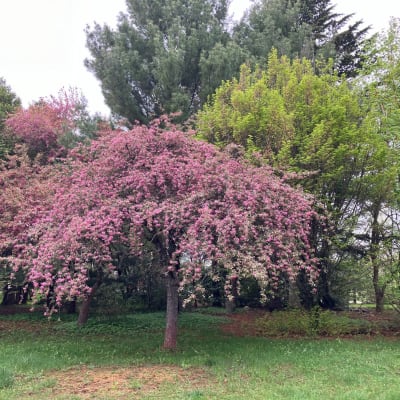
Malus spp. Bright red skin. Very rare! A true weeper, wide spreading and cascading in tufts and mounds. Single pink blossoms and bright red crabapples. Z3.
Malus spp.This is a twig for grafting. Fall, blushed yellow skin. Highly flavored dessert apple popular in the Victorian era for its complex spicy honey-nut flavor. Compact rugged tree. Z4.
Malus spp. Fall-winter, russeted yellow-green skin, greenish white flesh. Best fresh eating after storage when fruit develops its extraordinary spicy cinnamon-nutmeg flavor. Very rugged tree. Z4.
Malus spp.This is a twig for grafting. Late summer-early fall, red-striped skin. Old Scottish apple, popular in Victorian times and doing well in the Northeast. Good for baking and fresh eating. Z4.
Malus spp.This is a twig for grafting. Late summer, red-blushed skin, white flesh. Beautiful fresh-eating, juicing and cooking apple. Like a summer McIntosh. Z3.
Malus spp.This is a twig for grafting. Fall, bronze-blushed yellow skin, yellowish flesh. Tender mild juicy aromatic fruit for fresh eating and cooking. Productive and annual bearing. Z4.
Malus spp. Mid-late summer, deep purplish red skin, red-stained flesh. A fine summer dessert and cider apple. Makes delicious pink sauce. Tree is vigorous, precocious and annual bearing. Z4.
Malus spp.This is a twig for grafting. Winter, yellow skin, white flesh. Old Hudson Valley apple, late 1700s. Dense and tart off the tree, sweetening in storage. Good keeper. Z4.
Prunus armeniaca Red-speckled orange skin. Heirloom English variety now standard in the U.S. Orange fruit speckled with red is sweet, aromatic and firm yet juicy. Great for fresh eating, canning and drying. Z5.
Prunus armeniaca Midsummer, yellow-orange skin. One of the best-tasting of the Harrow series of hardy apricots, but not quite as cold tolerant as others. Drips with sweet juice. Z4/5.
Prunus armeniaca Mid-late summer, orange skin. Multipurpose sweet freestone variety is good for fresh eating, canning and drying. Most cold hardy of the Harrow series. Z4.