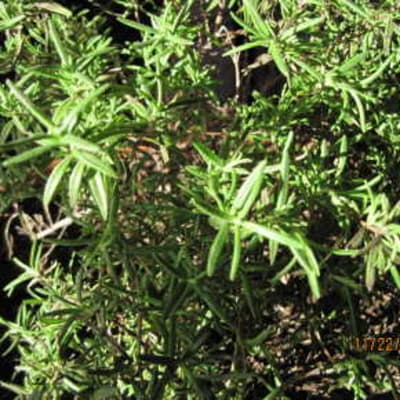
Rosmarinus officinalis Open pollinated. Beloved tender perennial growing to 3-4'. Cannot withstand temperatures below 17°, may be overwintered indoors if kept cool and moist.
Gaylussacia baccata 1-3' x 2-4'. Cousin of the blueberry. Less acidic, more mildly sweet flavor. Flowers in June, fruits in August. Full sun to part shade but fruits best in sun. Native to eastern U.S. and Canada. Z3/4.
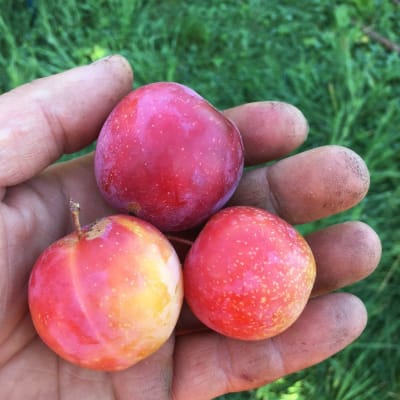
Prunus tomentosa 6-10' x same. Broad dense highly ornamental fruiting shrub blooms early. Excellent hedge and edible landscape plant. Plant two or more for pollination. Z2.
Rhus aromatica 5-6' x 6-8'. Leaves emit a pleasing aroma when crushed. Phenomenal fall colors. Adaptable and easy to transplant. Useful in erosion control. Native to eastern U.S. Z3.
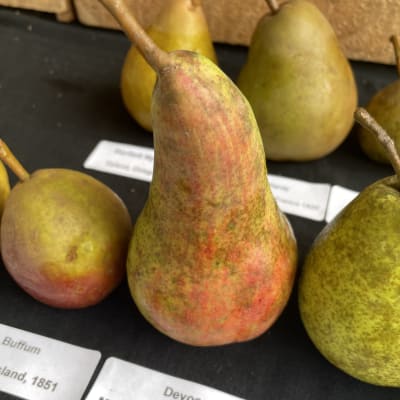
Pyrus communisThis is a twig for grafting. Summer, yellow-green skin. Medium-sized fruit with buttery aromatic juicy flesh. Grower Mark Fulford says it’s the “most like nectar” of the 40 varieties he’s grown. Keeps for a month. Z4.
Pyrus communis Late summer, red-blushed golden yellow skin, white flesh. Fine-grained buttery flesh is juicy and sweet with notes of honey and vanilla. Begins bearing at a young age. Z4.
Pyrus communis Pink-blushed yellow skin, mottled red flesh. Unusual red-fleshed pear. Mild and sweet, good fresh eating and drying. A fun addition to any orchard. Z4.
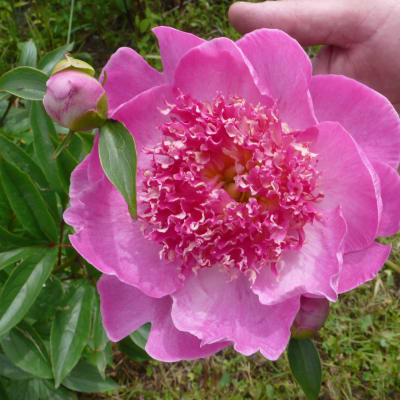
Papaver orientale 20-30" tall. Surely named after one of the three Greek Graces, Aglaea, which means something like ‘festive radiance.’ Royal Horticultural Society’s Award of Garden Merit. Z3.
Solanum tuberosum Mid-season, purple skin, white flesh. For size, style, yield and taste, it's an all-around winner. Show-stopping colorful skin and creamy rich flesh. Delicious baked, roasted or mashed.
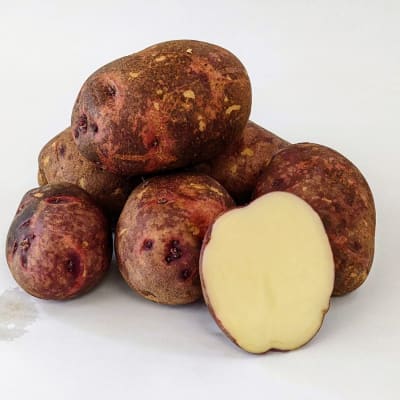
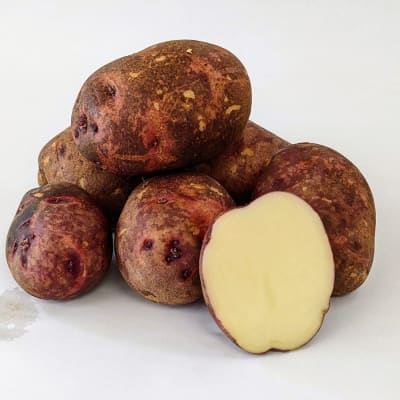
Solanum tuberosum Mid-season, pink-splashed purple skin, white flesh. For size, style, yield and taste, it's an all-around winner. Show-stopping colorful skin and creamy rich flesh. Delicious baked, roasted or mashed.
Solanum tuberosum Late season, yellow skin, yellow flesh. Buttery and decadent with a creamy texture, striking bicolor skins, and high yields of up to 28 tubers per plant!
Solanum tuberosum Late season, yellow skin, yellow flesh. Buttery and decadent with a creamy texture, striking bicolor skins, and high yields of up to 28 tubers per plant!
Raphanus sativus Bluish purple skin, purple flesh. (50 days) F-1 hybrid. Bluish-purple skin and greenish-purple shoulders. Interior white ringed deep purple with streaks and a purple sunburst core.
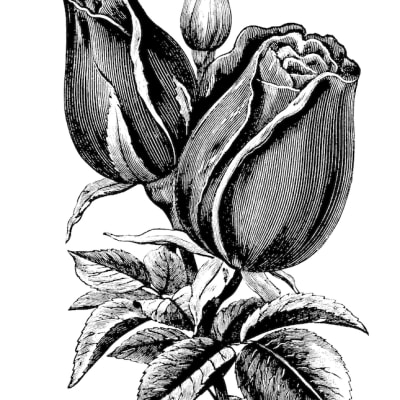
Rosa alba 5-6' x same. Classic alba variety with clusters of white fragrant highly double 2–3" blossoms, sometimes with more than 200 petals per flower! Z4.
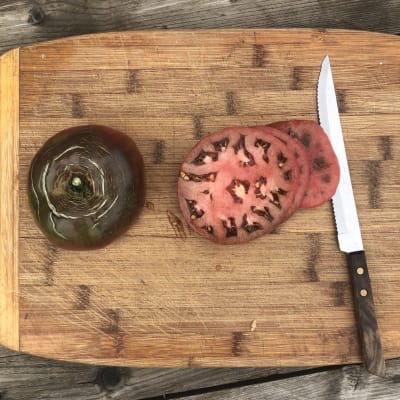
Solanum lycopersicum Coal-dusted crimson skin. (85 days) Open pollinated. Also known as True Black Brandywine. Rich and peaty flattened large heirloom beefsteak looks coal-dusted over crimson, with shadows of green, purple and brown.
Solanum lycopersicum Coal-dusted crimson skin. (85 days) Open pollinated. Also known as True Black Brandywine. Rich and peaty flattened large heirloom beefsteak looks coal-dusted over crimson, with shadows of green, purple and brown.
Brassica rapa Bright red skin, rose-blushed white flesh. (55 days) Open pollinated. Round red-skinned tennis ball-sized turnip. White flesh blushed rose pink. Compares to Scarlet Ohno Turnip.
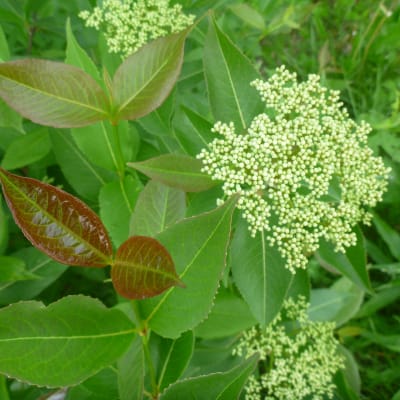
Viburnum cassinoides 5-6' × same. Dense suckering native shrub. White flowers from spring to early summer. Edible black fruit. Plant more than one for fruit. Z3.
Salix gracilistyla ‘Melanostachys’ Purple-black skin. 6-10' x same. Very attractive fast-growing plant with deep purple-black male catkins in early spring. Stems turn rich purple-black in winter. Z4.
Zinnia haageana Open pollinated. Small Mexican-style haageana zinnias in a mix of pink, orange, carmine and burgundy-red blooms tipped yellow to carmine.
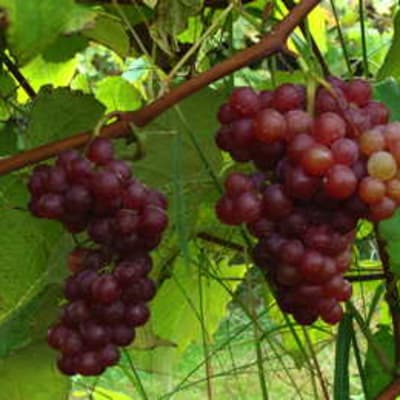
Vitis spp. Very Early. Large loose clusters of tender sweet pinkish-red grapes with a strawberry-like flavor. Good for fresh eating or juice. Stores well. Z4/5.
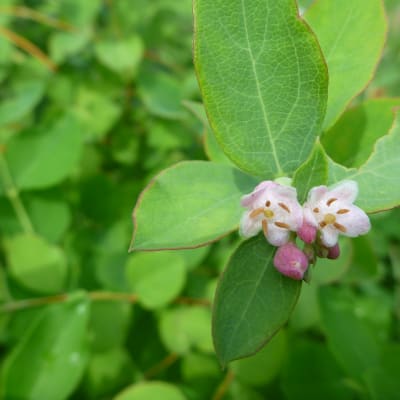
Symphoricarpos albus 5-6' x same. Wildlife and medicinal shrub native to eastern U.S. is quite beautiful all season. Berries are insipid to humans but adored by birds. Easy to grow and adaptable to most conditions. Z3.