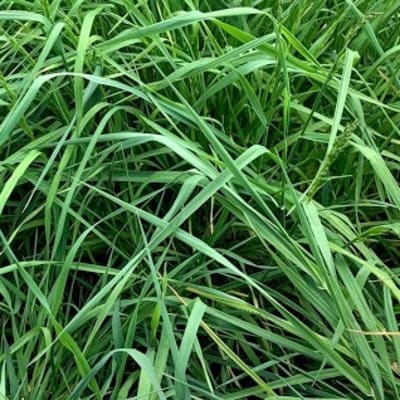
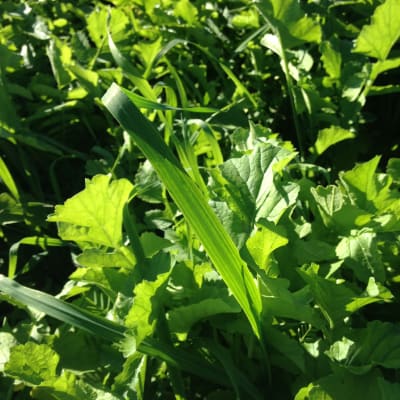
Lolium arundinaceum Perennial grass. Long-lived, versatile and low-maintenance grass good for pasture, lawn, or hay. Deep and extensive root system protects against erosion. Tolerates most adverse conditions.
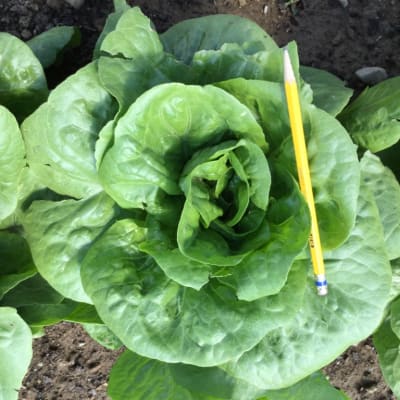
Lactuca sativa (51 days) Open pollinated. Combination of Batavian and romaine, with whorling thick succulent medium-green leaves. Tolerant of heat and rarely bitter.
Lactuca sativa (55 days) Open pollinated. German heirloom. Elegant loose softball-sized green butterhead lettuce with light brown pebbling on leaves. Excellent flavor and bolt resistance.
Lactuca sativa (46 days) Open pollinated. Folded and blistered light green leaves wrap into a tight crisp whorled 4" head that easily makes a single-serving salad.
Lactuca sativa (50 days) Open pollinated. Fast-growing crinkled glossy yellow-green leaf lettuce. Sweet flavor with a slight hint of bitter. Heat tolerant.
Lactuca sativa (60 days) Open pollinated. Slightly ruffled green leaf lettuce is tinged bronze at the tips. Extreme cold tolerance. Fall, winter and spring production.
Lactuca sativa (45 days) Open pollinated. Frilly looseleaf lettuce with deeply cut pointed leaves. A standard component of salad mixes. Recommended for overwintering and cool weather.
Thick commercial-grade polypropylene fabric that deters stubborn weeds. Will last at least a decade if protected by mulch. Allows water penetration. Very resistant to tearing.
Pisum sativum (58 days) Open pollinated. Earliest snap pea, on 2' vines. Use to start the season, and allow extra space between rows if you do not stake.
Capsicum annuum Garnet skin. (65 days) Open pollinated. Black 2.5" long conical peppers ripen to lustrous garnet. Mild, juicy, thick-walled, a little less spicy than a jalapeño; 2,000-5,000 Scovilles.
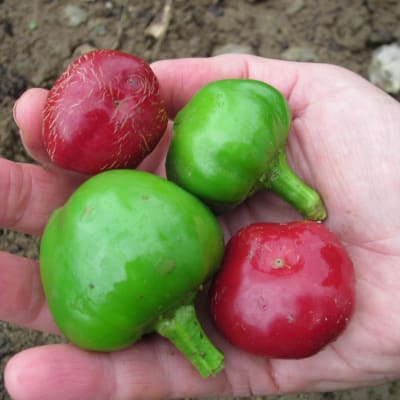
Capsicum annuum Red skin. (75 days) F-1 hybrid. Shiny green ripens to blazing red in a small strawberry-shaped cherry-type. Sweet and spicy, 2,500-5,000 Scovilles.
Capsicum annuum Red skin. (64 days green, 80 days red ripe) F-1 hybrid. Uniform glossy dark red fruits are mostly 2-lobed, flattened and tapering with a recessed stem. Known as Poblano when green.
Tiny particles of kaolin clay prevent insects from recognizing their targets, and, if they land, inhibit their access to the plant’s surface and cause irritation and excessive grooming.
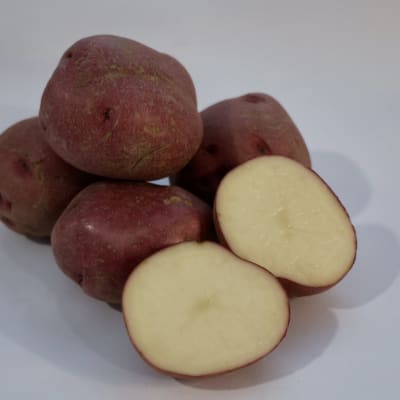
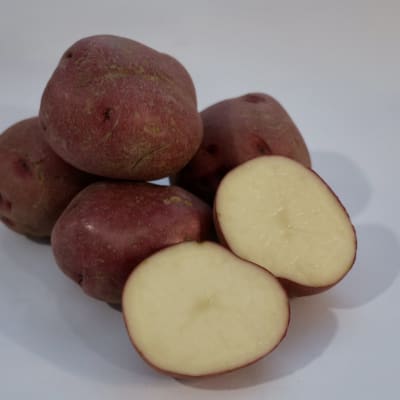
Solanum tuberosum Very early season, buff skin, white flesh. The earliest of the early. Mid-sized to large round tubers with a floury texture (good for mashing and baking). Stores quite well for such an early potato.
Solanum tuberosum Mid-season, yellow skin, yellow flesh. Low maintenance potato with heavy yields for luscious potato salads in the summer. Good storability for hearty soups all winter long. Tolerates low fertility.
Solanum tuberosum Mid-season, yellow skin, yellow flesh. Low maintenance potato with heavy yields for luscious potato salads in the summer. Good storability for hearty soups all winter long. Tolerates low fertility.
Spinacia oleracea (25 days to baby leaf, 45 days to mature) F-1 hybrid. Well suited for early spring and fall plantings. Reasonable early summer tolerance, with slow steady growth that results in a stunning high-quality winter crop.
Cucurbita moschata Light brown skin. (110 days) Open pollinated. Buff tear-drop shaped 7 lb fruit with very hard rind stores long. Delicious deep orange flesh. Seminole heirloom.
x Triticosecale Wittm. ex A. Camus [Secale × Triticum] Triticale is a hybrid of wheat and rye, and boasts many advantages over plain winter rye. This variety was selected for winter hardiness and consistently high yields of both forage and seed yields.
Trifolium pratense Short-lived perennial legume. Up to 24". Vigorous and high-yielding clover suitable for pastures, underseeding and cover-cropping. More drought-tolerant than white clover.
With annuals and biennials, grasses and legumes and broadleafs, and roots of all shapes and sizes, this blend mimics natural diversity and encourages a flourishing and balanced microbial population.
Lactuca sativa (48 days) Open pollinated. Hefty wine-red Batavian forms open rosette that folds together like a romaine at maturity. Shiny red leaves, green in the center, good for baby leaves.
A lightweight, porous and stable material made from volcanic glass. Widely used in potting mixes to improve water retention and prevent compaction. Also great for rooting cuttings.
Gently curved chrome-plated blade with non-set teeth for cleaner cuts. Comes with a sheath that can hang from your belt and secure against your leg if desired. The go-to saw for large-limb pruning.
Biochar helps your soil sequester more carbon and emit less nitrous oxide. Also provides a dream home for beneficial bacteria and fungi, while preventing essential nutrients from leaching away.
Hordeum vulgare Annual spring grain. Variety: ‘Quest.’ Suitable for cover-cropping, grain production, home brewing, or forage. Reliable, valuable feed grain for livestock.
Hordeum vulgare Annual spring grain. Truly hulless variety, which makes for quick, easy, low-tech processing. Fast-growing, and competes well with weeds. Tolerates drought and heavy soils.
Avena sativa Annual grass. Vigorous, lush foliage. Significantly more biomass production than common oats, making them superior for cover-cropping/soil-building, and for feeding livestock. Organic seed.
Secale cereale Winter annual grass. Extremely frost hardy, adaptable and competitive. For cover crop or grain. Deep extensive roots help prevent compaction and improve soil tilth. Vigorous spring regrowth.