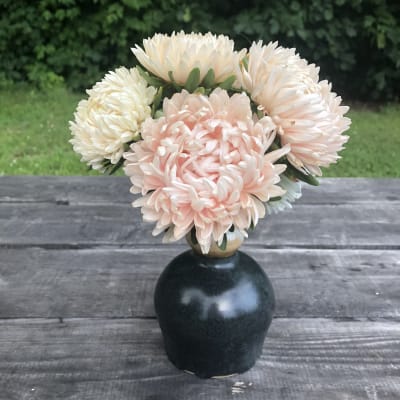
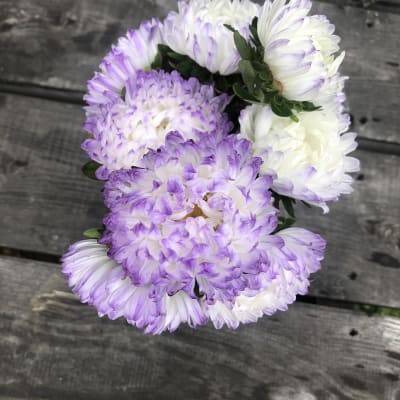
Callistephus chinensis (110 days) Open pollinated. Irresistible bicolor 2–3" peony-type blooms of iridescent white and purple. Bred for uniform height and bloom time.
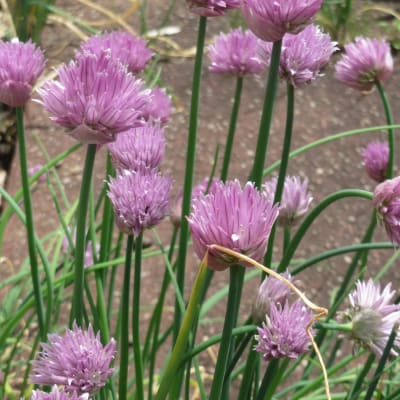
Allium schoenoprasum (80 days) Open pollinated. Hardy perennial. 1-2' dark blue-green leaves are medium-fine, long and slender. Lilac-colored flowers bloom in June and July.
Aquilegia canadensis 12-24" tall. This eastern North American native features delicate red-spurred sepals with yellow petaled skirts. Blooms late May to early June. Irresistible to hummingbirds! Z3.
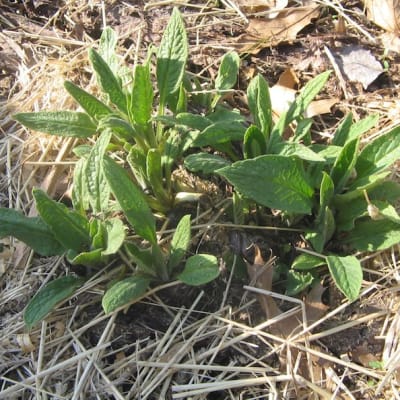
Symphytum × uplandicum 24–48" tall. Great companion plant for orchards. Excellent addition to the compost pile. Rich in silica, nitrogen, magnesium, calcium, potassium and iron. Z3.
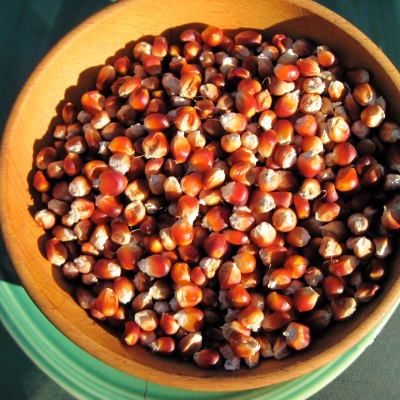
Zea mays var. rostrato (100 days) Open pollinated. Beautiful red pointy kernels are easy to shell and grind. Rich sweet corn flavor good for flour or polenta.
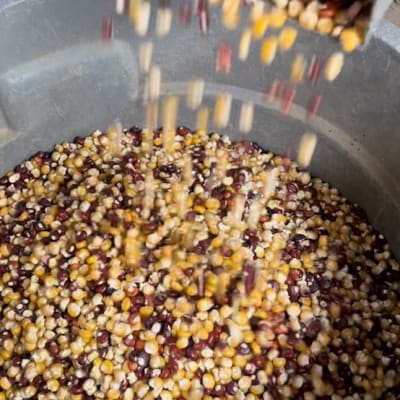
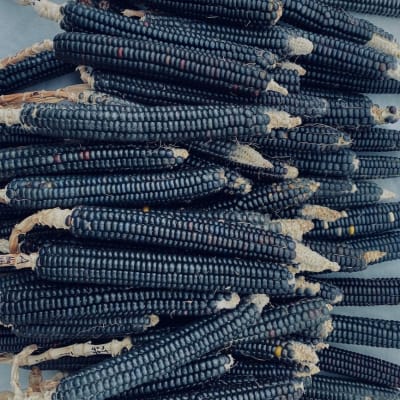
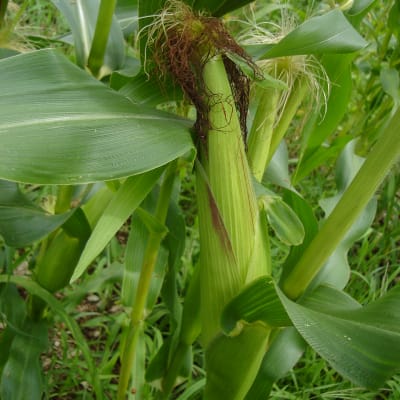
Zea mays (95 days) Open pollinated. A nutrient-dense grain that is fast maturing under harsh conditions, and stands strong for machine harvest. The soft starch makes fluffy cornbread and also binds well for Johnnycakes and tortillas.
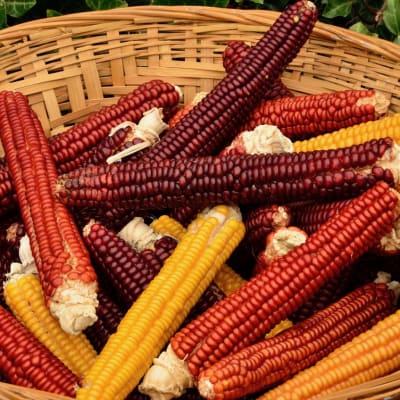
Zea mays (85 days) Open pollinated. This superior flour corn boasts hardiness, earliness and vigor. Ears are solid-colored and can be sorted for use based on kernel color: Pancake White, Parching Red, Parching Starburst and Brown Gravy.
Zea mays (72 days) Open pollinated. Bred by Fred Ashworth. 5' stalks, 6-7" yellow ears, good flavor. Harvest at milk stage; does not hold in the field. Starts well in cool soil.
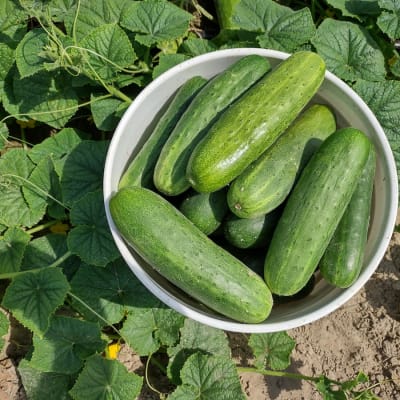
Cucumis sativus (54 days) Open pollinated. Smooth thin-skinned fruits are juicy, refreshingly cool, enjoyably mild and almost completely free of the bitterness common in American slicers.
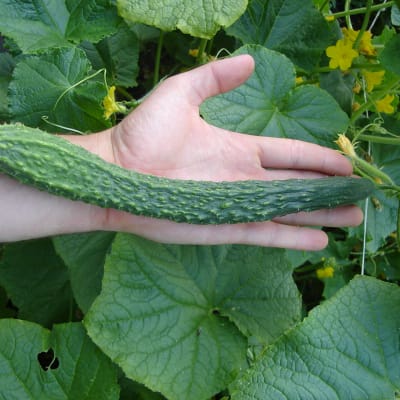
Cucumis sativus (62 days) Open pollinated. Extra-long Asian slicer. Uniform slender smooth-skinned 9-12" fruit with crisp non-bitter flesh. Excellent flavor.
Cucumis sativus (60 days) Open pollinated. Parthenocarpic pickler. Blocky, smaller than average fruit. Compact growth and small leaves. Can be grown under row cover.
Cucumis sativus (60 days) Open pollinated. Specialty Indian cuke. 4-5" fruit turn from cream to golden yellow to russet brown. All stages edible and very crisp. Vigorous.
Echinacea purpurea 3-5' tall. Spiny seedheads are a beautiful coppery yellow-brown, surrounded by a single row of reflexed lavender-purple petals. Tinctured roots boost the immune system. Z3.
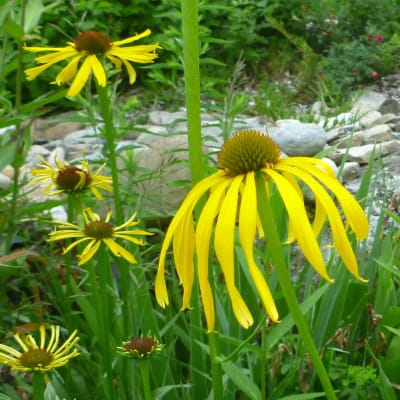
Echinacea paradoxa 3-5' tall. Bright pure-yellow flowers with drooping petals surround spiky dark brown seed cones—irresistible to gobbling goldfinches! Z3.
Solanum melongena White-streaked lavender skin. (88 days) Open pollinated. Italian heirloom. White with lavender streaking, plump, 3-4" wide by 5" long. Fruits avg 2 lb. Creamy, delicate, great for gourmet markets.
Solanum melongena Pink-lavender skin. (84 days) Open pollinated. Pink-lavender with white shoulders, pear-shaped, 4-6" wide by 6-8" long. Sweet tender white flesh. Early and productive.
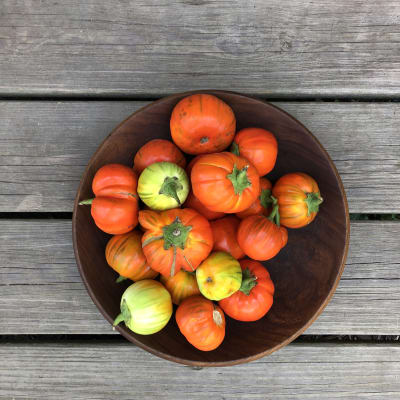
Solanum aethiopicum Orange skin. (65 days) Open pollinated. Sometimes called Ethiopian Eggplant or Garden Egg. Fruits mature to orange but are sweetest when they first turn from green to white. Great in curries and spreads.
Hordeum vulgare Annual spring grain. Variety: ‘Robust.’ Suitable for cover-cropping, grain production, home brewing, or forage. Reliable, valuable feed grain for livestock.
Hordeum vulgare Annual spring grain. Truly hulless variety, which makes for quick, easy, low-tech processing. Fast-growing, and competes well with weeds. Tolerates drought and heavy soils.
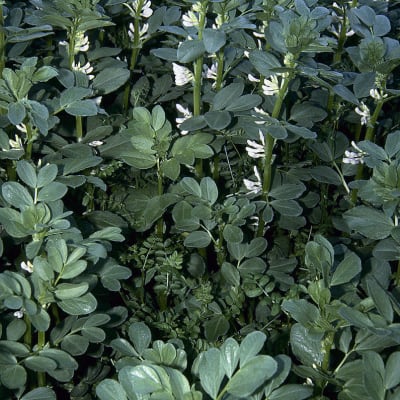
Vicia faba Annual or winter annual legume. Great for fixing nitrogen, and building large amounts of biomass. Bell beans will happily sprout in half-frozen soil, and tolerate a wide range of soil conditions.
Fagopyrum esculentum Annual broadleaf. Excellent cover crop for outcompeting summer weeds. Makes tasty flour for pancakes or baked goods. Bees like its abundant nectar.
Trifolium repens Perennial legume. 8–12" tall. Fantastic nitrogen fixer with great protein and digestibility. Tall enough to be harvested for hay, silage, and green chop. Good choice for poorly drained soil.
Raphanus sativus var. niger Broadleaf annual. Roots penetrate hardpans and loosen soil down to 30" or beyond. Takes up available soil nutrients and prevents losses to leaching or runoff. Suppresses weeds if planted thickly.
Pisum sativum var. arvense Annual legume. Also called Forage Peas. Great as weed-smothering workhorse soil builder, or a tasty and highly digestible forage. Likes cool moist conditions. Will grow in most soil types.
Lolium multiflorum Annual or winter annual grass. Extremely frost hardy. Widely adaptable. Will establish quickly in cool wet spring weather, providing a dense cover crop and outcompeting weeds. Good erosion control.
Dactylis glomerata Perennial grass. Long-lived vigorous grass. Tall leafy plants grow rapidly even in poor soils, tolerates moderately drained soils. Can be established in spring, summer, or even late winter.
Lolium perenne Short-lived perennial grass. Extremely palatable forage grass, popular in grazing mixes. Germinates quickly and grows rapidly, suppressing weeds. Holds up under heavy traffic. Good pest resistance.
Lolium arundinaceum Perennial grass. Long-lived, versatile and low-maintenance grass good for pasture, lawn, or hay. Deep and extensive root system protects against erosion. Tolerates most adverse conditions.
 Tower Chamois China Aster - OrganicSeedsunavailable, crop failure