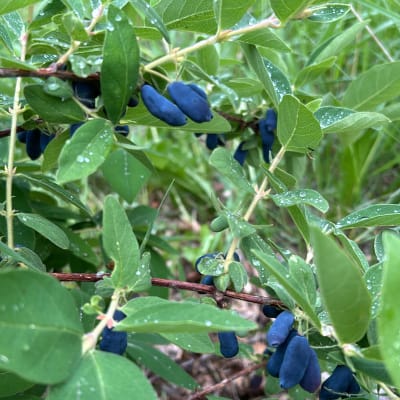
Gaylussacia baccata 1-3' x 2-4'. Cousin of the blueberry. Less acidic, more mildly sweet flavor. Flowers in June, fruits in August. Full sun to part shade but fruits best in sun. Native to eastern U.S. and Canada. Z3/4.
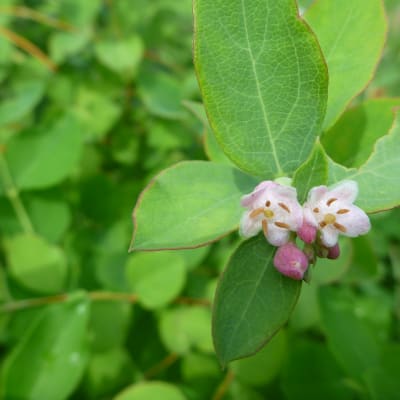
Symphoricarpos albus 5-6' x same. Wildlife and medicinal shrub native to eastern U.S. is quite beautiful all season. Berries are insipid to humans but adored by birds. Easy to grow and adaptable to most conditions. Z3.
Natural phosphorus source. Adequate phosphorus results in more vigorous early root formation, better flower and seed production, better growth in cold temperatures, and better water use efficiency.
Malus spp.This is a twig for grafting. Winter, red skin. Classic all-purpose Vermont heirloom. Large dark red striped fruit. Mild subacid flavor, moderately juicy and crisp. Z3.
Malus spp. Winter, deep purple skin, greenish white flesh. Uniquely dark fruit with well-balanced flavor. Excellent pies and cider. Maine heirloom. Best eating late Dec. to March. Great keeper. Z4.
Malus spp.This is a twig for grafting. Winter, deep purple skin. Uniquely dark fruit with well-balanced flavor. Excellent pies and cider. Maine heirloom. Best eating late Dec. to March. Great keeper. Z4.
Malus spp.This is a twig for grafting. Late summer, red-blushed skin, white flesh. Beautiful fresh-eating, juicing and cooking apple. Like a summer McIntosh. Z3.
Dicentra formosa 14-20" tall. Heart-shaped blossoms in late spring. With good moisture, the lacy foliage look nice all season. Full to dappled shade. Z3.
Eschscholzia californica (60 days) Open pollinated. Cheery cup-shaped silky blooms range from light orange to deep rust, opening their faces to the sun each morning and closing up again at night.
This design was featured on some staff-only apparel recently, and it was so well-loved that we decided to release it to the wider world on these 100% certified-organic cotton shirts.
Cornus alternifolia 20' x 30-35'. Small tree or large multi-stemmed shrub with tiers of horizontal branches and fragrant white 2-3" flower clusters. Z3.
Cornus amomum 8-12' x same. Large rounded long-limbed shrub. Effective for erosion control, wildlife or pollinator habitat. Maroon bark visible in winter. Suckers and spreads. Native to eastern U.S. Z4.
Cichorium intybus Perennial broadleaf, up to 18". Very high digestibility. Protein levels up to 50% higher than alfalfa. Stands may live 5 years or longer, but it’s also valuable for pasture or green chop.
Lupinus mutabilis (130 days, longer to seed) Open pollinated. “Lost” crop of the Incas. Wild-looking 3' lupine native to the high Andes. Attractive, many-colored flowers. Protein-rich seeds.
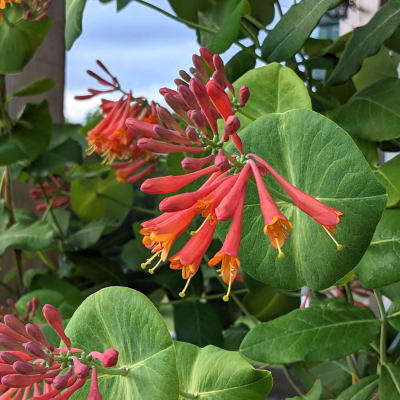
Lonicera × brownii 10-20'. Tall climbing honeysuckle. Non-invasive! Attractive to pollinators, especially hummingbirds. Species is native to North America. Z3.
Lactuca sativa (51 days) Open pollinated. Best of the speckled types. Dark green ruffled leaves mottled with maroon-red spots. Sweet juicy veins, blushed pink heart. Poor heat tolerance.
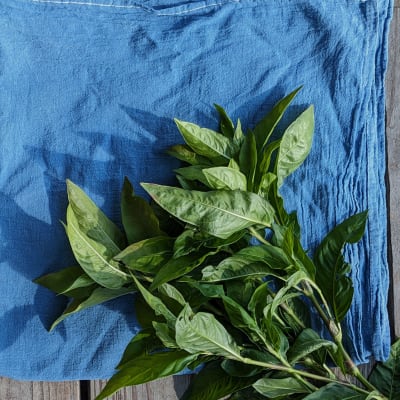
Persicaria tinctoria Open pollinated. Japanese indigo preferred by dyers in Maine. A tender annual, indigo thrives in fertile soil and likes heat and humidity.
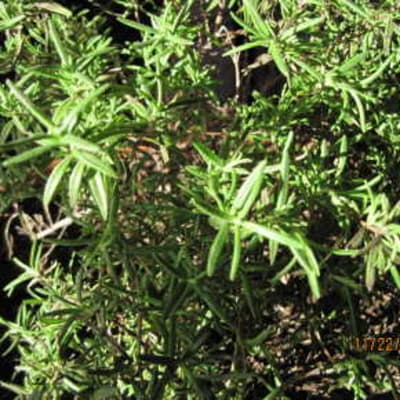
Rosmarinus officinalis Open pollinated. Beloved tender perennial growing to 3-4'. Cannot withstand temperatures below 17°, may be overwintered indoors if kept cool and moist.
Lindera benzoin 6-12' x 8-12'. Large rounded multi-stemmed fragrant native shrub suited to moist or wet areas. Soft-yellow flowers. Glossy red edible berries. Z5.
Rhus aromatica 5-6' x 6-8'. Leaves emit a pleasing aroma when crushed. Phenomenal fall colors. Adaptable and easy to transplant. Useful in erosion control. Native to eastern U.S. Z3.
Viola × wittrockiana Open pollinated. Perennial to Zone 6. Heart-shaped leaves on mounded 4-6" plants covered with 3" mostly bicolor flowers, with darker whiskers and yellow eyes.
Can be used to monitor the presence and level of insect pests, or as a control measure (on small plantings). For aphids, cucumber beetles, fungus gnats, corn root worms or whiteflies.
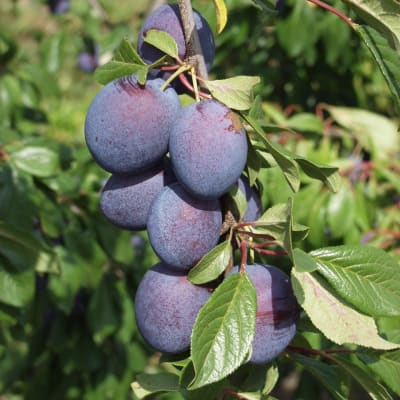
Prunus Late summer, dark bluish purple skin, greenish amber flesh. Famous in Bosnia and Herzegovina for making sweet and creamy preserves, and fermenting into brandy. Z4.
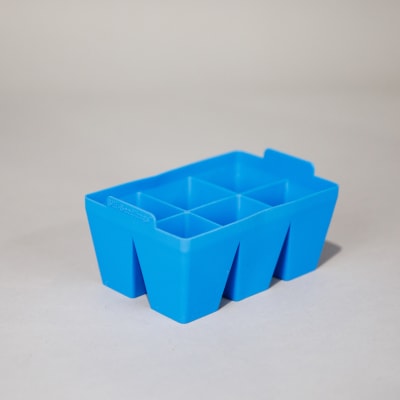
Tired of cheap plastic six-packs that fade and crack? Then invest in these crush-proof break-proof melt-proof freeze-proof seedling containers made of rugged BPA-free FDA-approved silicone.
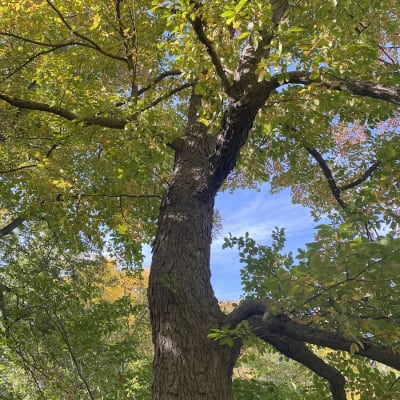
Nyssa sylvatica 40-85' x 20-30'. Medium-sized deciduous tree produces fruits that feed migrating birds. Vibrant fall colors. Can live up to 650 years! Z4.
Spinacia oleracea (45 days) Open pollinated. Recommended for late fall, winter greenhouse, or overwintering under mulch. Large semi-savoyed medium-green spinach selected for cold hardiness.
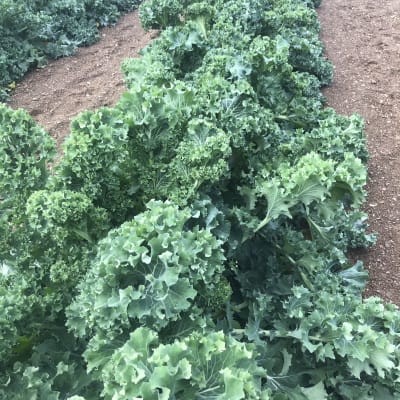
 Beedy’s Camden Curly Kale - OrganicSeedsunavailable,