Phaseolus vulgaris (70 days) Open pollinated. Beautiful 6-7" green pods with purple streaking. Tan seed with dark stripes. Also known as Preacher Bean.
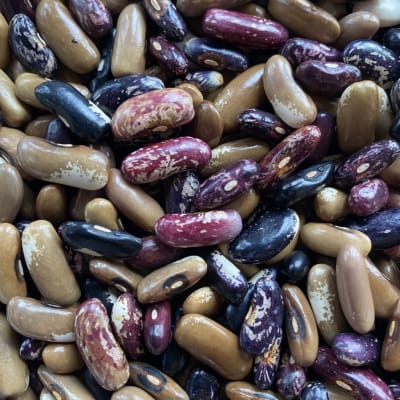
Phaseolus vulgaris (60 days) Open pollinated. Dubbed “weirdo beans,” by the student seed keepers at Troy Howard Middle School, these glorious mutts spin out a ragtag rainbow of patterns, habits and ancestral forms.
A poignant and galvanizing collection of essays and conversations with respected Black leaders, brilliantly woven together by Leah Penniman of Soul Fire Farm, author of Farming While Black.
An approachable botany textbook and herbal field guide to North American plants with colorful illustrations on nearly every page. Regularly updated by the author since its release in 1996.
Filled with clear how-to and how-not-to instructions, along with useful illustrations and laugh-out-loud humor, Turnbull walks through the basics and delves into specifics for more than 150 plants.
A gift to a world disoriented by ecological collapse and haunted by the question of what to do, Eisenstein’s book gets to the heart of the predicament of how to heal our planetary wounds.
A standout among the many no-till books. Frost provides a deep look into the living nature of soil while broadening our practical understanding of how to grow crops in a regenerative way.
With plenty of scientific detail and practical knowledge about a variety of regenerative practices, Phillips reveals how mycorrhizal fungi are deeply embedded in healthy soils and plant physiology.
If thoughts of crisp carrots in March set your mouth watering, you'll love this well-illustrated tour of root cellar designs, featuring varietal selections, best storage conditions, and recipes.
Brassica oleracea (botrytis group) (90 days) F-1 hybrid. Late-summer to fall, delivers a dark green semi-domed 6-8" head with medium-small tight bead. Abundant side shoots, good heat tolerance.
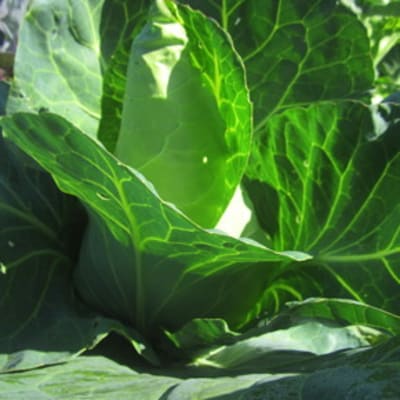
Brassica oleracea (capitata group) (75 days) Open pollinated. Distinctive violet-rose color. Small to medium 3-5 lb heads can be up to 7" across on a compact plant.
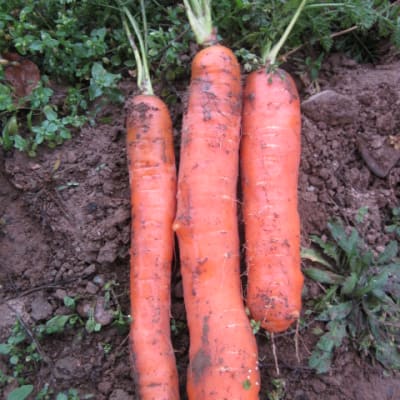
Daucus carota (55 days) Open pollinated. Early coreless translucent pinkish-orange blunt-tip roots. Mild sweetness boosted by “carrot perfume.” Upright tops good for bunching.
Daucus carota (55 days) F-1 hybrid. Blunt Nantes-type 7-8" orange carrot with strong green tops and a medium core. Snappy, sweet and juicy. Use fresh or store.
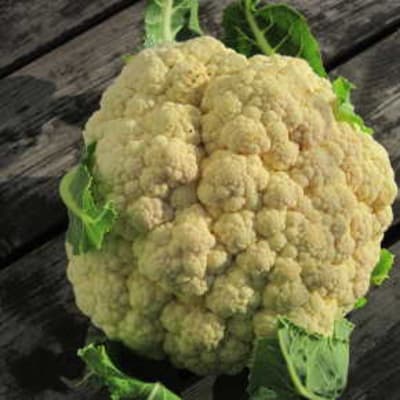
Brassica oleracea (botrytis group) (93 days) F-1 hybrid. Very large upright plants set dense 2-4 lb attractive white domed heads. Tender with very good flavor.
Apium graveolens (80 days) Open pollinated. Thick crisp stalks have rich flavor, not harsh even in less-than-ideal conditions. Ventura must receive adequate, even moisture for best growth.
Slipped over your forearms and gloves, the heavy close-woven canvas protects you from the cuts of rose thorns, thistle spines and other prickly peril, without restricting arm motion or circulation.
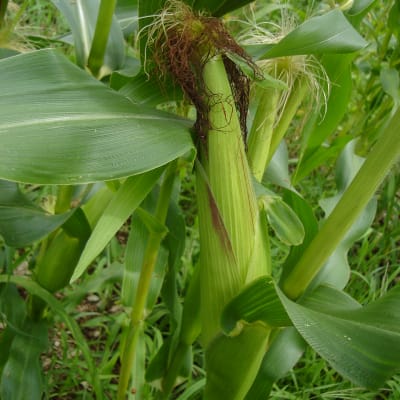
Zea mays (68 days) Synergistic F-1 hybrid. Early fancy tip-filled 8" ears. Quality and flavor like a late corn. Good cold-soil emergence. Often a single ear per stalk.
Zea mays (75 days) Supersweet F-1 hybrid. Bicolor, 8" ears, 16-18 rows of crisp but tender kernels. Holding quality in the field and after harvest is superb.
Zea mays (72 days) Open pollinated. Bred by Fred Ashworth. 5' stalks, 6-7" yellow ears, good flavor. Harvest at milk stage; does not hold in the field. Starts well in cool soil.
For building tunnels with slitted plastic or fabric row covers. Shipped as straight 74" flexible rods of 10-gauge wire that can be stuck in the ground and bent into your desired hoop width.
Cucumis sativus (58 days) Open pollinated. Slicer from the same line as Marketmore 76. Fruit is slimmer and darker, with improved yield and disease resistance.
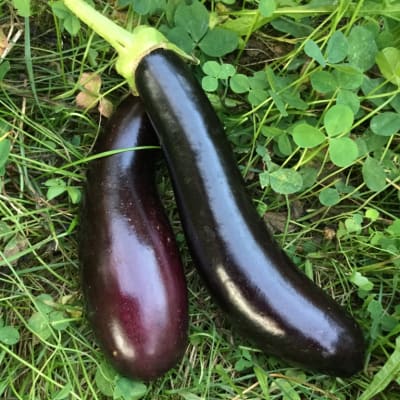
Solanum melongena Dark purple skin. (60 days) F-1 hybrid. This long 7x2" dark purple Italian “sword” is great for cooks who like uniform slices. Flavor is smooth and mild with no bitterness.
Lolium multiflorum Annual or winter annual grass. Extremely frost hardy. Widely adaptable. Will establish quickly in cool wet spring weather, providing a dense cover crop and outcompeting weeds. Good erosion control.
Lolium multiflorum Annual or winter annual grass. Extremely frost hardy. Widely adaptable. Will establish quickly in cool wet spring weather, providing a dense cover crop and outcompeting weeds. Good erosion control.
Diverse multispecies clover-heavy mix is great as a soil-building living mulch under tall-growing competitive crops, like cannabis. Suitable in raised beds, containers and high tunnels.
This dynamic cover crop duo has become a favorite of growers who value its vigorous growth and soil-building prowess, along with the assurance that it will winterkill up North.
Brassica juncea or Sinapis alba Annual broadleaf. Great cover crop to retain nutrients, suppress weeds and improve water penetration. Breaks down into compounds toxic to nematodes and soil-borne pathogens.