Castanea pumila 15-30' x 10-20'. Once an important food for indigenous peoples. Somewhat resistant to chestnut blight. Native to much of central/eastern U.S. Z4.
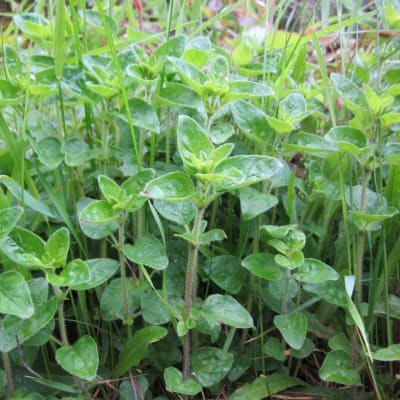
Origanum vulgare 18-20" tall. Fragrant green and purple leaves used for culinary purposes. Given plenty space in full sun, it sprawls and is attractive to pollinators. Z4.
Levisticum officinale Open pollinated. Perennial. Umbelliferous, attracts beneficial insects, grows 3-6' and makes a dramatic architectural element in a decorative border.
Leonurus cardiaca Open pollinated. Perennial 2–4' plant with dull green leaves and tiny white to purple blooms. Bees love the flowering tops, which are used for tea or herbal tincture.
Stevia rebaudiana (100-120 days) Open pollinated. Stevia is several hundred times sweeter than sugar, and is used fresh, dried, powdered or in a liquid as a sugar substitute.
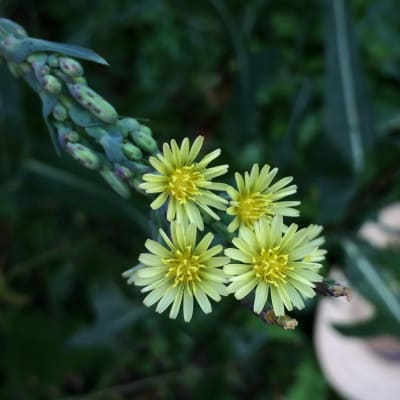
Lactuca serriola (60 days) Open pollinated. Readily grows as a spring-sown annual.Young leaves are edible, and the plant can be milked for its medicinal latex.
Cornus mas 20-25' x 15-20'. Bright red pear-shaped edible fruit. Each seedling will be unique. Will pollinate each other and any named cornelian cherry cultivar. Z4/5.
Prunus tomentosa 6-10' x same. Broad dense highly ornamental fruiting shrub blooms early. Excellent hedge and edible landscape plant. Plant two or more for pollination. Z2.
Myrica pensylvanica Waxy blue skin. 5-10' x same. A common sight along Maine’s rocky shores. Fragrant glossy deep green leaves and small waxy berries. Fixes nitrogen and feeds wildlife. Z2.
Ceanothus americanus Small compact shrub fixes nitrogen and attracts pollinators. Leaves historically used as tea and medicine. Grows in poor soils. Native to N. America. Z4.
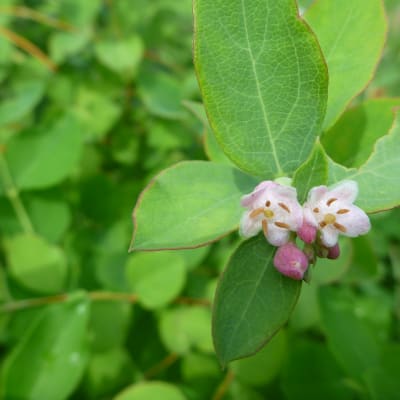
Symphoricarpos albus 5-6' x same. Wildlife and medicinal shrub native to eastern U.S. is quite beautiful all season. Berries are insipid to humans but adored by birds. Easy to grow and adaptable to most conditions. Z3.
Rhus aromatica 5-6' x 6-8'. Leaves emit a pleasing aroma when crushed. Phenomenal fall colors. Adaptable and easy to transplant. Useful in erosion control. Native to eastern U.S. Z3.
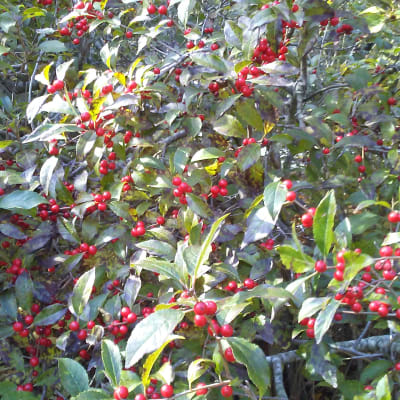
Ilex verticillata Bright-red berries stand out through the winter, providing late-spring forage for birds. A staple of the Maine landscape. Unsexed seedlings, plant several for berries. Z4.
Pyrus communis Fall, greenish yellow skin, yellowish flesh. A superior dessert pear with sweet very juicy flesh. Better wear a bib. Highly ornamental tree. Z4.
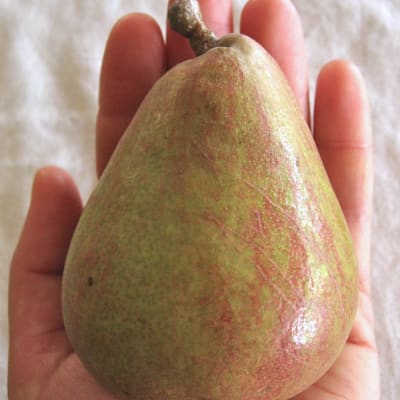
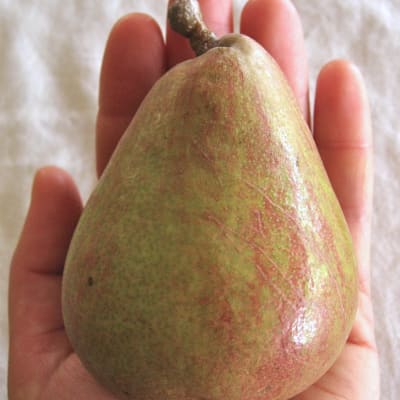
Pyrus communis Late summer, russeted greenish yellow skin. Maybe the best-tasting pear ever. Rich, melting, buttery, juicy, sugary, tender, highly perfumed and aromatic with almost no grit cells. Excellent fire blight resistance. Z4.
Pyrus communisThis is a twig for grafting. Late summer, russeted greenish yellow skin. Maybe the best-tasting pear ever. Rich, melting, buttery, juicy, sugary, tender, highly perfumed and aromatic with almost no grit cells. Excellent fire blight resistance. Z4.
Paeonia lactiflora 24–36" tall. A symphony of coral, peach, melon and pink shades in semi-double form. Very fragrant and packed with petals. Early. Z3.
Diospyros virginiana 35-60' x 20-35'. Medium-sized native tree produces edible orange fruit used in pies, jams and jelly. May not always ripen north of Boston. Plant two or more for fruit. Z4/5.
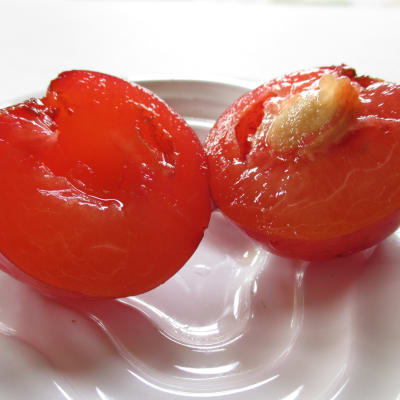
Prunus spp. Midsummer, red-orange skin, dark pinkish red flesh. Delicious medium-sized fruit with soft sweet pinkish flesh. Glossy ornamental red foliage all summer long. May be self-pollinating. Z4.
An environmentally friendly alternative to plastic clamshells, these boxes are recyclable and compostable cardboard and they ship flat, so they are more fuel-efficient to move around.
An environmentally friendly alternative to plastic clamshells, these boxes are recyclable and compostable cardboard and they ship flat, so they are more fuel-efficient to move around.
An environmentally friendly alternative to plastic clamshells, these boxes are recyclable and compostable cardboard and they ship flat, so they are more fuel-efficient to move around.
An environmentally friendly alternative to plastic clamshells, these boxes are recyclable and compostable cardboard and they ship flat, so they are more fuel-efficient to move around.
Solanum tuberosum Early to mid-season, blue skin, yellow flesh. Round sapphire exterior creates a striking contrast with stunning gold flesh. High yielding. Also known as Peter Wilcox.
Solanum tuberosum Early to mid-season, red skin, white flesh. Rounded oblong tubers with pinkish-red and slightly netted skin. Shallow eyes for easy peeling. Late blight resistant.
Solanum tuberosum Early to mid-season, red skin, white flesh. Red skin, white flesh. Rounded oblong tubers with pinkish-red and slightly netted skin. Shallow eyes for easy peeling. Matures later than most earlies.
Solanum tuberosum Mid-season, red skin, white flesh. Excellent dormancy retention in winter storage. Order your extra crates now to accommodate staggering yields to come!
Solanum tuberosum Mid-season, red skin, white flesh. Super-sweet moist flesh. Excellent dormancy retention in winter storage. Order your extra crates now to accommodate staggering yields to come!
Solanum tuberosum Late season, buff skin, white flesh. Released in 1932 by the USDA and Maine, it is the standard to which all storage potatoes are compared. Very well suited to a Maine growing season.
Solanum tuberosum Mid-season, buff skin, white flesh. The quintessential Maine potato, with large uniform tubers that store extremely well. High yielding, adaptable and late-blight resistant.
Solanum tuberosum Mid-season, buff skin, white flesh. The quintessential Maine potato, with large uniform tubers that store extremely well. High yielding and adaptable to various soil and growing conditions.
Solanum tuberosum Mid-season, yellow skin, yellow flesh. These potatoes are rarely uniform but have that charming old-fashioned potato look. Firm and waxy, with flavor loved by all.
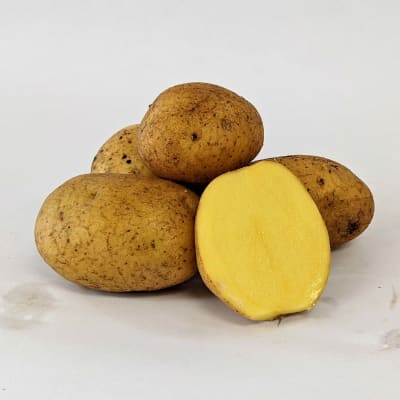
Solanum tuberosum Late season, lightly russeted yellow skin, yellow flesh. These buttery tubers are hands-down the best-tasting roasting potato in the winter. High yields, good storage qualities.
Solanum tuberosum Late season, yellow skin, yellow flesh. These buttery tubers are hands-down the best-tasting roasting potato in the winter. High yields, good storage qualities.
Cydonia oblonga Golden yellow skin, light yellow flesh. 10-25'. Hardy Russian quince bred for disease resistance. For jellies and cider, stews and marmalades. Citrusy, fragrant with an orangey-pink hue. Z4/5.
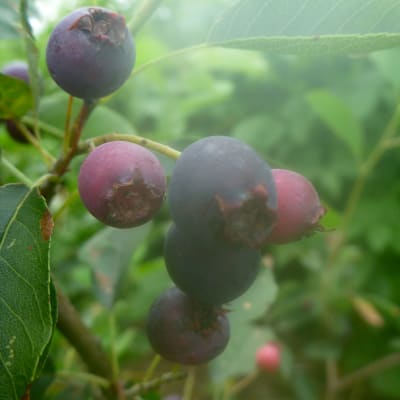
Amelanchier stolonifera 3-5' x same. Berries are small but very flavorful—perfect combo of sweet and tangy. Would do well in a rock garden, hedge or thicket. Native. Z4.
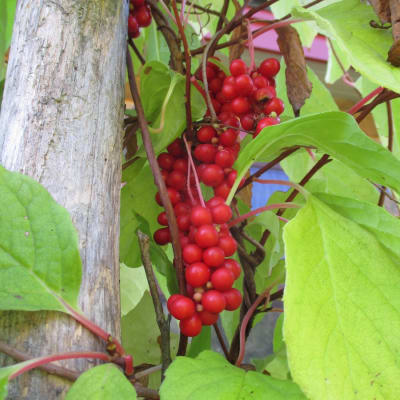
Schisandra chinensis 20' or taller. Ornamental vines produce flavorful medicinal berries. Adaptogenic fruit used to build the immune system and rejuvenate the body. Z4.