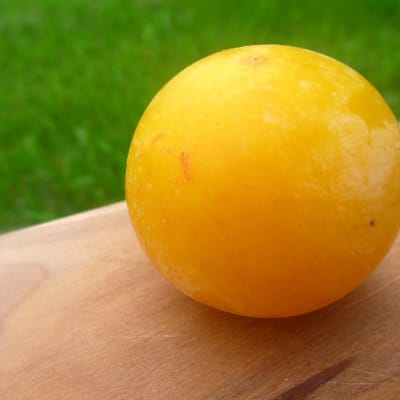
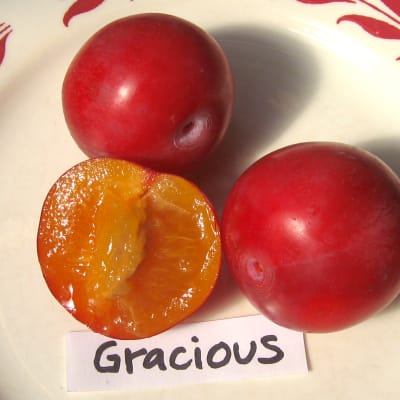
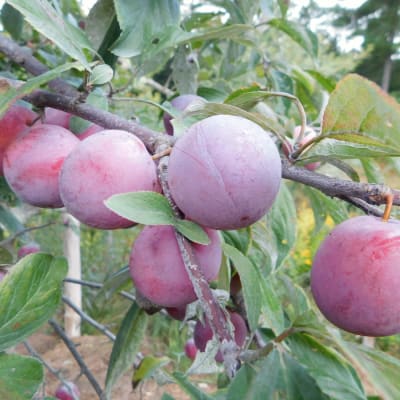
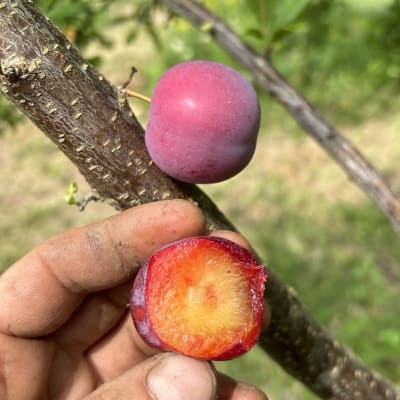
Prunus americana 15-20' The best pollinator for hybrid plums. Very decent red, yellow and orange 1" plums, suitable for fresh eating, canning and freezing. Z3.
Prunus domestica Summer, dark blue skin, golden flesh. Sweet balanced firm freestone flesh, with a smaller pit than other European plums. Ripens about 3 weeks earlier than Stanley. Z4.
Prunus Early summer, reddish purple skin, yellow flesh. One of the first European plums to fruit in the season, and one of the hardiest varieties out there. Z3.
Prunus spp. Mid-late summer, yellowish green skin, yellow flesh. Small semi-freestone plum has tender juicy melting flesh with rich flavor. Often considered the best dessert plum. Z4.
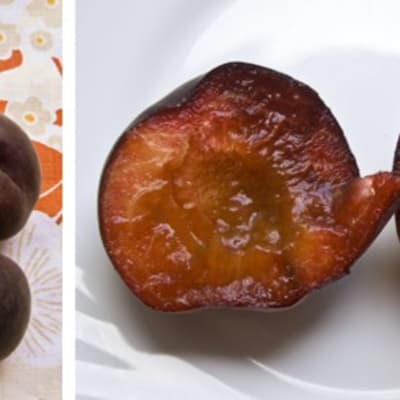
Prunus spp. Late summer, red-purple skin, red-purple flesh. Meaty, mild and rich with no astringency. Clingstone. One of the most delicious plums! Z4/5.
Prunus spp Midsummer, fuchsia skin, golden flesh. One of the most widely grown Japanese plums in Japan and Korea. Large oblong fruit ripens to a majestic fuchsia, with sweet-tart golden flesh. Clingstone. Z4.
Prunus domestica Late summer, blue skin, golden yellow flesh. A relatively new plum showing promise in commercial and home orchards. Very juicy sweet yellow flesh. Clingstone. Z5.
Prunus spp. Late summer, dark purple skin, greenish yellow flesh. Freestone dessert and processing prune plum. Similar to Stanley, with improved productivity and disease resistance. Z4.
Prunus spp. Midsummer, red-orange skin, dark pinkish red flesh. Delicious medium-sized fruit with soft sweet flesh. Glossy ornamental red foliage all summer long. May be self-pollinating. Z4.
Prunus spp. Late summer, yellow skin, yellow flesh. Roundish tender thin-skinned plum sometimes blushed with a little pink. Tender juicy flesh. Freestone. Z3/4.
Prunus spp. Late summer, rosy purplish red skin, yellow flesh. Sweet, meaty and flavorful. Somewhat freestone. Extremely vigorous tree. A great pollinator for other hybrids. Z3.
Prunus salicina × Prunus cerasifera Mid-late summer, dark red skin, deep red flesh. Edible and ornamental! Freestone are juicy and sweet. Semi-dwarf trees feature abundant pick blossoms and purple leaves. Z4.
Prunus nigra Late summer, yellow flesh. Yellow flesh is sweet and juicy, good for eating right off the tree, in jams, chutney, tarts or infused in vodka! Tree is upright, spreading and a prolific annual bearer. Very cold hardy. Z3.
Prunus spp. Mid-late summer, red-purple skin, yellow-orange flesh. Large plums with translucent tart flesh. Clingstone. Good fresh eating or canning. Bears reliably. Z3.
Prunus spp. Midsummer, dull red skin, golden yellow flesh. Firm sweet juicy semi-freestone flesh, very good for eating and cooking. Long ripening and picking season. Z3.
Prunus Late summer, dark bluish purple skin, greenish amber flesh. Famous in Bosnia and Herzegovina for making sweet and creamy preserves, and fermenting into brandy. Z4.
Prunus domestica Fall, dark blue skin, golden yellow flesh. Firm semi-freestone fruit is delicious for fresh eating. Large fruit and heavy annual crops. Z4.
Prunus spp. Late summer, red skin, yellow flesh. Rich juicy sweet flesh is very firm and meaty but tender. Tastes like an apricot. Recommended for cooking and fresh eating. Rare in the trade. Z3.
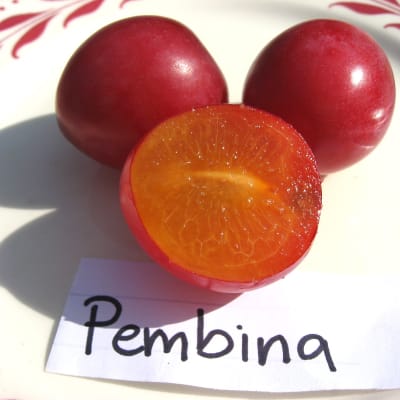
Prunus spp. Early summer, bright red skin, dark golden orange flesh. Firm and apricot-flavored flesh. Partially freestone. One of the first hybrids to ripen in summer. Z3/4.
Prunus spp. Midsummer, light yellow skin, light yellow flesh. Sweet chin-dribbling translucent flesh is so juicy it might soak your shirt. Broadly spreading picturesque tree tops off at only 10 or 12'. Z5.
Raphanus sativus Plum skin, white flesh. (26 days) Open pollinated. Popular plum-colored ping pong ball-sized radish with crisp white flesh. Tolerant to culture under row cover.
Solanum lycopersicum Blood red skin. (82 days) Open pollinated. Blemish-free blood-red nippled 2 oz plums are solid but moist, perfect in salads and sandwiches. Gorgeous healthy plants produce great yields.
Prunus × dasycarpa Summer, deep reddish purple skin, crimson orange flesh. Cross between apricot and myrobalan plum. Rare. Makes flavorful dried fruit that rivals dried mango. Tangy, sweet, satisfying. Z6; worth trialing in Z4/5.
Malus spp. Late summer, purple-blushed red skin. Fresh-eating crab about the size of a small plum. Tender, crisp, juicy and tart. Good in sauce. Highly scab resistant. Z2.
Malus spp.This is a twig for grafting. Late summer, purple-blushed red skin. Small fresh-eating crab about the size of a small plum. Tender, crisp, juicy and tart. Not sweet. Good in sauce. Highly scab resistant. Z2.
Lactuca sativa (48 days) Open pollinated. Compact tight uniform heads form upright rosettes for a clean market and salad harvest. Pebbled leaves shaded red and light plum on a green base.
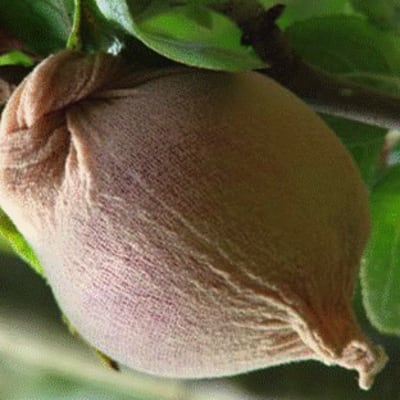
Stretchable nylon sleeves prevent damage to tree fruits from apple maggots, codling moths and plum curculio. Heavy weave and reinforced seam. Reusable and made in the USA.
Solanum lycopersicum Red skin. (60 days) F-1 hybrid. Glossy red plum-shaped 1-2 oz grape tomato. Prolific, crack-resistant, versatile: use them fresh, dried, stewed, sauced. Sweet and tangy.
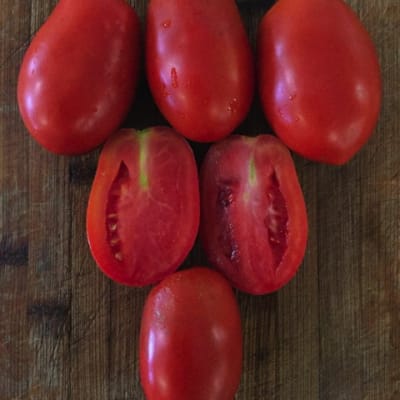
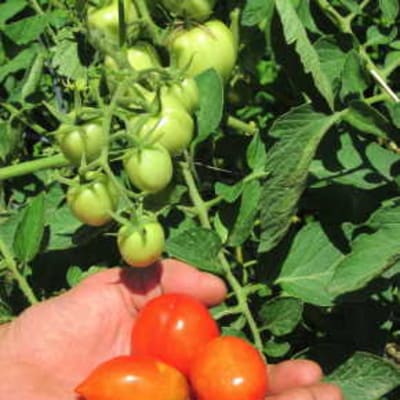
Solanum lycopersicum Red skin. (68 days) Open pollinated. Red 2.5-3 oz plum tomato. Firm fruits amazingly early. Small loaded plants with clean fruits.
Solanum lycopersicum Pinkish red skin. (65 days) Open pollinated. This large elongated 3–6" pinkish plum tomato was a winner in our “paste” test! Very flavorful, sweet d and meaty.