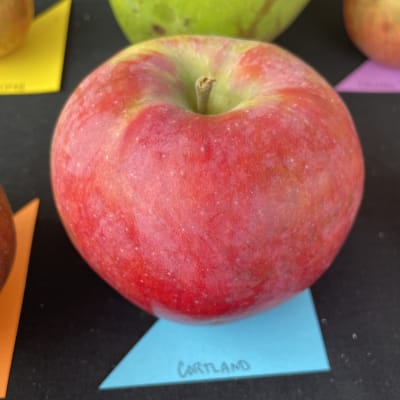
Malus spp. Early fall. Medium bittersweet cider apple. Sweet, crisp and juicy. Soft, astringent, tannin. Useful for its early ripening. Midseason bloomer. Z4.
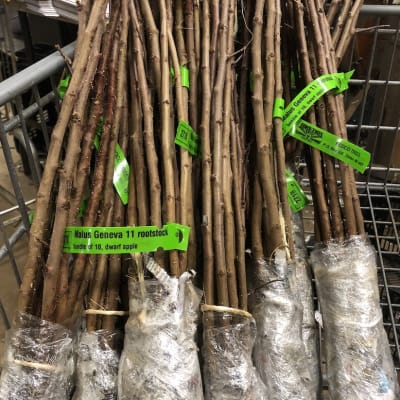
Malus spp.This is a twig for grafting. Early fall, red-striped skin, white flesh. Medium bittersweet cider apple. Sweet, crisp and juicy. Soft, astringent, tannin. Useful for its early ripening. Midseason bloomer. Z4.
Malus spp.This is a twig for grafting. Fall, russeted yellowy-green skin. Large beautiful bittersweet cider apple. Not for eating fresh. Blooms midseason. Z4.
Malus spp.This is a twig for grafting. Mid-late fall, yellow skin, yellow flesh. Medium-small vintage cider apple. Rich firm dry yellow flesh. Famous cider said to be better than champagne! Z4.
Malus spp. Fall, russeted red skin. Bittersharp cider apple high in tannin and acidity. Makes a full-bodied vintage cider with nice blend of acid, tannins and sugar. Decent fresh-eating. Z4.
Malus spp.This is a twig for grafting. Fall, russeted red skin. Medium-sized bittersharp cider apple. Full-bodied vintage cider with nice blend of acid, tannins and sugar. Decent fresh-eating. Z4.
Malus spp. Fall. Bittersharp ancient English cider apple discovered around 1600 in the Forest of Dean. The flesh has a peculiar flavor combo of sharp, astringent and sweet. Blooms midseason. Z4.
Malus spp. Fall, dark red skin, red flesh. Bittersharp cider apple. Among the best red-fleshed cultivars. Prized for its size, vigor, disease resistance and deep red juice. Z4.
Malus spp. Late fall. Bittersharp cider apple with lots of sugar, bitterness and acidity. Good candidate for a single varietal. Highly disease resistant, immune to scab and mildew. Long midseason bloom time. Z4.
Malus spp. Fall. Full bittersweet cider apple. Sweet, woolly textured and astringent. Adds a powerful and unique taste to cider; best for blending. A true spitter! Z4.
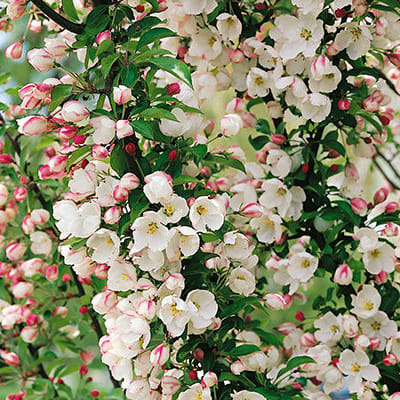
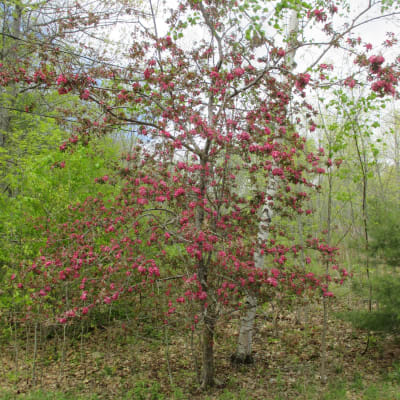
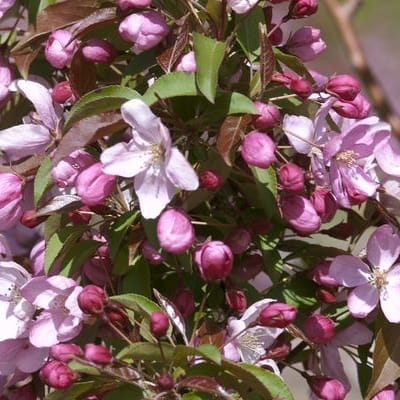
Malus spp. Ornamental flowering crabapple with beautiful rose-like blossoms and bitter green fruit. Very high in tannin. Great for cidermakers! Blooms late. Z4.
Malus spp. Purple-red skin. Classic culinary crab. Still found in old Maine dooryards. Apricot-pink buds, large fragrant pure white single flowers. Great for canning, pickling, delicious sauce and flavorful ruby-red jelly. Z2.
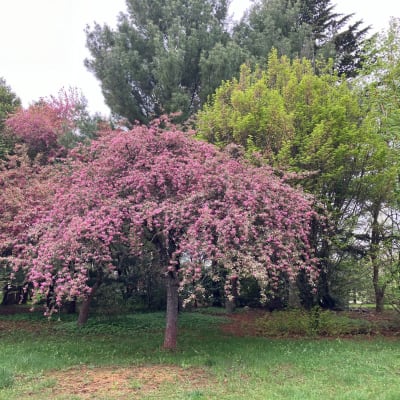
Malus hupehensis 20 × 20'. One of the reddest flowering crabs. Red buds, large single rose-pink-red flowers and persistent red fruits. Disease resistant. Z4.
Malus spp. Orange-red skin. One of our favorite “rose” crabs. Small white cup-shaped semi-double flowers with yellow stamens look like miniature roses. Orange-red persistent fruit lasts till spring. Z3.
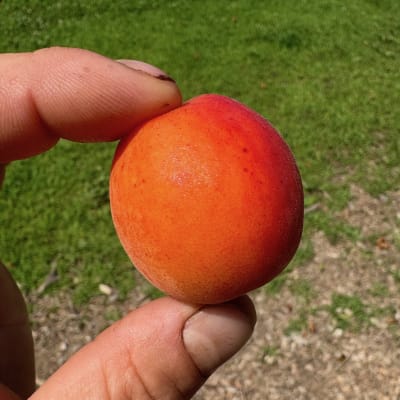
Prunus armeniaca Midsummer, yellow-orange skin. One of the best-tasting of the Harrow series of hardy apricots, but not quite as cold tolerant as others. Drips with sweet juice. Z4/5.
Prunus armeniaca Mid-late summer, orange skin. Multipurpose sweet freestone variety is good for fresh eating, canning and drying. Most cold hardy of the Harrow series. Z4.
Prunus × dasycarpa Summer, deep reddish purple skin, crimson orange flesh. Cross between apricot and myrobalan plum. Rare. Makes flavorful dried fruit that rivals dried mango. Tangy, sweet, satisfying. Z6; worth trialing in Z4/5.
Asparagus officinalis Heirloom. Large early green stalks tolerate heat well and demonstrate good resistance to rust. Early, vigorous, uniform. Planted in American gardens for more than a century. Z3-8.
Asparagus officinalis High-yielding good-quality tender green spears are long-lived and very cold hardy. On the rise as an excellent replacement for Jersey, even outproducing Jersey in northern Minnesota trials! Z3-8.
Symphyotrichum novae-angliae 4-6' tall. North American native. Blooms range from blue-purple to lavender-pink with yellow eyes. Attractive to pollinators. Z3.
Penstemon hirsutus 16-30" tall. Shorter than P. digitalis, with fuzzy stems topped by clusters of slender tubular nodding 1" lavender flowers with arching white lips. Z3.