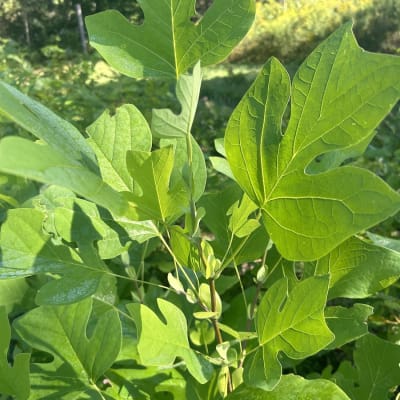
Hydrangea quercifolia 4-6' × 3-5' Spreading native hydrangea with large oak-like leaves and spiked whitish-pink double flowers July-Aug. Dried flowers turn pink to bronze. Purple, red and orange fall folliage. Z5.
Syringa vulgaris 7×8' Deep purple buds followed by fragrant shimmering single blooms of deep blue-purple backed by a light silver-lilac. Unusual and very nice. Z3.
Syringa vulgaris 10×10'. Creamy buds and very thick double white blooms. One of the oldest named varieties from one of the most famous of all lilac breeders. Z3.
Syringa meyeri 3-4' × 3-6'. Excellent choice for small spaces! Dwarf lilac with clusters of fragrant pale pinky-violet single blossoms. Blooms midseason. Z3.
Lobelia siphilitica 3–5' tall. Native wildflower of stream edges and bogs with also thrive in moist gardens. Blue-violet blossoms beloved by bumblebees. Z3.
Prunus persica Early to mid-season, white flesh. Aromatic with sweet exceptional flavor. Freestone. High-yielding trees are very cold hardy. Resistant to bacterial leaf spot. Z4.
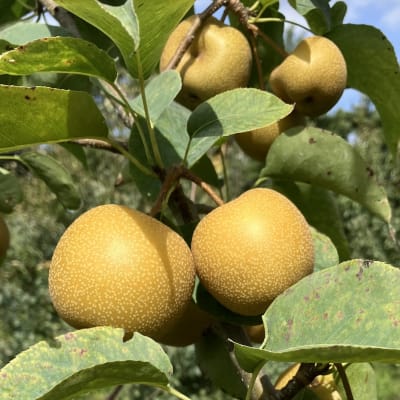
Pyrus pyrifolia Fall. Very large sweet juicy golden-brown pear. One fruit grown in Japan made it into the The Guinness Book of World Records. Will develop sweetness even in cooler summer weather. Z5.
Pyrus pyrifolia Late summer. Sweet and rich with a distinctive butterscotch flavor. Short picking period. Stores for several months. Very productive. Z4/5.
Pyrus communis Early fall, yellow-green skin. Great for fresh eating or cooking. Flesh is amazing: rich, sweet and melting—everything you could want in a pear. Very pest resistant. Z4/5.
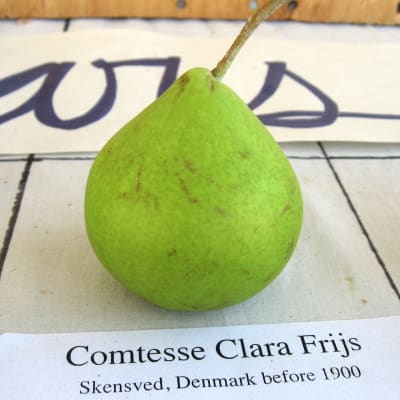
Pyrus communis Late summer, green skin. Large dessert pear with melting juicy flesh, smooth creamy texture and thin skin. Wonderful dessert pear. Great for canning. Z3.
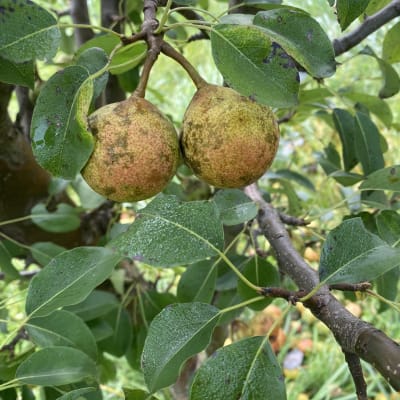
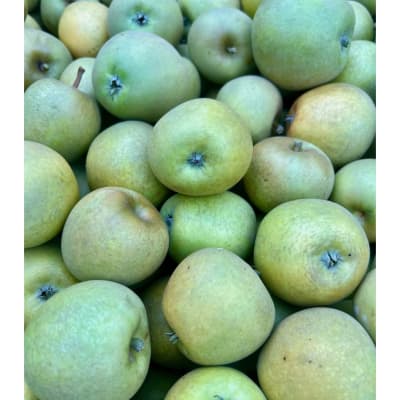
Pyrus communis Fall. Ancient English perry pear. Small oval yellow-green russeted pear under 2" in diameter. Used for alcohol production; not for fresh eating. Z4.
Prunus spp. Mid-late summer, yellowish green skin, yellow flesh. Small semi-freestone plum has tender juicy melting flesh with rich flavor. Often considered the best dessert plum. Z4.
Prunus spp. Late summer, dark purple skin, greenish yellow flesh. Freestone dessert and processing prune plum. Similar to Stanley, with improved productivity and disease resistance. Z4.
Prunus spp. Late summer, red skin, yellow flesh. Rich juicy sweet flesh is very firm and meaty but tender. Tastes like an apricot. Recommended for cooking and fresh eating. Rare in the trade. Z3.
Rosa gallica 2-3' × 3-4'. Highly fragrant dark purple-burgundy double 3" blooms in midsummer. Can be dried whole. Less thorny than other roses. Rugged and easy to grow. Z3/4.
Rosa rugosa 4-5' × same. Semi-double very large 3-4" magenta flowers with lemony scent. Blooms all summer and into fall. Large orange-red edible hips. Z2.
Rosa 3-4' × same. Small lightly fragrant red blooms are fringed like carnations. Very unusual and attractive with a long bloom season, often going until frost. Upright arching yet compact form. Z3.
Rosa rugosa 6-7' × 7-10'. Large clove-scented blooms begin early summer and rebloom in fall. Prolific giant red-orange hips. A productive cultivar for herbalists. Z3.
Rosa 6-7' × same. One of the best climbing or long-caned varieties for colder climates. Vivid velvety deep red-pink semi-double blooms with spicy fragrance. Repeat bloomer. Z3.
Rosa alba 5-6' × same. Highly fragrant 3" very double pale pink flowers bloom profusely late June into July. Sometimes more than 200 petals per flower. Z4.
Rosa macrantha 3-4' × 6-8'. Clusters of unusual semi-double globular 2" silvery-pink flowers with a peppery fragrance. Rounded mounding habit. Stunning in full bloom! Z3.
Rosa 3×3'. Faint lilac-purple blooms are practically white. Semi-double, recurrent and fragrant. Tough, low-growing, salt-tolerant and can handle partial shade. Disease resistant. Z3.