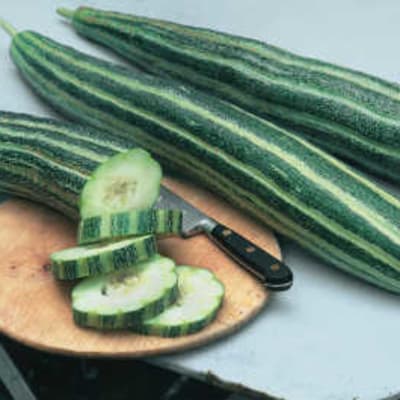
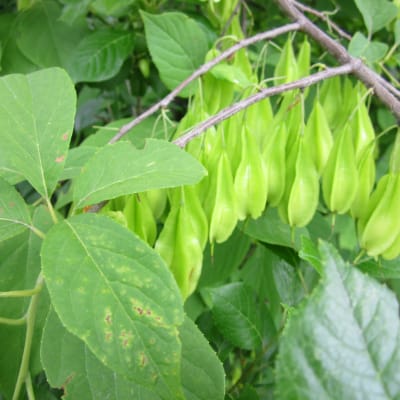
Cucumis melo var. flexuosus (55 days from transplant) Open pollinated. Specialty heirloom "snake melon" cuke. Curved coiled slender fruit with light and dark green stripes. Best eaten at 8-18".
Melothria scabra (65 days) Open pollinated. Vigorous but delicate climbing vine. Profuse bearing of 1" oblong green and white fruits. Eat fresh or pickled.
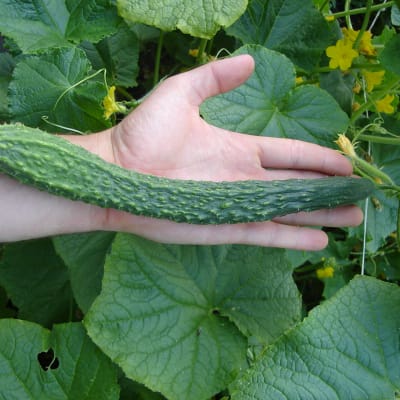
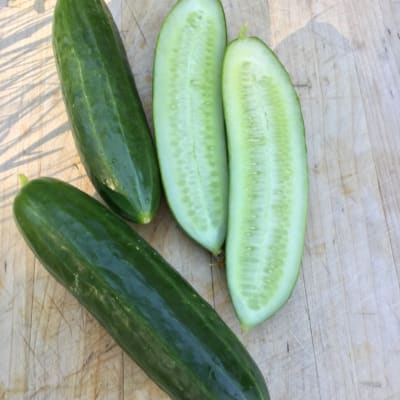
Cucumis sativus (62 days) Open pollinated. Extra-long Asian slicer. Uniform slender smooth-skinned 9-12" fruit with crisp non-bitter flesh. Excellent flavor.
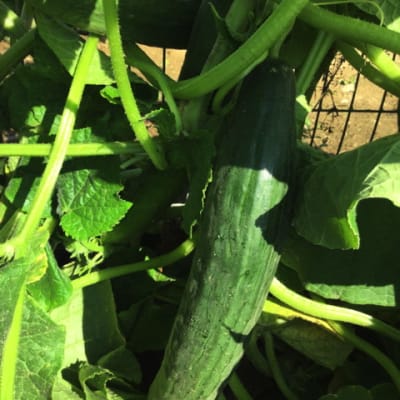
Cucumis sativus (60 days) Open pollinated. Heirloom performs in tunnels and outdoors. 10-14" slim Euro-type cuke with mild flavor; not bitter, few seeds. Trellis for straight fruits.
Cucumis sativus (54 days) Open pollinated. Smooth thin-skinned fruits are juicy, refreshingly cool, enjoyably mild and almost completely free of the bitterness common in American slicers.
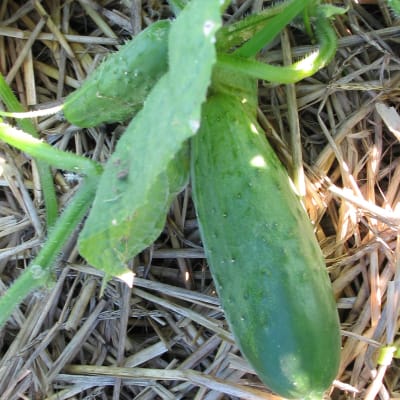
Cucumis sativus (60 days) Open pollinated. Parthenocarpic pickler. Blocky, smaller than average fruit. Compact growth and small leaves. Can be grown under row cover.
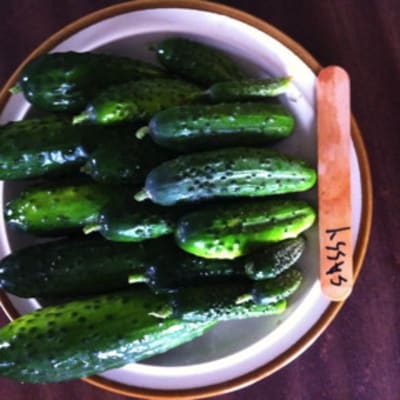
Cucumis sativus (52 days) Open pollinated. Classic pickler. Dark green fruit with black spines. Non-bitter. Used for small pickles and dills. Long harvest window.
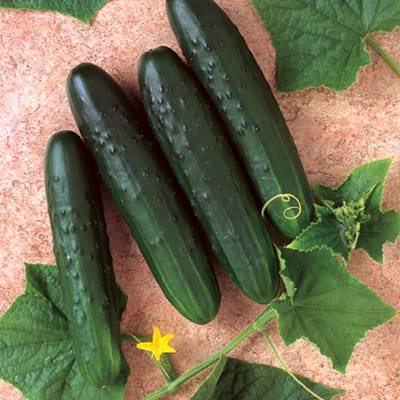
Cucumis sativus (58 days) Open pollinated. Slicer from the same line as Marketmore 76. Fruit is slimmer and darker, with improved yield and disease resistance.
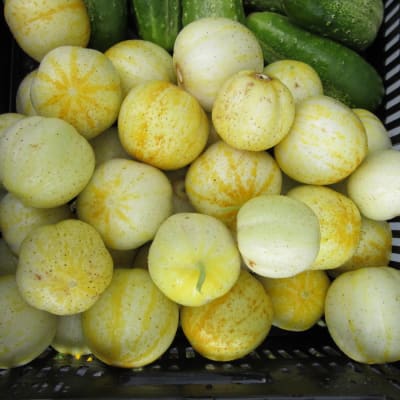
Cucumis sativus (60 days) Open pollinated. Specialty Indian cuke. 4-5" fruit turn from cream to golden yellow to russet brown. All stages edible and very crisp. Vigorous.
⅞" (internal diameter) clips made of non-GMO cornstarch, to attach tomatoes (or cucumbers, or melons, or other thin-vined plants) to your trellis system.
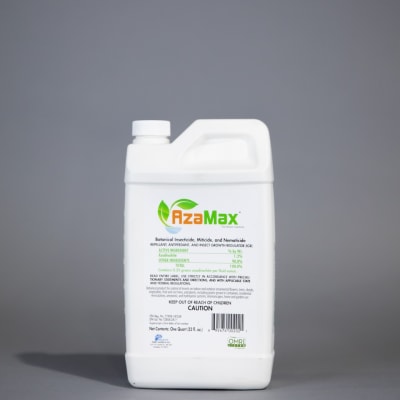
Botanical Insecticide/Miticide/Nematicide with azadirachtins A+B. Offers rapid knockdown of spider mites and cucumber beetles: similar to PyGanic, but with a lower price tag and less toxic to bees.
Can be used to monitor the presence and level of insect pests, or as a control measure (on small plantings). For aphids, cucumber beetles, fungus gnats, corn root worms or whiteflies.
A netted grid of 6.5" squares can be used vertically or horizontally. Unlike our poly trellis netting, jute netting does not stretch. Withstands up to three seasons of use.
6" reach-through polyester mesh for vertical support of crops like tomatoes, climbing beans, peas, cucumbers and luffas. If using vertically, weave a... read more
Laser-cut birchwood markers. Each tag is engraved with a crop’s name and a charming line drawing to represent it. Set of 20 stakes covers the most common annual garden crops. Made in WA.
Provides extremely uniform precise temperature over its entire surface. Makes the difference between success and failure when starting crops of tropical ancestry. Controller sold separately.
Warm the root zone for seedling success! The patented double-layer construction is tough, waterproof and easy to clean. Can be used with or without a controller. Fits four standard 1020 trays.
Warm the root zone for seedling success! The patented double-layer construction is tough, waterproof and easy to clean. Can be used with or without a controller. Fits two standard 1020 trays.
Warm the root zone for seedling success! The patented double-layer construction is tough, waterproof and easy to clean. Can be used with or without a controller. Fits one standard 1020 tray.
Cucurbita pepo (50 days) Open pollinated. Bulbous fruit has thin pale green skin with white specks. Vigorous bush habit, cranks out the fruits. Firm and flavorful.
Luffa aegyptiaca Green skin. (110 days) Open pollinated. Used to make sponges and scrubbies. Also edible when harvested young. Requires a long season; start indoors.
Lactuca sativa (50 days) Open pollinated. Dark green outer leaves with broad mid-ribs and a creamy white center heart. Slow to bolt. Excellent flavor. Bestseller.
Lactuca sativa (50 days) Open pollinated. Dark green outer leaves with broad mid-ribs and a creamy white center heart. Slow to bolt. Excellent flavor. Bestseller.
Halesia carolina 20-40' × 15-30'. Small tree or large multi-stemmed shrub. Edible flowers and fruit. Beautiful addition to woodland gardens! Native to Appalachia. Z4.
Tiny particles of kaolin clay prevent insects from recognizing their targets, and, if they land, inhibit their access to the plant’s surface and cause irritation and excessive grooming.
A botanical insecticide derived from chrysanthemum that has a rapid knockdown and high kill rate, but low toxicity for humans and other vertebrates. Commercial use only. Please apply with care.
For use on vegetables, fruit and nut trees, ornamental plants, and most livestock. Derived from the chrysanthemum Tanacetum cinerariaefolium
grown... read more
 Shintokiwa Long-Fruited Cucumber - OG/BDSeedsnot available yet, check back later
 Marketmore 86 Slicing Cucumber - ECOSeedsunavailable,