With 9 spray patterns and a clever ergonomic thumb-control valve for precisely dialing in the flow rate, this wand offers great durability, versatility and ease of use.
A netted grid of squares can be used vertically or horizontally. Unlike our poly trellis netting, jute netting does not stretch. Withstands up to three seasons of use.
Brassica oleracea (acephala group) (30 days baby, 56 days mature) Open pollinated. The most commonly grown kale. Dense finely curled blue-green leaves on upright hardy plants. Best as a fall crop, planted July or August.
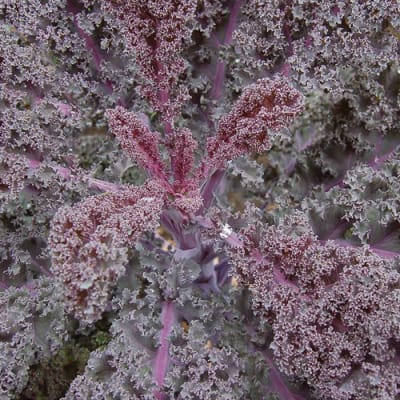
Brassica oleracea (acephala group) (30 days baby, 55 days mature) Open pollinated. Frilly purple leaves suitable for baby leaf or bunching. Similar to Redbor leaf shape and color.
Trigonella foenum-graecum (30 days leaf, 120 days seed) Open pollinated. Leaf and seeds are used culinarily, imparting a sweet nutty flavor reminiscent of maple syrup.
Raphanus sativus White skin, white flesh. (30 days) Open pollinated. Heirloom. Slender 4-6" long white radish of high quality. Harvest young. Recommended for home gardens.
Raphanus sativus Yellowish tan skin, white flesh. (30 days) Open pollinated. Polish origin. Medium-sized bunching radish with yellow-tan russeted skin. White flesh is crunchy, crisp and lightly spicy.
Spinacia oleracea (30 days) Open pollinated. Prized as a baby green for its striking magenta-red stems and veins in deep green arrowhead leaves. For the cooler ends of the season only.
Spinacia oleracea (25-30 days to baby leaf, 45 days mature) F-1 hybrid. Tender smooth leaves perfect for the baby cut. Mature, large leaves still have mild sweet flavor. Bolt tolerant, disease resistant.
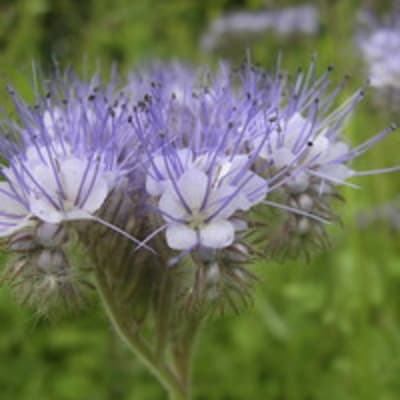
Phacelia tanacetifolia Open pollinated. Small frizzy lavender-blue flowers. Long bloom period. Excellent for pollinators and beneficial insects. Bushy 18-30" plants.
Malus spp. Late fall, russeted yellow skin. High-quality flavorful dessert apple. Rugged, reliable and hardy, it has produced for us here in central Maine for nearly 30 years. Z4.
Malus spp. Multi-colored skin. Be the proud keeper of a sister tree to one of many rare varieties planted at the Maine Heritage Orchard. $30 from the sale supports the project.
Penstemon hirsutus 16-30" tall. Shorter than P. digitalis, with fuzzy stems topped by clusters of slender tubular nodding 1" lavender flowers with arching white lips. Z3.
Prunus avium Summer, dark red skin. Good-quality dark red fruit. Survived –30° with minimal winterkill in central Maine. Vigorous. Requires second variety for pollination. Z4.
Abies koreana 15-30' x 6 -12' Upright 3" purple-blue cones perch atop bright green boughs on a conical to pyramidal tree. Nice as a specimen or in hedges. Z5.
Picea pungens var. glauca 30-60'. Very popular specimen tree with frosty blue needles. Excellent for privacy screens, as it is fast growing after 3'. Native to western U.S. Z2.
Cornus alternifolia 20' x 30-35'. Small tree or large multi-stemmed shrub with tiers of horizontal branches and fragrant white 2-3" flower clusters. Z3.
Raphanus sativus var. niger Broadleaf annual. Roots penetrate hardpans and loosen soil down to 30" or beyond. Takes up available soil nutrients and prevents losses to leaching or runoff. Suppresses weeds if planted thickly.
Raphanus sativus var. niger Broadleaf annual. Roots penetrate hardpans and loosen soil down to 30" or beyond. Takes up available soil nutrients and prevents losses to leaching or runoff. Suppresses weeds if planted thickly.
Dryopteris marginalis 20-30" tall. Strong stems and slightly glossy leathery grey-green fronds make this one of the best ferns for floral arrangements. Evergreen leaves in winter. Z3.
Iris versicolor 30-36" tall. Northeastern native species with gorgeous blue-violet flowers with bold purple veining and a white and lemon-yellow blaze. Early. Z2.
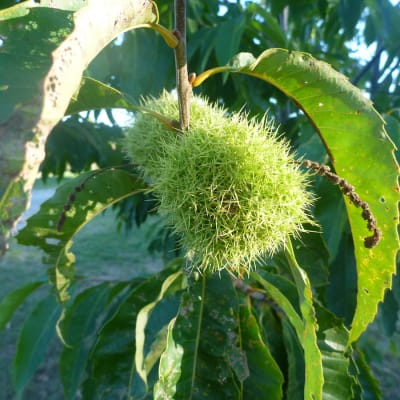
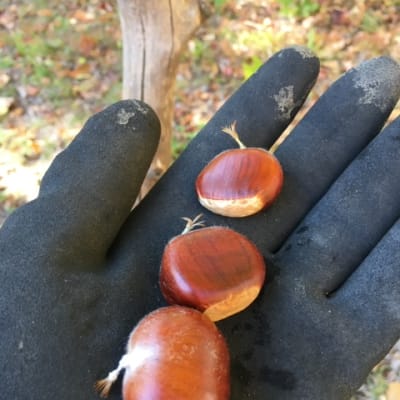
Castanea dentata Up to 100'. Once common in the eastern US. Important food source for people and wildlife. Not immune to blight but likely to thrive 10-30 years. Fast growing and precocious. Z4.
Castanea 40-60' x 30-40'. Hybrid crosses of mixed parentage. Parent trees show excellent blight resistance. Begins flowering at 3-5 years. Great flavor, high annual nut production. Z4.
Castanea pumila 15-30' x 10-20'. Once an important food for indigenous peoples. Somewhat resistant to chestnut blight. Native to much of central/eastern U.S. Z4.
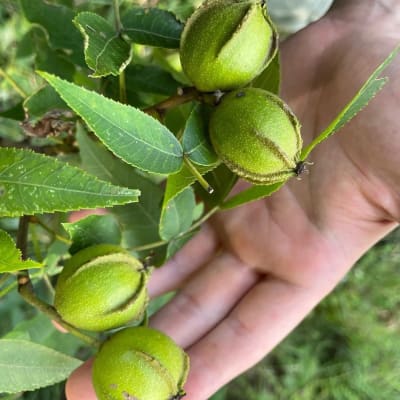
Carya cordiformis 50-80' x 30-50' Also known as Bitternut Hickory. Thin-shelled nuts can be pressed into a mild nutty cooking oil. Closely related to the pecan. Z3.
Cerinthe major var. purpurescens Open pollinated. Annual. Features coin-shaped grey-green foliage and profuse blue shrimp-like bracts with purple flowers. Beloved by bumblebees. 12-30" tall.
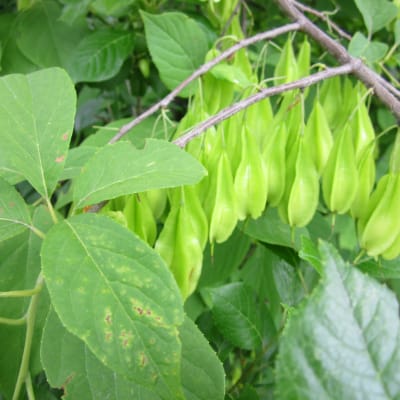
Halesia carolina 20-40' × 15-30'. Small tree or large multi-stemmed shrub. Edible flowers and fruit. Beautiful addition to woodland gardens! Native to Appalachia. Z4.
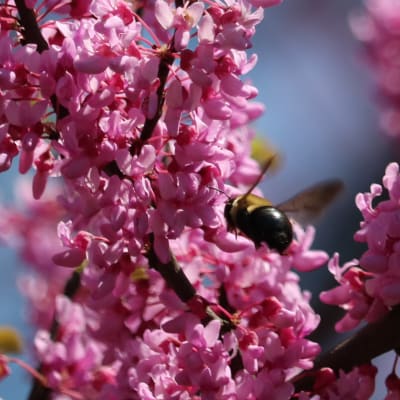
Cercis canadensis 25-30' × same. Small vase-shaped ornamental tree. Clusters of brilliant edible purplish-pink pea-like flowers fill the entire tree in spring. Z4/5.
Paeonia lactiflora 30-34" tall. Single anemone-type with scarlet-red guard petals surrounding fringed red and gold petaloid centers. Rare. Late blooming. Z3.