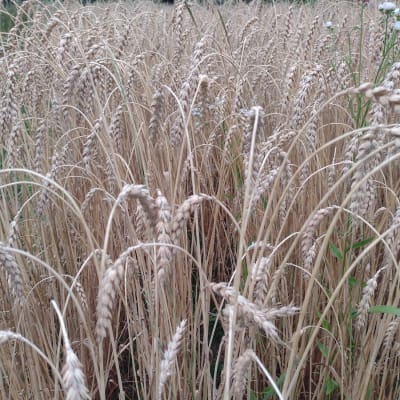
Triticum aestivum Winter annual grain. Extremely cold hardy hard red wheat. Flour has great flavor and texture, and sturdy plants make great straw. Good for small spaces. Well adapted to New England. Will Bonsall fave!
With 26 full-page illustrations (including covers), our exclusive coloring book features some mash-ups you might recall from past catalogs, and some brand-new ones, for an all-ages coloring fun fest.
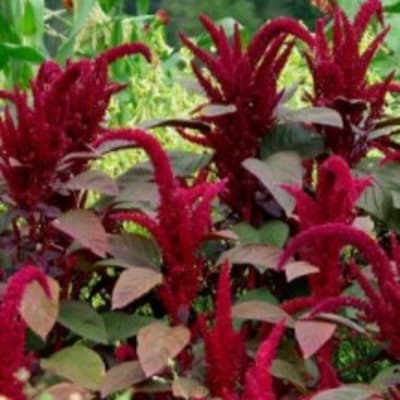
Amaranthus hybridus (65 days to flower, 125 days to seed) Open pollinated. Is it a green vegetable? An ornamental? A gluten-free grain? Why, yes! No wonder Amaranth was sacred in pre-Columbian Mexico.
Lupinus mutabilis (130 days, longer to seed) Open pollinated. “Lost” crop of the Incas. Wild-looking 3' lupine native to the high Andes. Attractive, many-colored flowers. Protein-rich seeds.
Cichorium intybus (80 days) Open pollinated. White-veined leaves turn from green to variegated burgundy red in cool weather. Romaine-shaped heads. Best for fall crops.
Montia perfoliata (40 days) Open pollinated. Small, heart-shaped leaves with a mild but succulent flavor. Use in mesclun and cut-and-come-again culture.
Valerianella locusta (60 days) Open pollinated. Heirloom. Vigorous large-leaf type of staple salad green. Best for sowing in spring for early summer harvest.
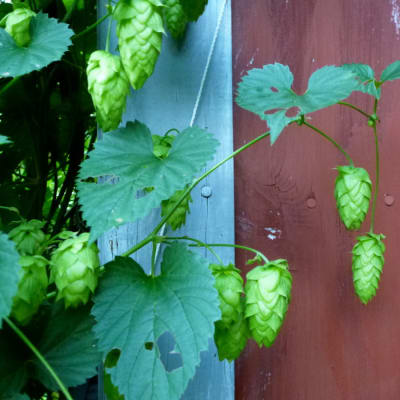
Humulus lupulus Late summer. Fragrantly aromatic hops, low bittering value. Very productive with large cones, ready to harvest mid-late August in central Maine. Z3.
Brassica oleracea (acephala group) (60 days) Open pollinated. Smooth glossy “greasy” greens are delicious steamed. Most delectable early in the season, or late after a nip of frost.
Lactuca sativa (51 days) Open pollinated. Combination of Batavian and romaine, with whorling thick succulent medium-green leaves. Tolerant of heat and rarely bitter.
Lactuca sativa (48 days) Open pollinated. Compact tight uniform heads form upright rosettes for a clean market and salad harvest. Pebbled leaves shaded red and light plum on a green base.
Lactuca sativa (52 days) Open pollinated. Large fancy fast-growing light-green butterhead lettuce. Bolts quickly in heat. Recommended for fall or overwintering where climate permits.
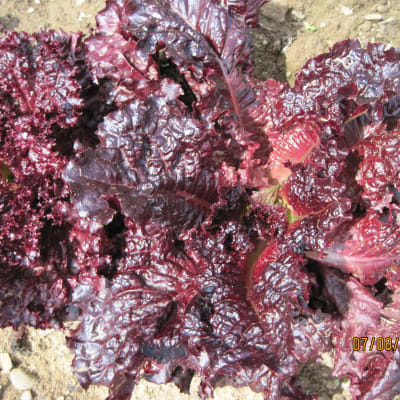
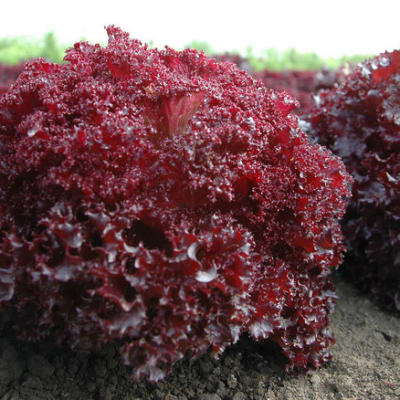
Lactuca sativa (56 days) Open pollinated. Beautiful compact Lollo-type has extremely dark purple-red leaves with ruffles and curls. Very mild flavor for type. Stays non-bitter longer.
Lactuca sativa (54 days) Open pollinated. Beautiful troutback/oakleaf cross, with rich lime-green oakleaves showing dark speckles. Excellent flavor and texture.
Lactuca sativa (67 days) Open pollinated. Deep dark red leaves with contrasting pink veins, and a smidgen of green in the center. Tall upright 8" heads.
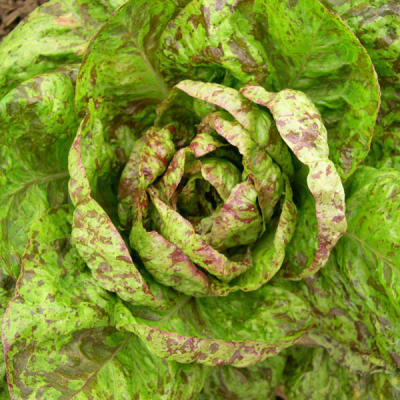
Lactuca sativa (51 days) Open pollinated. Best of the speckled types. Dark green ruffled leaves mottled with maroon-red spots. Sweet juicy veins, blushed pink heart. Poor heat tolerance.
Cucumis melo White flesh. (80 days) Open pollinated. Round-to-oblong 2–3 lb fruit that embodies the texture, flavor and redolence of the finest pear. High yielding, even in melon-challenging seasons.
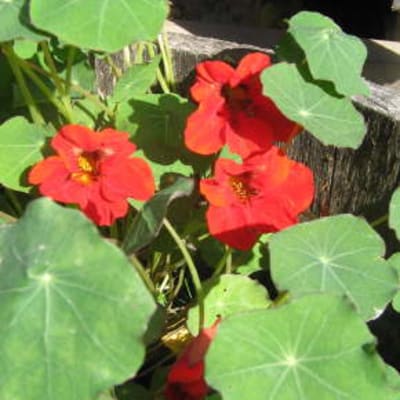
Tropaeolum majus (60 days) Open pollinated. Dark purplish-green leaves with brilliant crimson-scarlet flowers contrast well with other varieties. 16" plants.
With 9 spray patterns and a clever ergonomic thumb-control valve for precisely dialing in the flow rate, this wand offers great durability, versatility and ease of use.
Abelmoschus esculentus Burgundy skin. (75 days) Open pollinated. Edible and ornamental. Slender burgundy pods best harvested at 4". Green leaves and burgundy stems and pods.
Allium tricoccum Open pollinated. Also called Wild Leeks. Bulb-forming perennial is a spring ephemeral. Delectable pungent flavor, a mix of garlic and onion, is true wildwood fare—worth the long wait.
Allium cepa Purple-red skin. (110 days) Open pollinated. 19th century heirloom. Large medium-firm deep purple-red flattened globes with pinkish-white fine-grained flesh. Long-day. Keeps till late winter.
Allium cepa Red skin. (114 days) Open pollinated. Red storage onion. Flat square-shouldered top tapering like a barrel to a narrower flat bottom. Tops slow to go down.
Centaurea americana (90 days) Open pollinated. Annual. Resembles a thistle, but no prickles. Grassy honey-like fragrance. Native to south-central U.S. and northeastern Mexico.
Clarkia amoena (90 days) Open pollinated. 3" “satin flowers” blooms in red, pink, salmon, lavender and white, and with a bright red patch in the heart of the four petals. Best for cutting.
Saponaria officinalis Open pollinated. Not a dye plant; saponin-rich roots and leaves used to gently wash wool. Sweetly clove-scented pink perennial attracts pollinators. 3' plant.
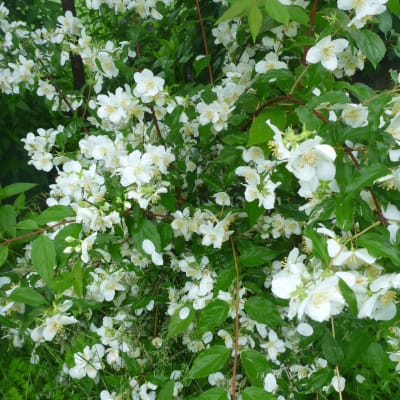
Philadelphus lewisii 4-5' x 3-4' Medium-sized loosely arching ornamental blooming shrub. A “blizzard” of sweet citrusy fragrance from white blossoms in late spring. Z3.
Pyrus communisThis is a twig for grafting. Late fall-winter, mottled blushed green skin. Frankendorf, Germany. Coarse flesh, good flavor. Great storage pear. Can keep until April in the root cellar. Z4.