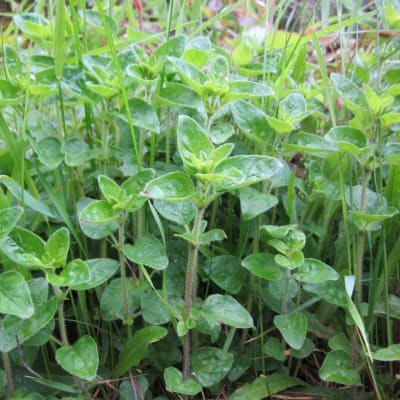
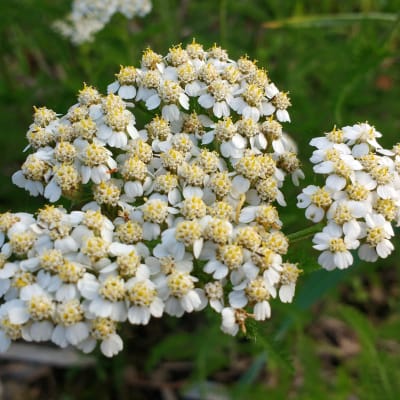
Origanum vulgare 18-20" tall. Fragrant green and purple leaves used for culinary purposes. Given plenty space in full sun, it sprawls and is attractive to pollinators. Z4.
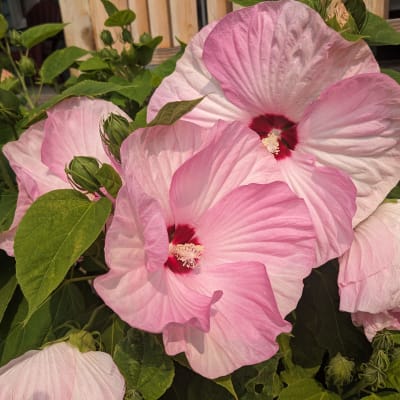
Hibiscus moscheutos Open pollinated. Perennial, Zones 5-9. 6-8" saucer-shaped flowers in a mix of pinks, red and white, with contrasting red eyes where a contrast is to be had.
Eryngium yuccifolium 3-6' tall. Globe-thistle-like 1" greenish-white flowerheads. Subtle honey-like scent. North american native. Great for cutflower production. Z3.
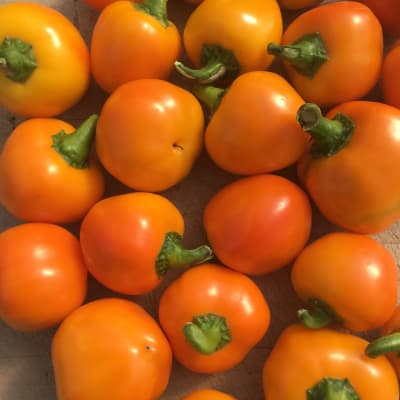
Capsicum annuum Tangerine skin. (74 days) Open pollinated. Round 1-2" shiny bright tangerine fruits on sturdy plants. Heat is comparable to a mild jalapeño, but varies with the weather
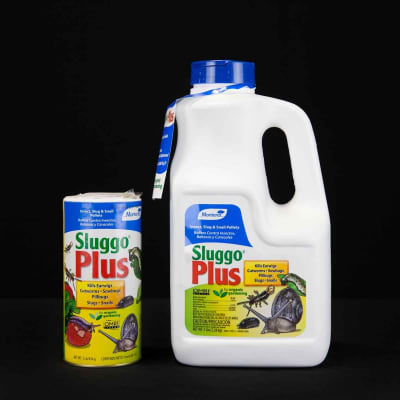
Similar to Sluggo, but with the addition of a small amount of spinosad (0.07%), which greatly increases effectiveness and scope. For snails, slugs, cutworms, earwigs, pillbugs, crickets and more.
Kniphofia uvaria 36-48" tall. A tropical-looking riot of fiery red-orange fading to coral and soft white tubular inflorescences. Breathtaking and playful. Makes an unusual accent in cutflower arrangements. Z5/6.
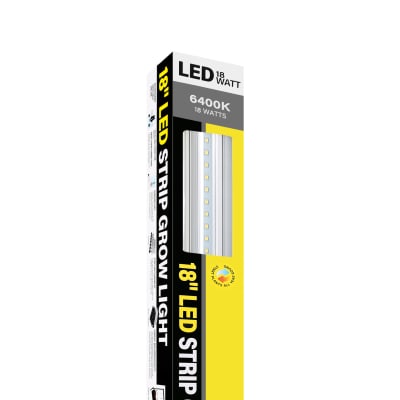
These energy-efficient LEDs provide high-output full-spectrum lighting while saving loads of electricity. Integrated fixture with built-in reflector is ready to use.
These energy-efficient LEDs provide high-output full-spectrum lighting while saving loads of electricity. Integrated fixture with built-in reflector is ready to use.
Antirrhinum majus (90 days) Open pollinated. Spikes of magenta and buttercream blossoms yellow throats bloom from mid-July into September. Ideal for beds, borders, and of course, cutflowers. A star in our 2023 flower trials.
Fragaria × ananassa Late. These bright red firm shiny berries are sweet and juicy and so big you could make a hand pie with just one. Resistant to leaf diseases. Z4.
Lathyrus latifolius Open pollinated. The traditional English cottage sweet pea. Shades of rose, white and pink in big clusters. Good cutflowers. Climbs 6'.
Tired of being hunched over with a trowel? Quickly plug in hundreds of flowerbulbs and plants for a naturalized look in your landscape! Works with most corded and modern cordless drills.
Recommended for fruit trees at planting time. Our own well-balanced blend of Tennessee brown phosphate, alfalfa meal, Azomite, and K-Mag in a humus-rich base of worm castings.
Calcium helps strengthen plants’ cell walls, improving crop quality, disease resistance and storage capacity. Can help prevent problems like blossom end rot and bitter pit.
Copper is necessary for efficient photosynthesis and respiration and affects the sugar content and flavor of produce. Contains 4% chelated copper derived from copper sulfate.
Iron is essential for chlorophyll development and function, and is also involved in nitrogen fixation by legumes. Contains 5% chelated iron derived from ferrous sulfate.
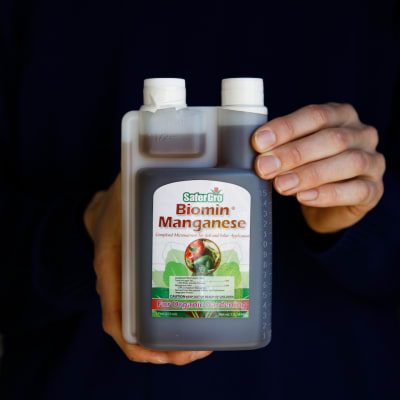
Manganese helps plants to synthesize chlorophyll and is used in electron transport during photosynthesis. Contains 1% nitrogen from vegetable protein and 5% chelated manganese.
Zinc is a component of auxin, an essential growth hormone, and is also necessary for proper root development. Improves cold tolerance. Contains 7% zinc derived from zinc sulfate.
A powerful soil restoration amendment! Supports plant health and increases yields by facilitating roots’ uptake of plant nutrients and water. Improves levels of carbon and humus.
Agricultural Sulfur. Use to make soil pH more acidic. Often helpful for both lowbush and highbush blueberries, and for potatoes. Lowering the pH of gravel paths will help control weed growth.
Malus spp. Fall-winter, bright red skin, yellowish flesh. Medium-large, slightly tart, crisp and juicy. Thomas Jefferson’s favorite. Good acid source for cider. All-purpose. Good keeper. Z4.
Malus spp. Late summer, deep red skin. These culinary crabapples are a tasty snack fresh off the tree, better after storage. Especially good for brandying. Keeps well. Z2/3.
Malus spp. Fall-winter, dark maroon skin, yellow flesh. Medium-sized intensely flavored apple is fine, juicy and tender. Keeps till January. Blooms early-midseason. Z4.
Malus spp. Fall, red skin. The most important apple in the Northeast. Delicious and aromatic. All-purpose. Annual bearer. Very susceptible to scab. Z4.
Malus spp. Late fall-winter, orange-russeted greenish yellow skin. Intensely flavorful dessert variety. Tastes like licorice! Keeps till the New Year. Z4.
Malus spp. Winter, red-striped skin. Famous heirloom apple. Very large, juicy, tender. Makes a great single-variety pie! All-purpose. Good keeper. Scab-resistant. Z4.
Malus spp.This is a twig for grafting. Fall, russeted green-yellow skin. Medium-small russet fruit with a longtime reputation as one of the very best dessert apples. Superb fresh eating. Keeps fairly well, still crunchy in January. Z3.
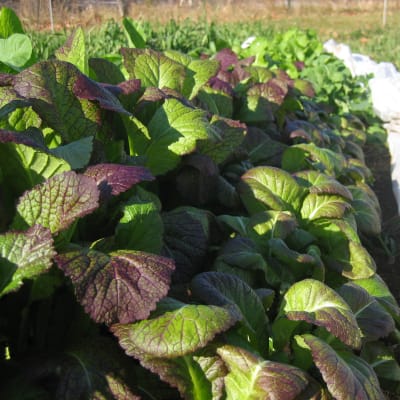
Brassica juncea (45 days) Open pollinated. Best-adapted mustard for northern climates. Hot mustardy flavor. Will come back when cut. Slow to bolt. Can be overwintered.
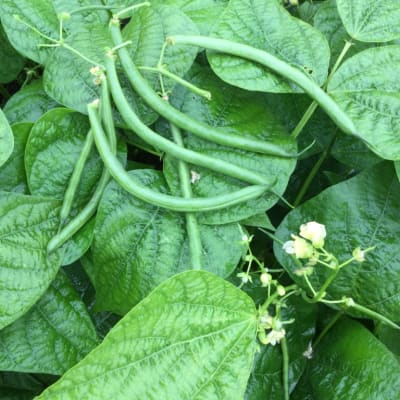
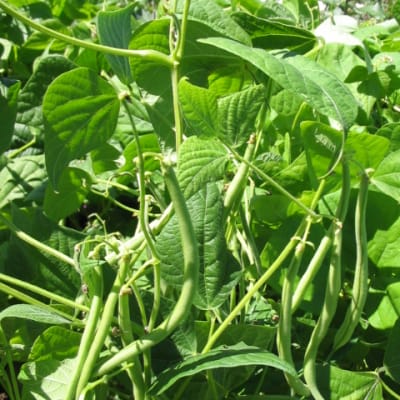
Phaseolus vulgaris (57 days) Open pollinated. A very refined haricot vert for home gardeners. Exquisitely tender, delicately flavored dark green pods are excellent raw with minimal bitterness.
Phaseolus lunatus (103 days) Open pollinated. 18" tall. 3 tender beans per pod, grey in the shell stage and drying to buff with purple and black mottling. White flowers.
Phaseolus vulgaris (59 days) Open pollinated. Produces heavy yields of fleshy medium-green 5" pods that are slow to develop seeds. Pods aren’t as wide as Roma II, but walls are thicker and juicier.
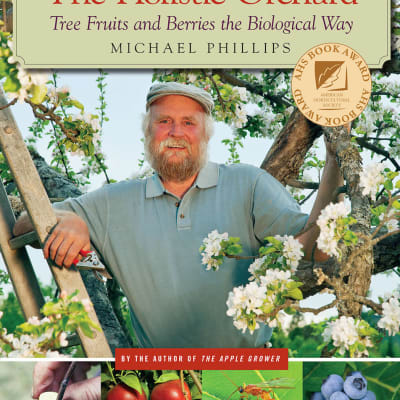
Covers a wide range of crops, while addressing orchard design, dynamics and horticulture in unparalleled detail. Pruning, planting, companion planting, spraying, not spraying—it's all here!
 Oregano - OrganicBare-Root Plantssold out