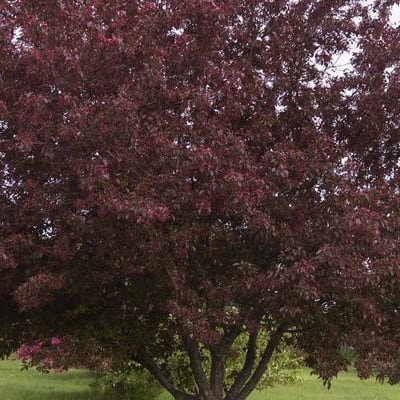
Malus spp. Dark red skin. Lovely in purply-pink bloom, but especially prized for its fabulous foliage. Reddish leaves turn to glossy purplish-green, fading to all purple in fall. Z3.
Brassica rapa (37 days) Open pollinated. Produces many pencil-thick deep purple flowering shoots with pleasing mild mustard flavor. Grows best in cool weather.
Brassica rapa (45 days) F-1 hybrid. Slow-growing 8-10" deep purple rounded leaves stand beautifully, and are mild and delectable all the way through the season.
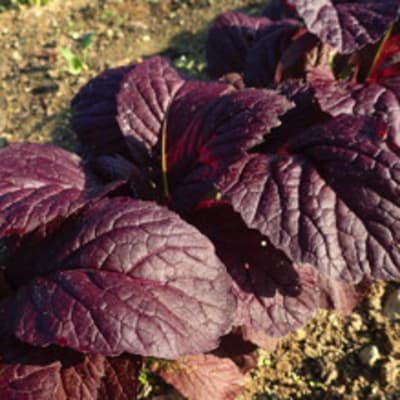
Brassica juncea (20 days baby; 45 days mature) Open pollinated. A favorite for cutting at the purple baby stage. Vibrant maroon slightly toothed leaves on lime-green stems. Good for salads or braising.
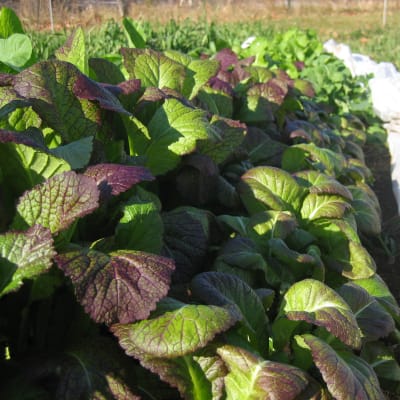
Brassica juncea (40 days) Open pollinated. Bold purple-blushed delicately serrated mizuna-type leaves with sweet and spicy flavor. For spring and fall plantings. Bolts in heat.
Symphyotrichum novae-angliae 4-6' tall. North American native. Blooms range from blue-purple to lavender-pink with yellow eyes. Attractive to pollinators. Z3.
Ocimum basilicum (60 days) Open pollinated. Purple stems and flowers of standard Thai, but displayed upon a strong bushy umbrella form with wide and beautifully ample flowers.
Ocimum basilicum (60 days) Open pollinated. An attractive 12-18" fine-leaved plant with purple stems, seed heads and flowers. Lends its distinctly strong licorice-anise basil flavor to Thai food.
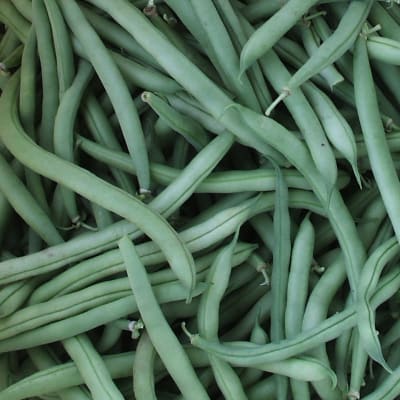
Phaseolus vulgaris (50 days) Open pollinated. Concentrated sets of 5-5.5" pods. High yields even in adverse conditions. A popular favorite. Purple seed.
Phaseolus vulgaris (50 days) Open pollinated. Concentrated sets of 5-5.5" pods. High yields even in adverse conditions. A popular favorite. Purple seed.
Phaseolus lunatus (103 days) Open pollinated. 18" tall. 3 tender beans per pod, grey in the shell stage and drying to buff with purple and black mottling. White flowers.
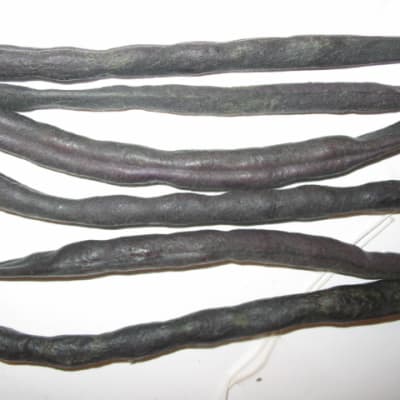
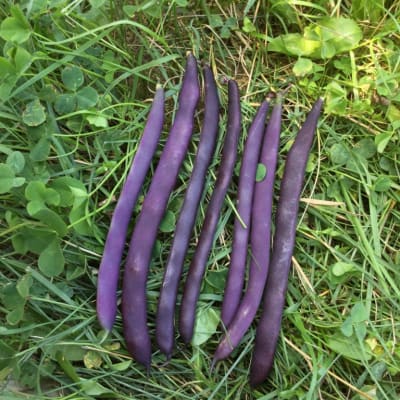
Phaseolus vulgaris (72 days snap) Open pollinated. Bluish-purple pods and green leaves tinged with purple. Harvest at 3-5". Can serve as a snap, shell or dry bean. Chocolate-colored seed.
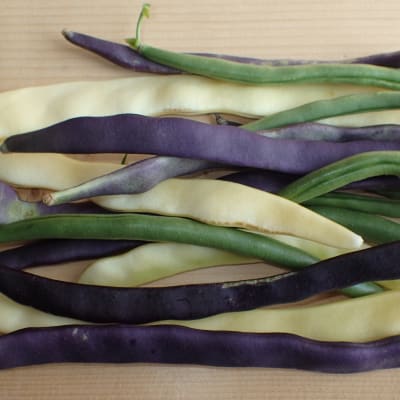
Phaseolus vulgaris (60-72 days) Open pollinated. We combine green, yellow, purple and striped varieties of staggered maturity into one packet. Varieties, our choice, will vary from year to year according to availability.
Phaseolus vulgaris (70 days) Open pollinated. Beautiful 6-7" green pods with purple streaking. Tan seed with dark stripes. Also known as Preacher Bean.
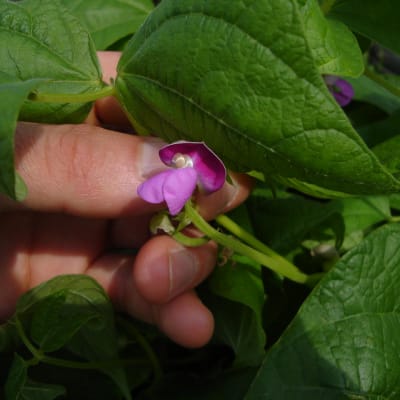
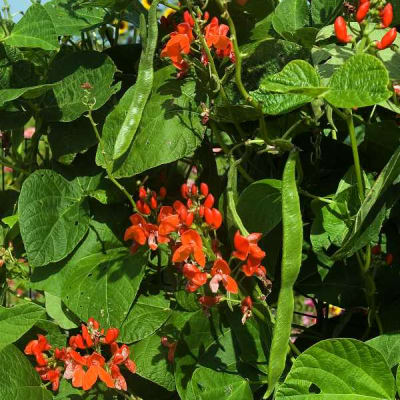
Phaseolus coccineus (70 days snap, 95 days shell) Open pollinated. 10-12' tall. Mottled black and purple seeds. Ornamental brilliant scarlet blossoms. Snap or shell bean.
Beta vulgaris (60 days) Open pollinated. Grown for greens, not roots. Large glossy reddish-purple leaves. Holds quality in summer but best in fall and under winter cover.
Beta vulgaris (60 days) Open pollinated. Grown for greens, not roots. Large glossy reddish-purple leaves. Holds quality in summer but best in fall and under winter cover.
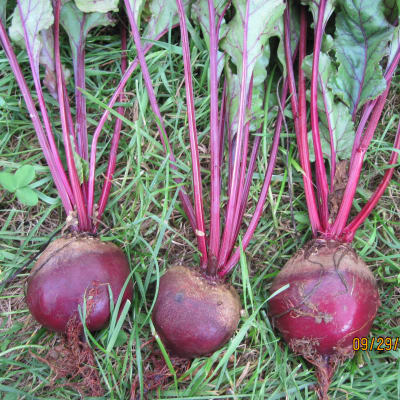
Beta vulgaris (48 days) Open pollinated. From 1911, beloved by commercial growers and home gardeners. Early beet greens and bunching beets. Quick cold soil emergence. Attractive purple tops.
Beta vulgaris (48 days) Open pollinated. From 1911, beloved by commercial growers and home gardeners. Early beet greens and bunching beets. Quick cold soil emergence. Attractive purple tops.
Brassica oleracea (botrytis group) (72 days) F-1 hybrid. Large broad purple heads, or wait for open floret stick-type stems. Easy to harvest from tall bushy plants.
Brassica oleracea (capitata group) (105 days) F-1 hybrid. Dense 3-6 lb red heads with savoyed pinkish-purple outer leaves and green interior. Can be overwintered.
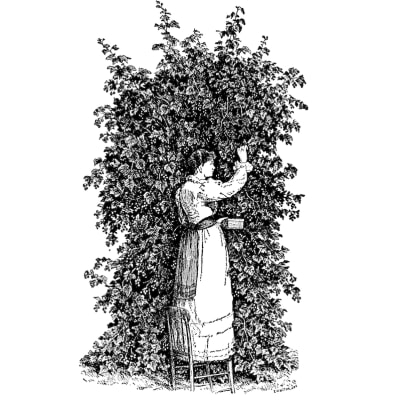
Rubus spp. Five Rubus cultivars (25 plants total) for a diverse and delicious array of berries—red, yellow, purple and black raspberries, plus blackberries. Z4.
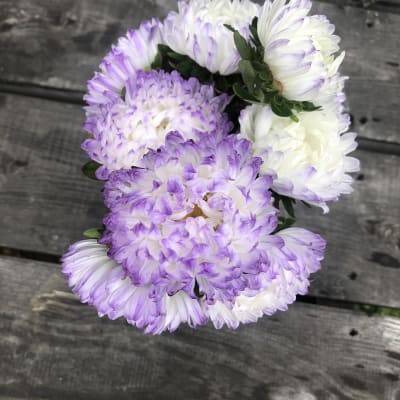
Callistephus chinensis (110 days) Open pollinated. Irresistible bicolor 2–3" peony-type blooms of iridescent white and purple. Bred for uniform height and bloom time.
Callistephus chinensis (110 days) Open pollinated. Irresistible bicolor 2–3" peony-type blooms of iridescent white and purple. Bred for uniform height and bloom time.
Symphytum officinale 24-48" tall. Clusters of pinkish purple flowers above bristled foliage. Known for skin-soothing properties. Recommended as an orchard companion. Z3.
Abies koreana 15-30' x 6 -12' Upright 3" purple-blue cones perch atop bright green boughs on a conical to pyramidal tree. Nice as a specimen or in hedges. Z5.
Zea mays (105 days) Open pollinated. 5-8" ears. Kernels are mostly red, yellow, mottled rosy-brown (also brown, purple, blue and white), and larger than most popcorns.
Solanum melongena White-streaked purple skin. (64 days in unheated tunnel, 72 days open field) F-1 hybrid. Slightly curved 8" extended-teardrop shape covered with purple and lavender streaks with emanations of ivory and light pink.
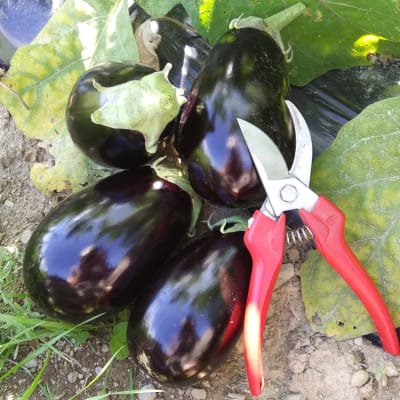
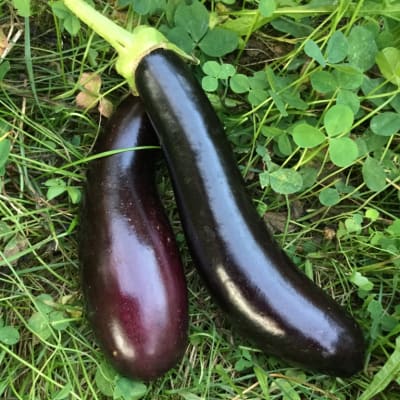
Solanum melongena Dark purple skin. (75 days) F-1 hybrid. Dark purple 7-8"tapered half-long bell-shaped fruit with a thornless light green calyx. Early and productive.
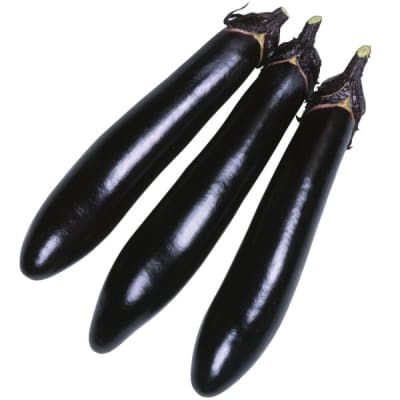
Solanum melongena Dark purple skin. (60 days) F-1 hybrid. This long 7x2" dark purple Italian “sword” is great for cooks who like uniform slices. Flavor is smooth and mild with no bitterness.
Medicago sativa Perennial legume, up to 3' high. This fragrant plant has beautiful purple flowers and is great for hay and as a cover crop. Herbalists consider it a valuable nutritive tonic.
Geranium sanguinium 4-9" tall. Magenta cups with purple-blue anthers cover tidy deep green lacy foliage. Compact form works well in containers. Considered more drought tolerant than others in the genus. Z3.

 Czech Broadleaf Hardneck Purple Stripe Garlic - ECOBulbsCheck for new listings in early May