Malus spp. This is a twig for grafting. Winter. Excellent fresh eating. Very large russeted fruit with firm white fine-grained flesh and nutty sweet-sharp flavor. Good keeper. Z4.
read more
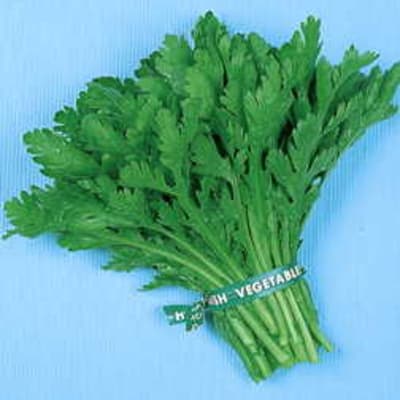
Glebionis coronaria (40 days) Open pollinated. Japanese Shungiku prized for small grey-green leaves and 3" yellow flowers, both edible. Sow in spring.
read more
Brassica rapa (pekinensis group) (35 days) Open pollinated. Loose round chartreuse leaves, flat white stems, and blossoms, all edible. Can be cut small for mesclun. Fair bolt tolerance.
read more
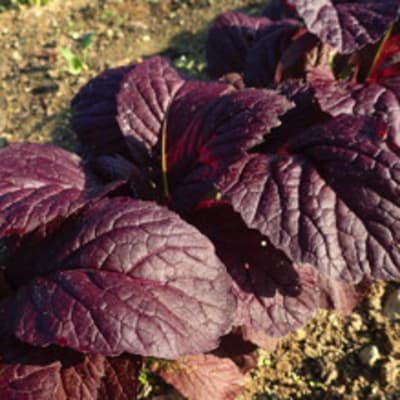
Brassica juncea (20 days baby; 45 days mature) Open pollinated. A favorite for cutting at the purple baby stage. Vibrant maroon slightly toothed leaves on lime-green stems. Good for salads or braising.
read more
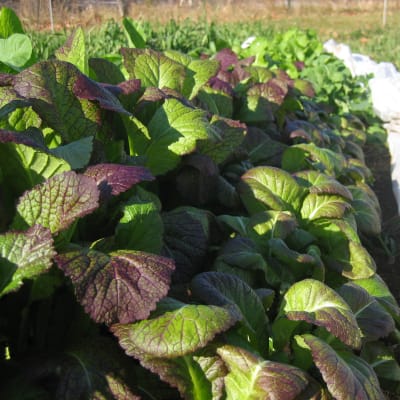
Brassica juncea (integlifolia group) (45 days) Open pollinated. Japanese heirloom. Large purple-tinted savoyed leaves. Peppery flavor. Standard mesclun ingredient. Cold tolerant.
read more
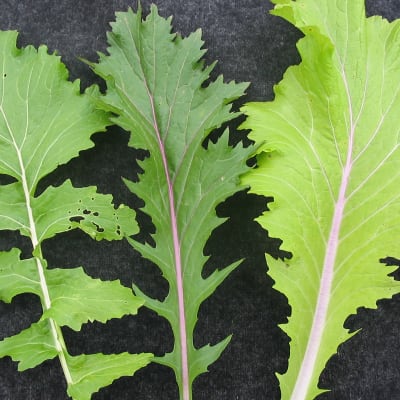
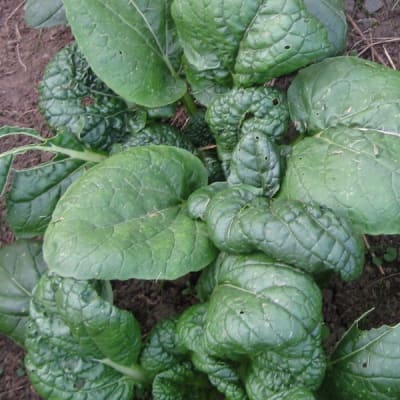
Brassica rapa (45 days full size; 21 baby) Open pollinated. Grows in rosettes like tatsoi, but bigger, more upright with leaves less shiny and more puckered. Harvest young for salad greens or mature for braising.
read more
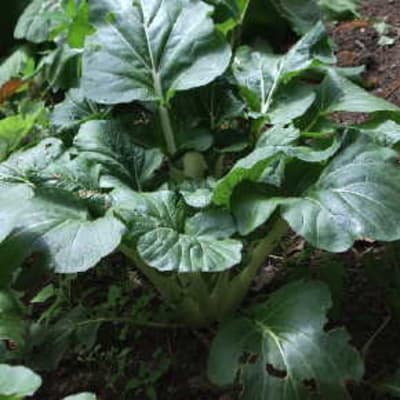
Brassica rapa (chinensis group) (50 days) F-1 hybrid. Uniform pac choi heads with dark green leaves and thick succulent basal stems. For summer and fall crops.
read more
Perilla frutescens var. crispa (85 days) Open pollinated. Japanese heirloom. Ornamental and edible purplish-red anise-scented leaves. Used in sushi, sauces, garnishes, pickles, stir-fries, and to color umeboshi plums red.
read more
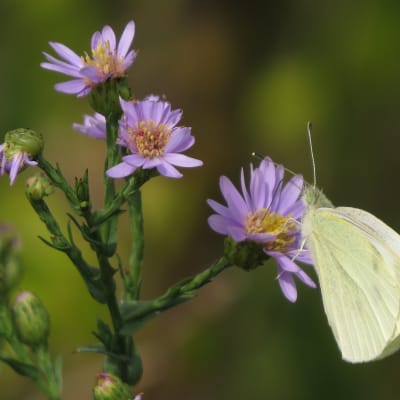
Symphyotrichum novae-angliae 4-6' tall. North American native. Blooms range from blue-purple to lavender-pink with yellow eyes. Attractive to pollinators. Z3.
read more
Symphyotrichum laeve 3-4' tall. North American native has Loose clusters of lavender-blue blossoms with yellow eyes. Smooth blue-green foliage. Attractive to pollinators in late season. Z3.
read more
Phaseolus vulgaris (61 days) Open pollinated. Dark green straight 6-8" filet pods with excellent flavor. Heavy producer. Speckled brown seed.
read more
Phaseolus vulgaris (57 days) Open pollinated. 6" creamy yellow pods mottled with purple tiger stripes. Seeds are purplish brown with blue stripes.
read more
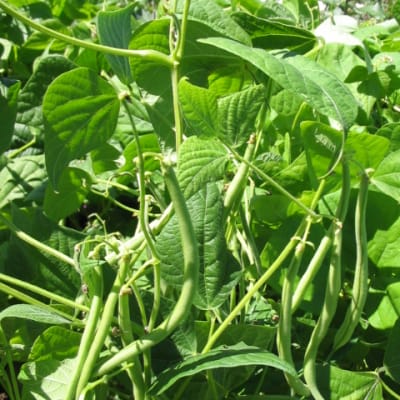
Phaseolus vulgaris (56 days) Open pollinated. High yields of tasty 5–7" straight slender round dark green beans. Holds quality well both on the plant and after harvest.
read more
Phaseolus vulgaris (56 days) Open pollinated. High yields of tasty 5–7" straight slender round dark green beans. Holds quality well both on the plant and after harvest.
read more
Phaseolus lunatus (95 days) Open pollinated. A pole lima that will actually ripen in the Northeast! Vigorous vines produce large pods of tender, sweet and delightfully beany limas.
read more
Phaseolus vulgaris (70 days shell, 90 days dry) Open pollinated. Consistently one of the earliest dry pole beans. Chestnut-brown dry beans are wide and flat like limas.
read more
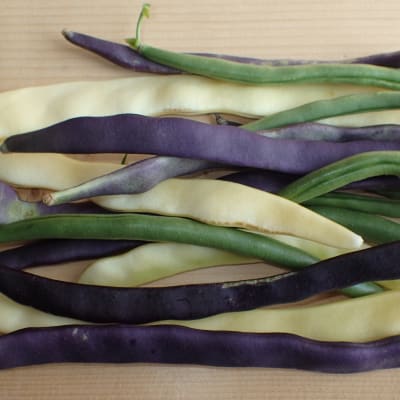
Phaseolus vulgaris (60-72 days) Open pollinated. We combine green, yellow, purple and striped varieties of staggered maturity into one packet. Varieties, our choice, will vary from year to year according to availability.
read more
Phaseolus vulgaris (70 days) Open pollinated. Beautiful 6-7" green pods with purple streaking. Tan seed with dark stripes. Also known as Preacher Bean.
read more
Phaseolus vulgaris (60 days shell, 85 days dry) Open pollinated. Plump shiny black beans! Can be harvested as a shell or dry bean. Dry pods resist shattering, yet are easy to shell.
read more
Phaseolus vulgaris (86 days) Open pollinated. Richly flavored heirloom brown baking bean that is well adapted to our cool climate. Golden-tan seed.
read more
Phaseolus vulgaris (86 days) Open pollinated. Richly flavored heirloom brown baking bean that is well adapted to our cool climate. Golden-tan seed.
read more
Phaseolus vulgaris (85 days) Open pollinated. Dense foliage produces medium runners, lavender flowers and good yields of thin delicate pods each containing 5-6 lustrous black seeds.
read more
Phaseolus vulgaris (106 days) Open pollinated. Large speckled tan beans with good yields, even in stressful conditions. Creamy texture for great comfort food.
read more
Phaseolus vulgaris (106 days) Open pollinated. Large speckled tan beans with good yields, even in stressful conditions. Creamy texture for great comfort food.
read more
Phaseolus vulgaris (70 days shell, 90 days dry) Open pollinated. White Cannellini bean. 5-6" short fat pods contain 5 plump seeds. Excellent flavor.
read more
Phaseolus vulgaris (89 days) Open pollinated. Large white kidney bean with red-brown soldier-like figures on the eye. Popular New England bean.
read more
Phaseolus vulgaris (89 days) Open pollinated. Large white kidney bean with red-brown soldier-like figures on the eye. Popular New England bean.
read more
Phaseolus vulgaris (65 days shell, 85 days dry) Open pollinated. Among the most beautiful of all dry beans. Tender skins disappear upon cooking.
read more
Monarda didyma Open pollinated. Perennial to Zone 3. Bushy clumping 30", bears 1-2 whorls of red tubular flowers on each stem from mid to late summer.
read more
Beta vulgaris (55 days) Open pollinated. Round rose-gold beet. Zoned white-yellow raw interior cooks to light orange. Short light green tops with gold stems and veins.
read more
Beta vulgaris (60 days) Open pollinated. Grown for greens, not roots. Large glossy reddish-purple leaves. Holds quality in summer but best in fall and under winter cover.
read more
Beta vulgaris (60 days) Open pollinated. Grown for greens, not roots. Large glossy reddish-purple leaves. Holds quality in summer but best in fall and under winter cover.
read more
Beta vulgaris (54 days) Open pollinated. Gold beet with Lutz shape, size and mild sweet flavor. Green tops with some golden stem. Golden orange roots with orange shoulders.
read more