Clarkia amoena (90 days) Open pollinated. 3" “satin flowers” blooms in red, pink, salmon, lavender and white, and with a bright red patch in the heart of the four petals. Best for cutting.
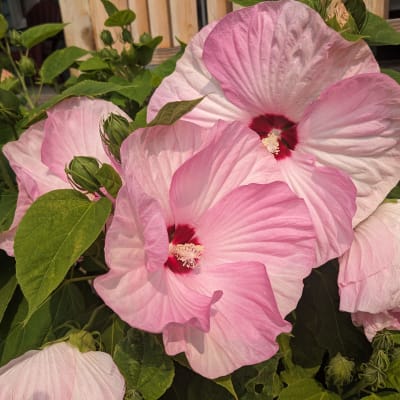
Hibiscus moscheutos Open pollinated. Perennial, Zones 5-9. 6-8" saucer-shaped flowers in a mix of pinks, red and white, with contrasting red eyes where a contrast is to be had.
Coix lacryma-jobi (100 days) Open pollinated. Sets pendulous sprays of globular pearly purple-grey seeds, which may be strung as beads for necklaces. Spiky 2–3' stalks good for planters or as filler in dried fall arrangements.
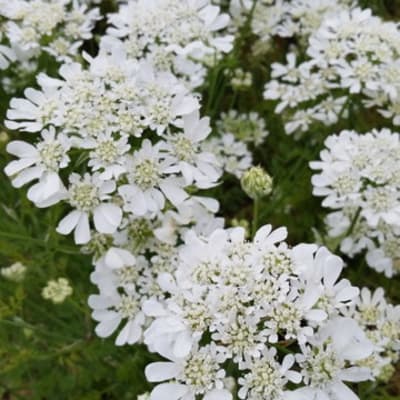
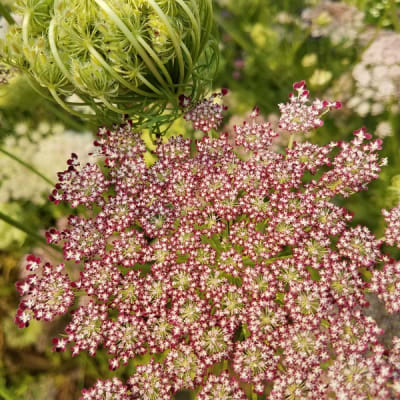
Orlaya grandiflora (65-70 days) Open pollinated. 2-3' with ferny foliage and sturdy stems, dainty delicacy resembling lace-cap hydrangea, with the central florets of a flat-topped cluster surrounded by a ring of larger flowers.
Rubia tinctorum Open pollinated. Ancient and excellent source of red dye. Harvest roots after three years and grind to yield a wash- and light-fast red dye par excellence. 4' plants.
Sempervivum Low-growing rosette-forming succulents produce runners and babies. Drought and heat tolerant. Cold-hardy too! Colorful mix of reds, greens and purples. Z3.
Ageratina altissima Open pollinated. Flat-topped fuzzy clusters of small pure white disk flowers bloom August through October, attracting multiple species of bees, moths and butterflies.
Artemisia annua (120 days) Open pollinated. The scent of the Common Ground Fair. Light green leaves valued for wreaths, flower crowns and other dried arrangements. Grows up to 5'.
Silybum marianum Open pollinated. Named for the bold white splashes on its glossy leaves, said to be from Mary’s milk. Fast-growing 3-5' annual with leaves up to 8x24".
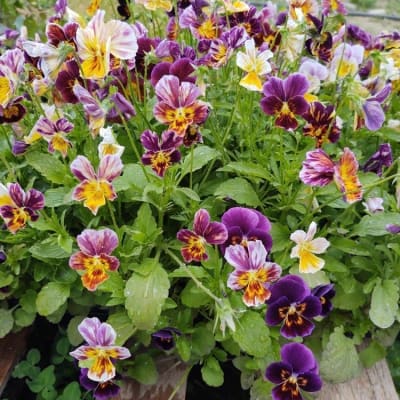
Spilanthes oleracea Open pollinated. Used as a ground cover in the south, it adds unusual beauty with its low growth habit and its cute yellow flowers with rayless red-orange centers.
Spilanthes oleracea Open pollinated. Used as a ground cover in the south, it adds unusual beauty with its low growth habit and its cute yellow flowers with rayless red-orange centers.
Stevia rebaudiana (100-120 days) Open pollinated. Stevia is several hundred times sweeter than sugar, and is used fresh, dried, powdered or in a liquid as a sugar substitute.
Myrica pensylvanica Waxy blue skin. 5-10' x same. A common sight along Maine’s rocky shores. Fragrant glossy deep green leaves and small waxy berries. Fixes nitrogen and feeds wildlife. Z2.
Pyrus communis Late summer, greenish yellow skin. Large greenish-yellow classic obtuse-pyriform pear. Adaptable to many climates and soils. Full reliable annual crops. Z4.
Pyrus communisThis is a twig for grafting. Late fall-winter, mottled blushed green skin. Frankendorf, Germany. Coarse flesh, good flavor. Great storage pear. Can keep until April in the root cellar. Z4.
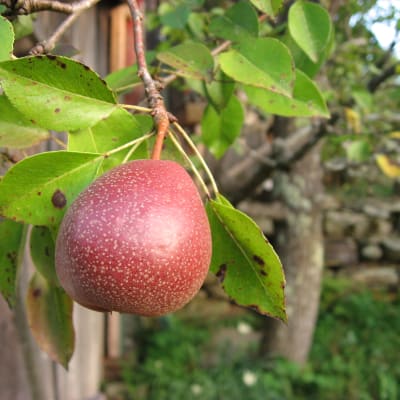
Pyrus communisThis is a twig for grafting. Late summer, red-blushed yellow skin. Small obovate yellowish-brown russeted pear with slight red blush. Often considered the best-flavored of all pears. Good fresh and cooked. Z4.
Capsicum annuum Red skin. (65 days) Open pollinated. Also known as Golden Delicious Apple Pepper. Heirloom from Hungary forms delicious flattened thick-walled fruits that ripen through yellow to red.
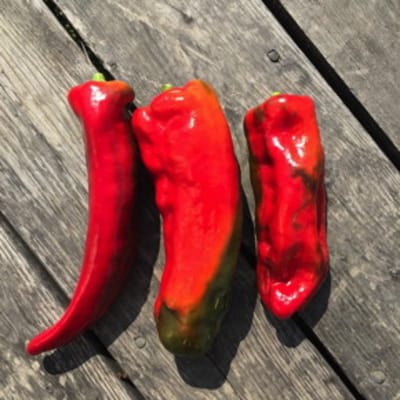
Capsicum annuum Red skin. (76 days) Open pollinated. Shiny red thin-walled 8" long tapering frying pepper. Sweet mild flavor, good raw and especially fried. High yielding.
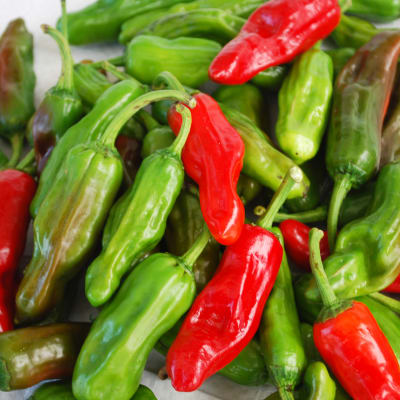
Capsicum annuum Red skin. (65 days) Open pollinated. An open-pollinated selection of the ever-popular shishito. Light green, thin walled and mostly mild. Early, prolific and delicious!
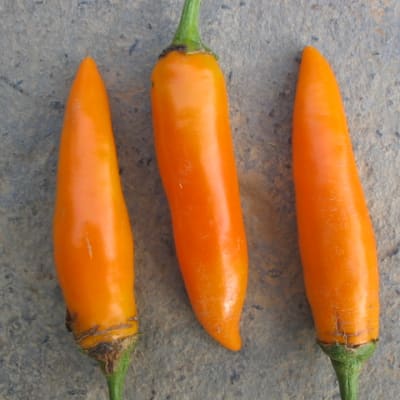
Capsicum annuum Fluorescent orange skin. (68 days) Open pollinated. Thin-walled 1½–3½" tapered fruits are as hot as they look and make welcome additions to chutneys, marinades, salsas, and hot sauces. Also delicious dried and ground.
Capsicum annuum Red skin. (88 days) Open pollinated. This rare Pennsylvania Dutch heirloom packs considerable heat. Rarely eaten raw, the peppers were traditionally used for pickling and pepper vinegar.
Capsicum chinense Tangerine skin. (90 days) Open pollinated. A Scotch Bonnet–type infamous for its extreme heat, their distinctive flavor makes them a key ingredient in West Indian jerk sauces.
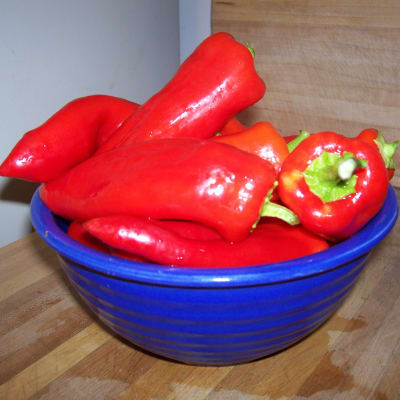
Capsicum annuum Red skin. (70 days) Open pollinated. Semi-hot and semisweet for perfectly balanced homemade paprika. Thick-walled light yellow to red fruits hold up well in roasting and in the traditional use as a stuffing pepper.
Capsicum annuum Red skin. (85 days) Open pollinated. 2x4" squat ribbed fleshy red fruits are thick-walled, crunchy and extra sweet. Plants are productive and fairly early.
Capsicum annuum Red skin. (80 days) Open pollinated. Early and prolific even in bad years, with a rich fruity taste. Maine-grown seed continues its cold-climate adaptation.
Silver and red metallized 7/16"x290' plastic tape is a cost-effective method to protect crops from flocking birds and crows. May also help keep raptors away from your chickens.
Used to control scab, powdery mildew and leaf spot. Sulfur is not water soluble; but small particles like these are better able to stay in suspension. Can also be applied as a powder.
Helps induce systemic resistance to a broad range of fungal diseases in most edible crops. Preferable to copper fungicide on cannabis, and worth a try to prevent late blight in your potatoes!
Microscopic sharp edges cut into insects’ bodies and cause death by dehydration. Insects cannot develop resistance to this mode of action. Good for cutworm protection.
A botanical insecticide derived from chrysanthemum that has a rapid knockdown and high kill rate, but low toxicity for humans and other vertebrates. For home garden use only. Please apply with care.
Neem has long been recognized for its antifungal, antibacterial and antiparasitic properties. Promotes the health and vitality of trees and plants. Deters a wide range of insect pests.