Pennisetum glaucum (120 days) Open pollinated. Ornamental grass with deep-purple foliage and large purple seed spikes. Popular in arrangements. 3-5' tall.
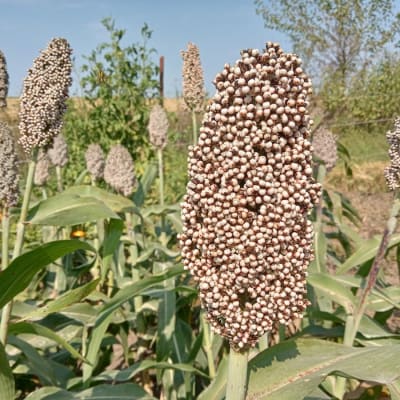
Sorghum bicolor (100 days) Open pollinated. A white-seeded 4' grain sorghum, can be popped, but it is more commonly ground into a mild-flavored flour, cooked as a grain, or sometimes nixtamalized like corn and made into tortillas.
Amaranthus tricolor (120 days) Open pollinated. Very red Jamaican traditional green for Callaloo stew. Beautiful tricolor blaze makes it ornamental as well.
Lupinus mutabilis (130 days, longer to seed) Open pollinated. “Lost” crop of the Incas. Wild-looking 3' lupine native to the high Andes. Attractive, many-colored flowers. Protein-rich seeds.
Vitis spp. Early season. Loose clusters of golden-green grapes suited for single varietal and blended wines. Fruity, crisp, mineral, hints of apple and pear. Z4/5.
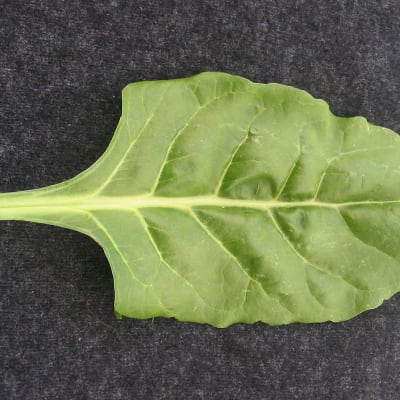
Beta vulgaris (55 days for bunching, 35-40 days baby leaf) Open pollinated. Very dark lush green fully savoyed leaf, brilliant red contrasting stalk. Excellent regrowth for multiple harvests.
Beta vulgaris (55 days for bunching, 35-40 days baby leaf) Open pollinated. Very dark lush green fully savoyed leaf, brilliant red contrasting stalk. Excellent regrowth for multiple harvests.
Cichorium intybus (80 days) Open pollinated. Italian heirloom grown for its fused stems which form a swollen bulb. Sweet stalks eaten in salad or cooked.
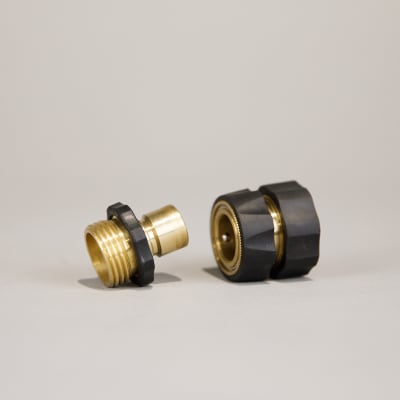
A lifesaver for anyone who changes or moves hoses on a regular basis. Fittings simply snap together for a watertight seal. Allows you to switch hoses without even turning the water off!
Hydrangea quercifolia 3-4' × 3-5' Giant panicles mature to deep rose and dry to red in fall. Broad lobed leaves. Low maintenance. Species native to N. America. Z5
Brassica napus (pabularia group) (55 days) Open pollinated. Cold hardy 18-28" purple and red-veined kale leaves grow frilly while remaining very tender. Good for bunches and mesclun mixes.
Brassica napus (pabularia group) (55 days) Open pollinated. Cold hardy 18-28" purple and red-veined kale leaves grow frilly while remaining very tender. Good for bunches and mesclun mixes.
Treated with non-toxic white paint, these are the official stakes in Fedco trials. At the end of the summer, names stand out clearly and the stakes show little deterioration. Made in Maine.
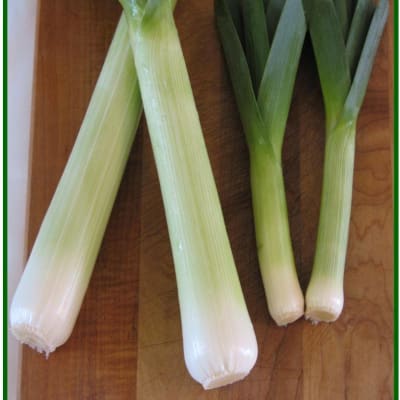
Allium ampeloprasum (porrum group) (75 days) Open pollinated. Dual-purpose "summer" leek. Direct seeded: 50 to 60 days for bunching. Or transplant for full-size August harvest.
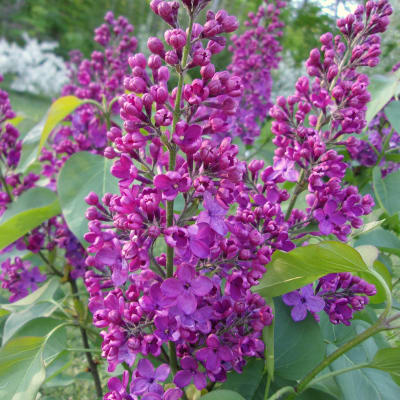
Syringa vulgaris 7×8' Deep purple buds followed by fragrant shimmering single blooms of deep blue-purple backed by a light silver-lilac. Unusual and very nice. Z3.
Syringa vulgaris 10' × same. Very fragrant large single reddish-purple blooms, with each petal edged in pure white. Unique and beautiful! Upright rounded open form. Z3.
Syringa vulgaris 8×8'. Among the deepest and darkest purple flowers of all lilacs. One of the best in cultivation. Large clusters of very fragrant large single florets. Provides stunning contrast with others. Z3.
Ipomoea purpurea (70 days) Open pollinated. Climbs to at least 8-9' with trellising, rich deep purple bloom with a glowing magenta center and dark 5-pointed star pattern.
Castanea dentata Up to 100'. Once common in the eastern US. Important food source for people and wildlife. Not immune to blight but likely to thrive 10-30 years. Fast growing and precocious. Z4.
Persicaria tinctoria Open pollinated. Japanese indigo preferred by dyers in Maine. A tender annual, indigo thrives in fertile soil and likes heat and humidity.
Hyssopus officinalis Open pollinated. Perennial. Normally hardy to Zone 3. Beautiful aromatic perennial border plant that produces spikes of indigo flowers.
Viola sororia 6-10" tall. North American native with cheery blue-purple flowers and attractive heart-shaped leaves, all edible. Larval host plant for multiple species of butterflies. Z3.
Pyrus communis Late summer, green skin. Large dessert pear with melting juicy flesh, smooth creamy texture and thin skin. Wonderful dessert pear. Great for canning. Z3.
Capsicum annuum Red skin. (65 days) Open pollinated. Also known as Golden Delicious Apple Pepper. Heirloom from Hungary forms delicious flattened thick-walled fruits that ripen through yellow to red.
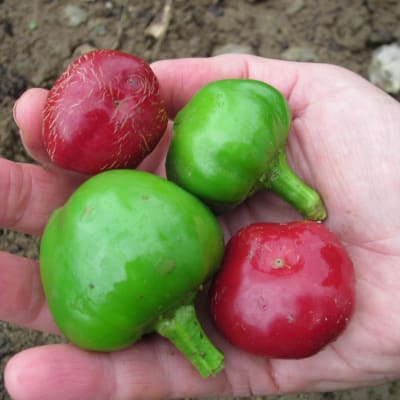
Capsicum annuum Red skin. (75 days) F-1 hybrid. Shiny green ripens to blazing red in a small strawberry-shaped cherry-type. Sweet and spicy, 2,500-5,000 Scovilles.