Solanum melongena White-streaked purple skin. (64 days in unheated tunnel, 72 days open field) F-1 hybrid. Slightly curved 8" extended-teardrop shape covered with purple and lavender streaks with emanations of ivory and light pink.
Solanum melongena White-streaked lavender skin. (88 days) Open pollinated. Italian heirloom. White with lavender streaking, plump, 3-4" wide by 5" long. Fruits avg 2 lb. Creamy, delicate, great for gourmet markets.
Solanum melongena Pink-lavender skin. (84 days) Open pollinated. Pink-lavender with white shoulders, pear-shaped, 4-6" wide by 6-8" long. Sweet tender white flesh. Early and productive.
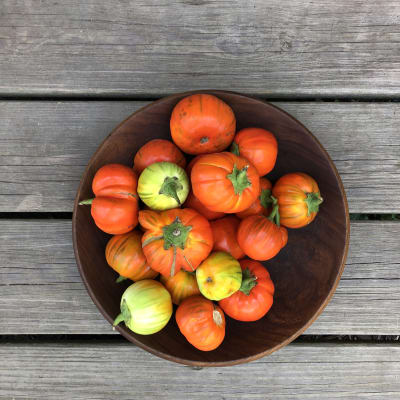
Solanum aethiopicum Orange skin. (65 days) Open pollinated. Sometimes called Ethiopian Eggplant or Garden Egg. Fruits mature to orange but are sweetest when they first turn from green to white. Great in curries and spreads.
Foeniculum vulgare (65 days) Open pollinated. Slow grower with very thin stems valued for its striking feathery bronze foliage. Delicious and decorative.
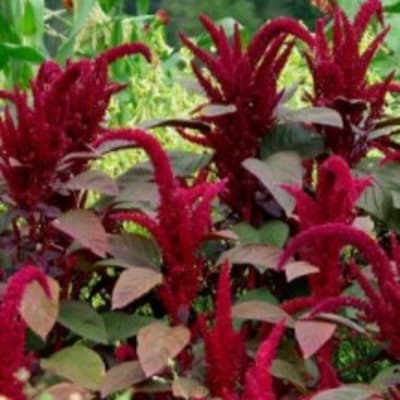
Amaranthus hybridus (65 days to flower, 125 days to seed) Open pollinated. Is it a green vegetable? An ornamental? A gluten-free grain? Why, yes! No wonder Amaranth was sacred in pre-Columbian Mexico.
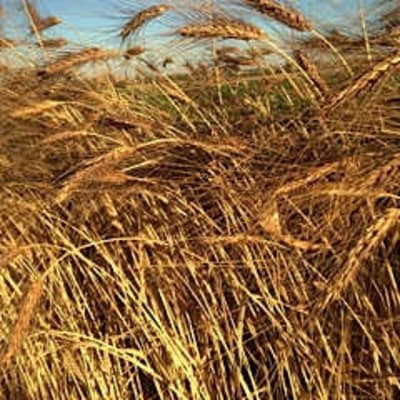
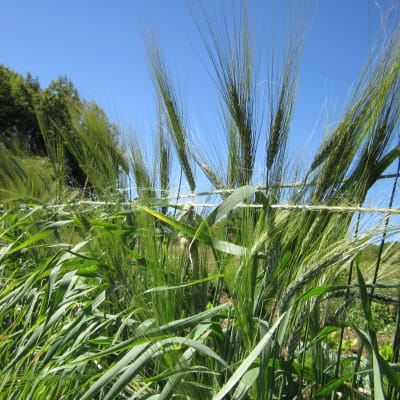
Hordeum vulgare Open pollinated. An historic 6-rowed barley selected by Luther Burbank from California hulless barley. In his final seed catalog he called it “one of [his] greatest grain creations.”
Pennisetum glaucum (120 days) Open pollinated. Ornamental grass with deep-purple foliage and large purple seed spikes. Popular in arrangements. 4-5' tall.
Avena nuda (100 days) Open pollinated. Grain that’s easier to thresh than most other oats, though it still has a small hull that must be removed. A good variety to re-introduce growing grain on home ground.
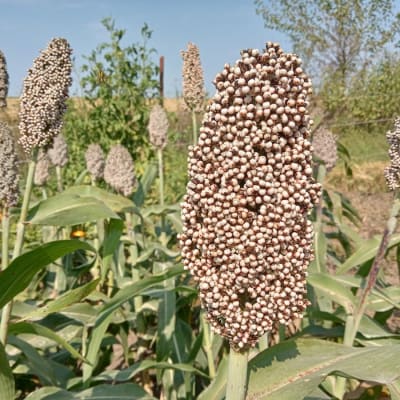
Sorghum bicolor (100 days) Open pollinated. A white-seeded 4' grain sorghum, can be popped, but it is more commonly ground into a mild-flavored flour, cooked as a grain, or sometimes nixtamalized like corn and made into tortillas.
Triticum aestivum Open pollinated. Extremely cold hardy hard red wheat good for small spaces and well adapted to New England. Flour has great flavor and texture, and sturdy plants make great straw.
Triticum durum Open pollinated. Too beautiful to eat! Used for wheat weaving and flower arrangements. Four rows with blue-grey husks and long black awns. Sow in April, reap in Sept.
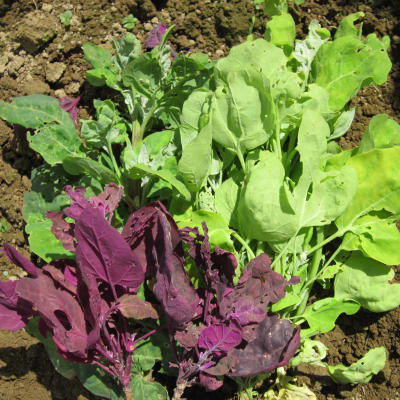
Open pollinated. Five or more kinds chosen from among arugulas, beets, chards, chervil, mustards, orachs, purslane, and kales. All organic, exact components vary.
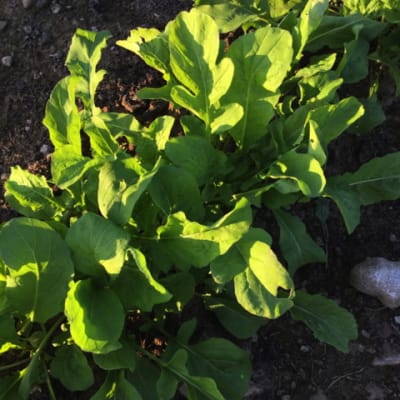
Eruca sativa (47 days) Open pollinated. Musky, cold tolerant greens, great for early spring, late fall, over-wintering. Eat the flowers if you miss some of the greens.
Eruca sativa (21 days baby, 35 days mature) Open pollinated. Profuse basal growth. Dense clusters of tasty lush leaves. Grows well in hot and cool seasons.
Eruca sativa (44 days) Open pollinated. Cross of two European heirlooms and selected for vigor and cold hardiness. Turns purple when it freezes. Full of flavor.
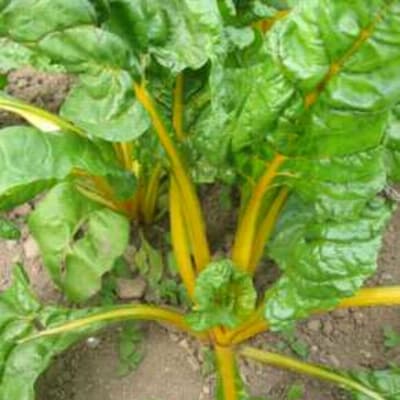
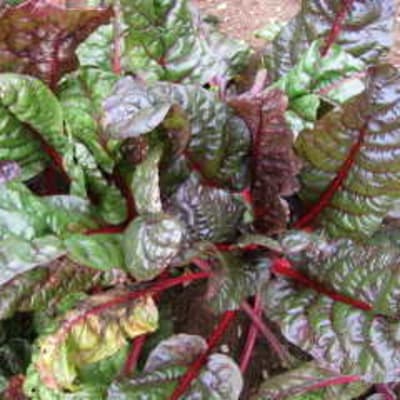
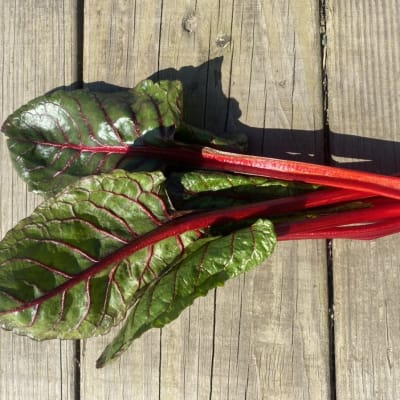
Beta vulgaris (55 days for bunching, 35-40 days baby leaf) Open pollinated. Very dark lush green fully savoyed leaf, brilliant red contrasting stalk. Excellent regrowth for multiple harvests.
Beta vulgaris (56 full size; 30 days baby leaf) Open pollinated. Much like Fordhook, except it’s more compact, deeply savoyed, more uniform and with a narrower stem. Long harvest window.
Cichorium endivia (42 days) Open pollinated. French heirloom. Large frizzy sweet endive with very fine ribs. For late spring and early summer harvests.
Portulaca oleracea var. sativa (50 days) Open pollinated. Golden-green leaves with succulent texture and mildly acerbic flavor. Ideal addition to mesclun.
Lepidium sativum (30 days) Open pollinated. Broad leaves are extremely ruffled, wrinkled and savoyed. Spicy, tangy and sweet. Good in salad mix and bunched for market.
Brassica oleracea (acephala group) (60 days) Open pollinated. Smooth glossy “greasy” greens are delicious steamed. Most delectable early in the season, or late after a nip of frost.
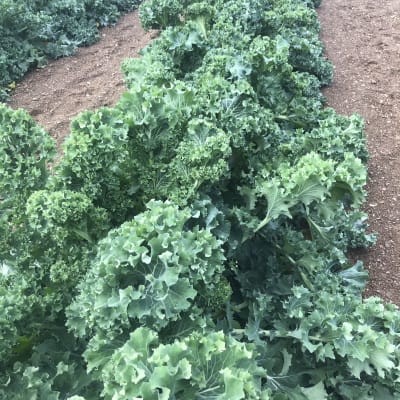
Brassica oleracea (acephala group) (65 days) F-1 hybrid. Crinkly and very curly, of the Dutch borecole type. Upright uniform productive plants hold well in the field in all weather conditions and continue to grow.
Brassica oleracea (acephala group) (30 days baby, 56 days mature) Open pollinated. The most commonly grown kale. Dense finely curled blue-green leaves on upright hardy plants. Best as a fall crop, planted July or August.
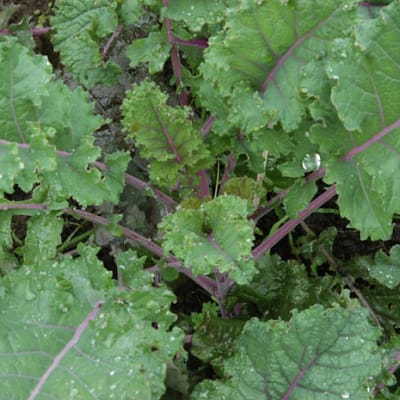
Brassica oleracea (acephala group) (61 days) Open pollinated. Lacinato crossed with Redbor. Curly edges, red veins, purple or blue-green leaves, diverse shapes and colors. Productive and cold-hardy.
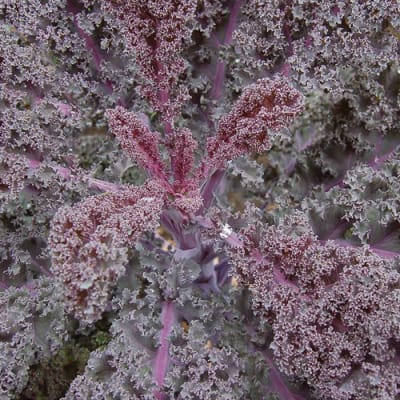
Brassica oleracea (acephala group) (30 days baby, 55 days mature) Open pollinated. Frilly purple leaves suitable for baby leaf or bunching. Similar to Redbor leaf shape and color.
Brassica oleracea (acephala group) (60 days) Open pollinated. Vigorous upright lacinato-leaved kale in a range of bluish-green shades, all with a dramatic pink mid-rib.
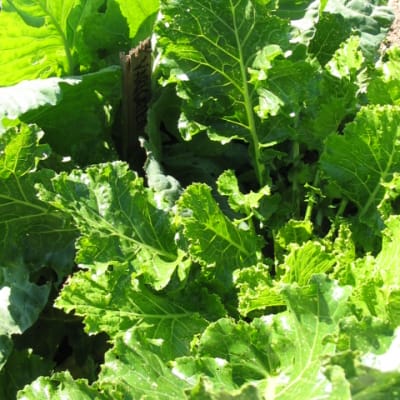
Brassica oleracea (acephala group) (60 days) Open pollinated. English heirloom. Extremely hardy and vigorous. Rounded slightly savoyed leaves are tender even when large.
Brassica napus (pabularia group) (60 days) Open pollinated. Unsurpassed tenderness and flavor. Green oakleaf with purple veining darkens in cold weather. Wilts quickly once picked. Great microgreens.
Brassica napus (pabularia group) (55 days) Open pollinated. Cold hardy 18-28" purple and red-veined kale leaves grow frilly while remaining very tender. Good for bunches and mesclun mixes.
Brassica napus (pabularia group) (60 days) Open pollinated. Serrated silvery-green flat-leaf Siberian-type kale with white veining. Sweetens after frost. Extremely cold hardy.
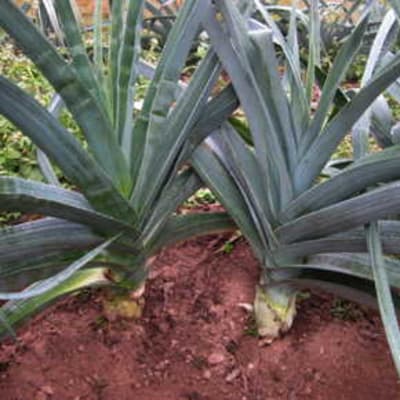
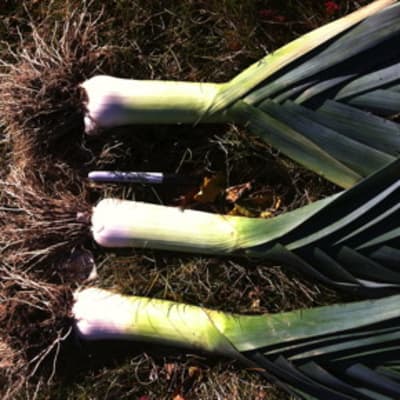
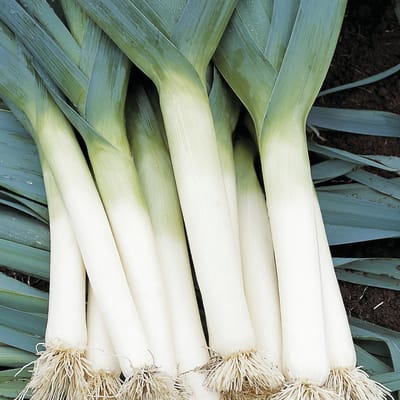
Allium ampeloprasum (porrum group) (84 days) Open pollinated. 6" tall, 3" thick shanks. Blue-green leaves. Very cold tolerant. A good candidate for overwintering.
Allium ampeloprasum (porrum group) (120 days) Open pollinated. Up to 4" across. Makes much of its growth below ground, protected from the cold; often withstands the rigors of winter to offer a delectable spring treat.
Allium ampeloprasum (porrum group) (100 days) Open pollinated. Highly uniform and reliable OP leek with impressive cold tolerance, gorgeous dark blue-green leaves, and medium-length white shanks.