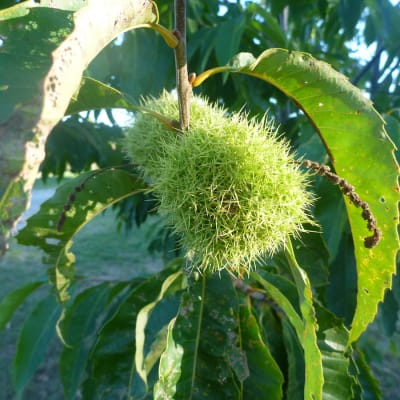
Castanea dentata Up to 100'. Once common in the eastern US. Important food source for people and wildlife. Not immune to blight but likely to thrive 10-30 years. Fast growing and precocious. Z4.
Galvanized metal limb spreaders are more durable than the plastic versions. Use them to establish optimal crotch angles on young tree branches. Bundle of 12 spreaders in four sizes.
Galvanized metal limb spreaders are more durable than the plastic versions. Use them to establish optimal crotch angles on young tree branches. Bundle of 12 spreaders in four sizes.
Amsonia tabernaemontana var. salicifolia 24–36" tall. Fine grassy willow-like foliage. Clusters of powder-blue florets in early summer. Best planted en masse. Z3.
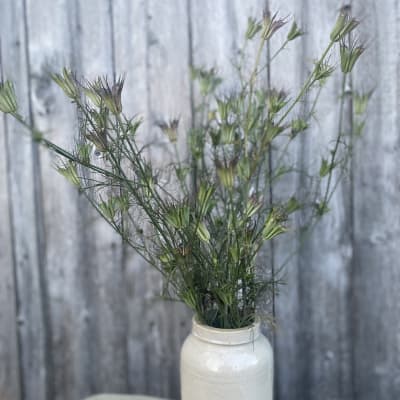
Cerinthe major var. purpurescens Open pollinated. Annual. Features coin-shaped grey-green foliage and profuse blue shrimp-like bracts with purple flowers. Beloved by bumblebees. 12-30" tall.
Pulmonaria 9-12" tall and eventually up to 2' wide. Periwinkle-blue buds open to pink flowers in spring. Large slate-green leaves with silver-white splotches. Woodland plant. Z3.
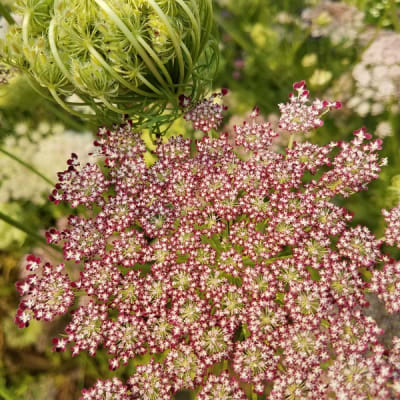
Astrantia 24-28". Clump-forming perennial makes an excellent groundcover when planted en masse. Makes long-lasting cutflowers and is also a great container plant. Z4.
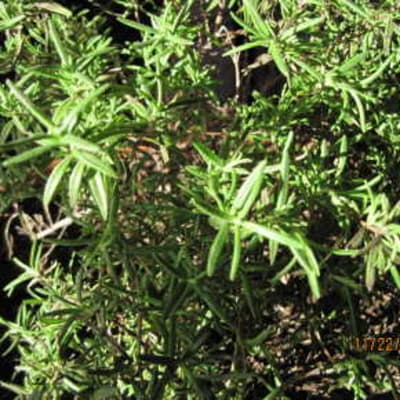
Rosmarinus officinalis Open pollinated. Beloved tender perennial growing to 3-4'. Cannot withstand temperatures below 17°, may be overwintered indoors if kept cool and moist.
Spilanthes oleracea Open pollinated. Used as a ground cover in the south, it adds unusual beauty with its low growth habit and its cute yellow flowers with rayless red-orange centers.
Spilanthes oleracea Open pollinated. Used as a ground cover in the south, it adds unusual beauty with its low growth habit and its cute yellow flowers with rayless red-orange centers.
Actaea racemosa 5-7' tall. Long arching racemes of creamy white serpentine flower spikes. Flowers mid to late summer. Medicinal. Woodland native and pollinator powerhouse. Z3.
Acorus americanus 24-36" tall. Water-loving bog plant with broad sword-like foliage that smells sweetly of citrus and vanilla when crushed. Roots traditionally used as an aromatic bitter for digestive upsets. Z3.
Myrica pensylvanica Waxy blue skin. 5-10' x same. A common sight along Maine’s rocky shores. Fragrant glossy deep green leaves and small waxy berries. Fixes nitrogen and feeds wildlife. Z2.
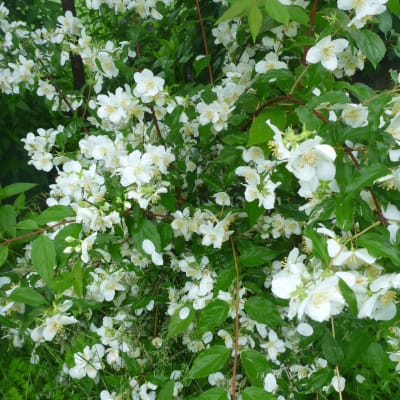
Philadelphus lewisii 4-5' x 3-4' Medium-sized loosely arching ornamental blooming shrub. A “blizzard” of sweet citrusy fragrance from white blossoms in late spring. Z3.
Spiraea tomentosa 2-4' x same. Adorable little plant. Rosy pink steeples emerge as terminal spikes about 4–6" tall. Easy to grow. A must for every butterfly garden. Z3.
Hamamelis virginiana 8-20' x same. Small fall-flowering tree or large shrub. Brilliant golden-yellow fall color. Quirky yellow flowers in November. Z3.
Capsicum annuum Red skin. (85 days) Open pollinated. Cone-shaped 2½x10" fruits taper to a blunt end. Ripens from green to yellow to red. Sweet, crunchy, fruity; ideal for grilling and frying.
Capsicum annuum Red skin. (64 days green, 80 days red ripe) F-1 hybrid. Uniform glossy dark red fruits are mostly 2-lobed, flattened and tapering with a recessed stem. Known as Poblano when green.
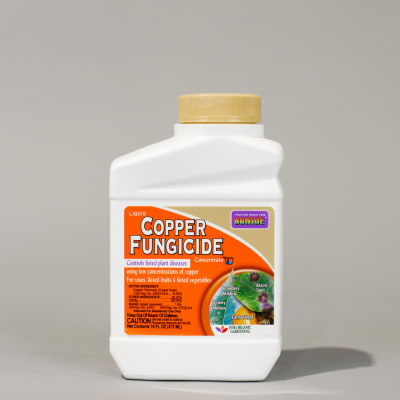
A copper fungicide for the home gardener. Copper is a very effective fungicide, but regular use may result in problematic concentrations in the soil or plant tissue: we advise regular soil testing!
Rich in several bitter flavonoids that stimulate plant immune function. Shown to prevent many pests from feeding and laying eggs. Also shown to kill pests such as mites, aphids and leafminer larvae.
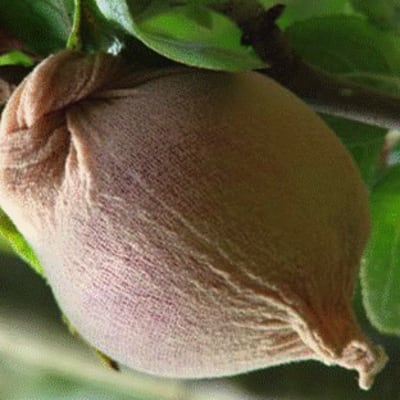
Stretchable nylon sleeves prevent damage to tree fruits from apple maggots, codling moths and plum curculio. Heavy weave and reinforced seam. Reusable and made in the USA.
Tiny particles of kaolin clay prevent insects from recognizing their targets, and, if they land, inhibit their access to the plant’s surface and cause irritation and excessive grooming.
Prunus spp.This is a twig for grafting. Summer, bright red skin, yellow flesh. Medium-sized fruit with firm fragrant yellow semi-freestone flesh. Apricot-like flavor when cooked. Grows rapidly. Z3/4.
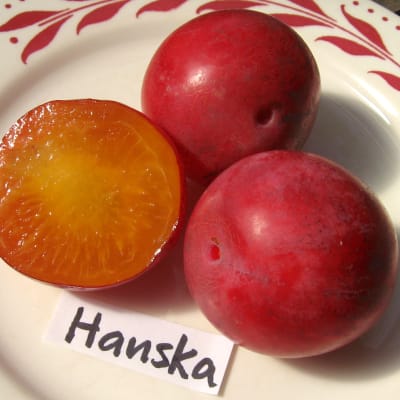
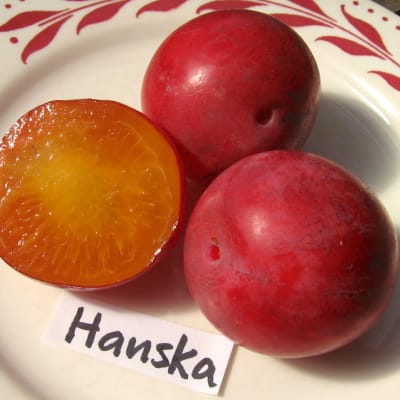
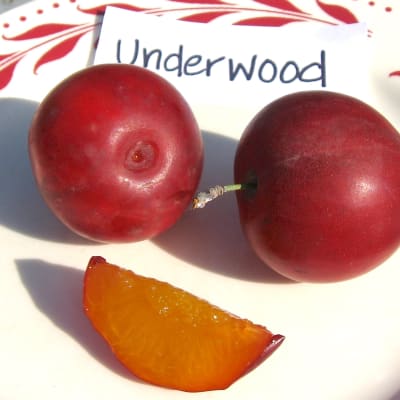
Prunus spp. Midsummer, dull red skin, golden yellow flesh. Medium-to-large 2" dull red fruit. Firm sweet juicy golden-yellow semi-freestone flesh, very good for eating and cooking. Z3.
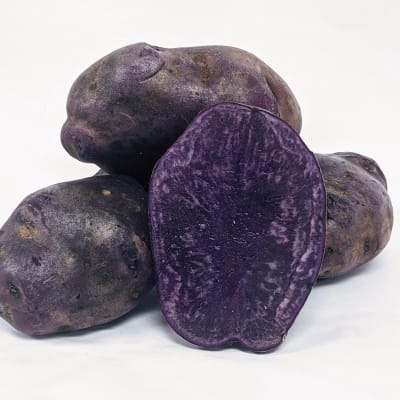
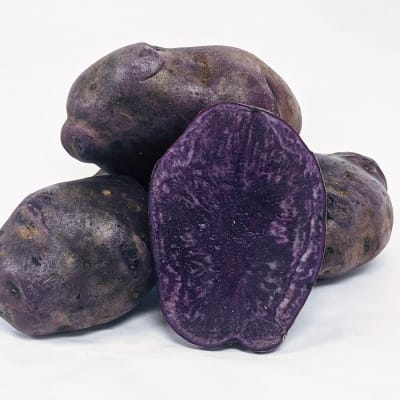
Solanum tuberosum Mid-season, blue skin, blue flesh. Maintains its purple color after boiling, roasting or frying. This spud is packed with powerful antioxidants.
Solanum tuberosum Mid-season, blue skin, blue flesh. Maintains its color after boiling, roasting or frying. This spud is packed with anthocyanins, powerful antioxidants that can lower risks of heart and neurological diseases.
Solanum tuberosum Early to mid-season, blue skin, yellow flesh. Round sapphire exterior creates a striking contrast with stunning gold flesh. High yielding. Also known as Peter Wilcox.
Solanum tuberosum Late season, buff skin, white flesh. Released in 1932 by the USDA and Maine, it is the standard to which all storage potatoes are compared. Very well suited to a Maine growing season.
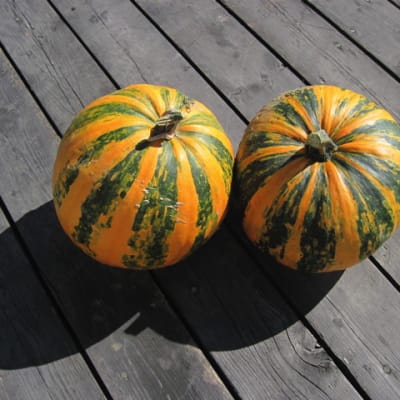
Cucurbita pepo Green-streaked orange skin. (110 days) Open pollinated. Plentiful plump dark brown hulless seeds show a good balance of mild nuttiness and underlying rich earthy potency. Feed yourself, your animals and your chickens all winter and spring!
Cydonia oblonga Golden yellow skin, light yellow flesh. 10-25'. Hardy Russian quince bred for disease resistance. For jellies and cider, stews and marmalades. Citrusy, fragrant with an orangey-pink hue. Z4/5.