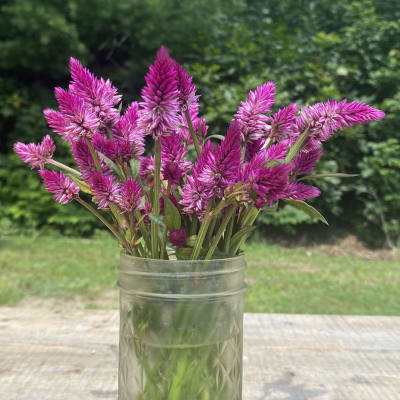
Celosia argentea var. spicata (75 days) Open pollinated. Upright 20-26" tall multi-branched wheat-type celosia produces showy spikes, light pink at the base turning to a deep rose-magenta at the tip. Green foliage starts at ground level.
Allium schoenoprasum (80 days) Open pollinated. Hardy perennial. 1-2' dark blue-green leaves are medium-fine, long and slender. Lilac-colored flowers bloom in June and July.
Cosmos bipinnatus (75-90 days) Open pollinated. Delicate cosmos in rich hues ranging from burgundy to deep amber rose. The 2¼–3¼" flowers contrast nicely with bright green foliage. 3–4' tall.
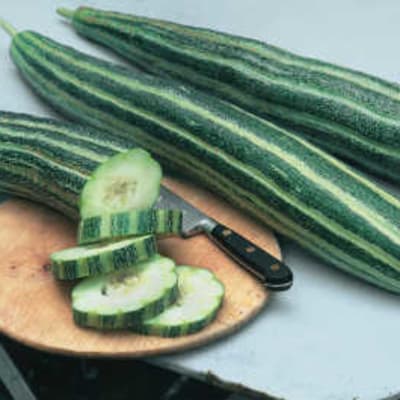
Cucumis melo var. flexuosus (55 days from transplant) Open pollinated. Specialty heirloom "snake melon" cuke. Curved coiled slender fruit with light and dark green stripes. Best eaten at 8-18".
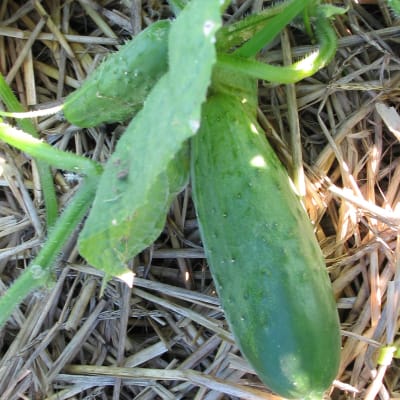
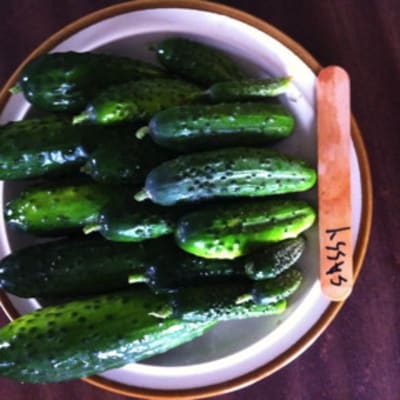
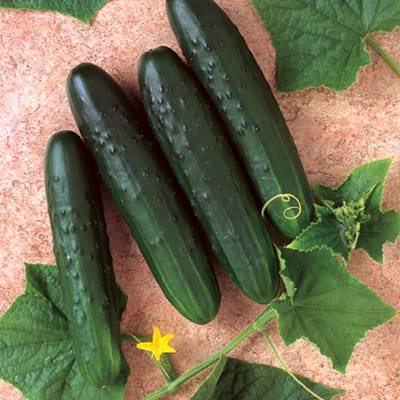
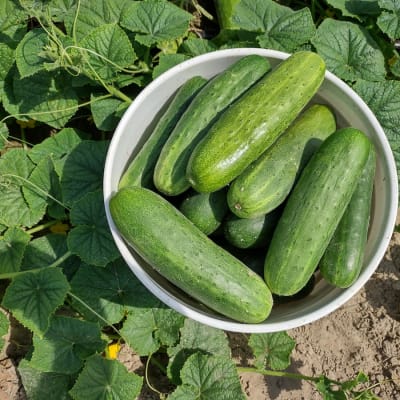
Cucumis sativus (52 days) Open pollinated. Classic pickler. Dark green fruit with black spines. Non-bitter. Used for small pickles and dills. Long harvest window.
Melothria scabra (65 days) Open pollinated. Vigorous but delicate climbing vine. Profuse bearing of 1" oblong green and white fruits. Eat fresh or pickled.
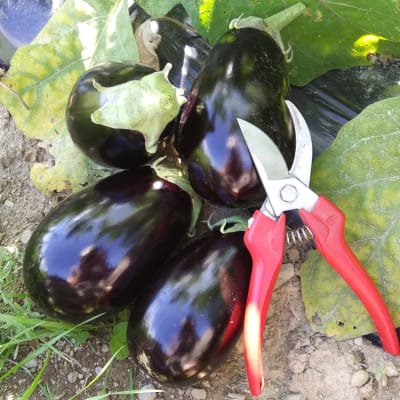
Solanum melongena Dark purple skin. (75 days) F-1 hybrid. Dark purple 7-8"tapered half-long bell-shaped fruit with a thornless light green calyx. Early and productive.
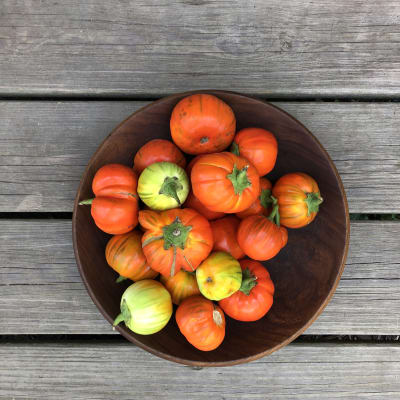
Solanum aethiopicum Orange skin. (65 days) Open pollinated. Sometimes called Ethiopian Eggplant or Garden Egg. Fruits mature to orange but are sweetest when they first turn from green to white. Great in curries and spreads.
Trifolium incarnatum Tender biennial legume. Up to 18". Rapid growth in cool weather makes this vigorous clover great for cover cropping and green manure. Crimson blooms attract bees and make good cutflowers.
Trifolium repens Perennial legume. 8–12" tall. Fantastic nitrogen fixer with great protein and digestibility. Tall enough to be harvested for hay, silage, and green chop. Good choice for poorly drained soil.
Melilotus officinalis Biennial legume. Up to 6'. Vigorous clover for cover cropping, bee forage and green manure. Long thick taproots are very effective at breaking up subsoils and improving soil aeration.
Cichorium intybus Perennial broadleaf, up to 18". Very high digestibility. Protein levels up to 50% higher than alfalfa. Stands may live 5 years or longer, but it’s also valuable for pasture or green chop.
Dryopteris marginalis 20-30" tall. Strong stems and slightly glossy leathery grey-green fronds make this one of the best ferns for floral arrangements. Evergreen leaves in winter. Z3.
Geranium sanguinium 4-9" tall. Magenta cups with purple-blue anthers cover tidy deep green lacy foliage. Compact form works well in containers. Considered more drought tolerant than others in the genus. Z3.
Lagenaria siceraria Tan skin. (120 days) Open pollinated. Dark green skin with pale green splotches. Round 8-10" base tapers into a long neck capped by a small bulb near the stem to make the swan’s head.
Cucurbita pepo var. ovifera Green skin. (93 days) Open pollinated. Heirloom ornamental. Tiny 2-3" green-and-white striped bottle gourds. Rampant vines. Hard shells dry to tan.
Hosta Very large oval blue-green leaves, up to 16" long and 12" wide! Pale lavender flowers bloom midsummer. Foliage develops best blue color in light shade. Z3.
Iris sibirica 32" tall. Bred by legendary Maine hybridizer Currier McEwen in shades of creamy white with accents of yellow-green and buttery yellow. Early midseason to late. Z3.
Brassica oleracea (acephala group) (61 days) Open pollinated. Florida heirloom. After frost, develops beautiful white ribs that contrast with yellow-green leaves.
Brassica oleracea (acephala group) (30 days baby, 56 days mature) Open pollinated. The most commonly grown kale. Dense finely curled blue-green leaves on upright hardy plants. Best as a fall crop, planted July or August.
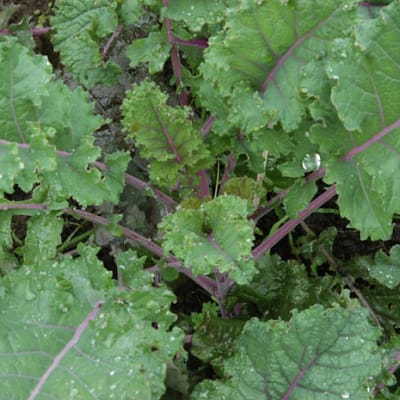
Brassica oleracea (acephala group) (61 days) Open pollinated. Lacinato crossed with Redbor. Curly edges, red veins, purple or blue-green leaves, diverse shapes and colors. Productive and cold-hardy.
Brassica oleracea (acephala group) (60 days) Open pollinated. Vigorous upright lacinato-leaved kale in a range of bluish-green shades, all with a dramatic pink mid-rib.
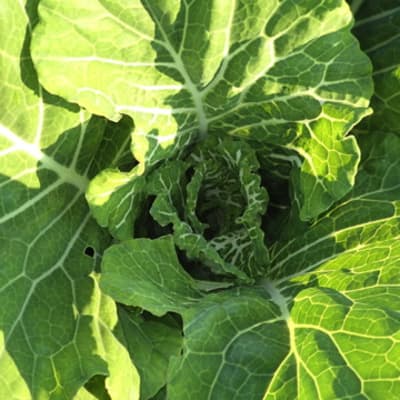
Brassica oleracea (acephala group) (60 days) Open pollinated. English heirloom. Extremely hardy and vigorous. Rounded slightly savoyed leaves are tender even when large.
Brassica napus (pabularia group) (60 days) Open pollinated. Serrated silvery-green flat-leaf Siberian-type kale with white veining. Sweetens after frost. Extremely cold hardy.
Actinidia arguta Green skin, green flesh. Female. Medium-sized bright green fruits with excellent flavor. Very productive and reliably hardy. Requires Meader male for pollination. Z4.
Brassica oleracea (gongylodes group) Green skin, white flesh. (45 days) F-1 hybrid. Very early consistently high-quality green kohlrabi. Tender with sweet flavor.
Lavandula angustifolia Open pollinated. More compact habit than common Lavender with deeper green leaves and a more powerful, less sweet, aroma. 1' plants have bold clustered flower spikes with deep color from mid-July to early September.
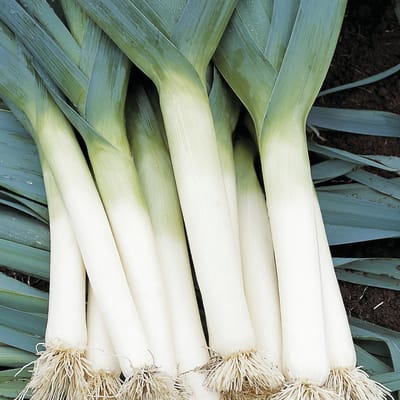
Allium ampeloprasum (porrum group) (84 days) Open pollinated. 6" tall, 3" thick shanks. Blue-green leaves. Very cold tolerant. A good candidate for overwintering.
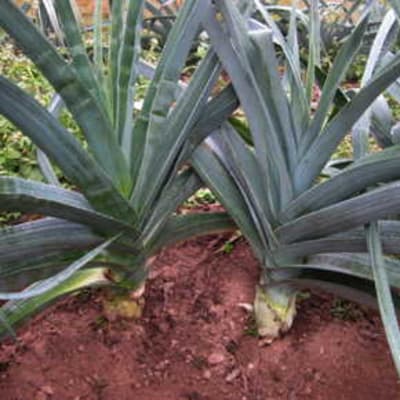
Allium ampeloprasum (porrum group) (100 days) Open pollinated. Highly uniform and reliable OP leek with impressive cold tolerance, gorgeous dark blue-green leaves, and medium-length white shanks.
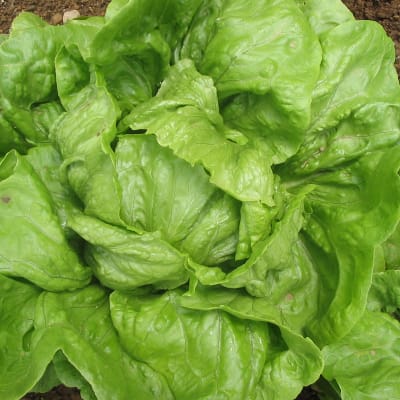
Lactuca sativa (72 days) Open pollinated. Slow-growing compact dark green Batavian with crisp outer leaves surrounding a round tightly-packed heart. Excellent heat tolerance.
Lactuca sativa (65 days) Open pollinated. Compact hardy plants with reddish-amber–tipped green leaves and crunchy batavian taste. French heirloom stands the test of time as well as the chill of fall.
Lactuca sativa (48 days) Open pollinated. Hefty wine-red Batavian forms open rosette that folds together like a romaine at maturity. Shiny red leaves, green in the center, good for baby leaves.
Lactuca sativa (51 days) Open pollinated. Combination of Batavian and romaine, with whorling thick succulent medium-green leaves. Tolerant of heat and rarely bitter.