Gladiolus murielae 12-18" tall. Sword-like foliage is topped by wonderfully scented star-shaped white flowers with mahogany-purple centers on arching stems. Beautiful in the garden or as a cutflower. Z7.
Pennisetum glaucum (120 days) Open pollinated. Ornamental grass with deep-purple foliage and large purple seed spikes. Popular in arrangements. 4-5' tall.
Eruca sativa (44 days) Open pollinated. Cross of two European heirlooms and selected for vigor and cold hardiness. Turns purple when it freezes. Full of flavor.
Iris versicolor 30-36" tall. Northeastern native species with gorgeous blue-violet flowers with bold purple veining and a white and lemon-yellow blaze. Early. Z2.
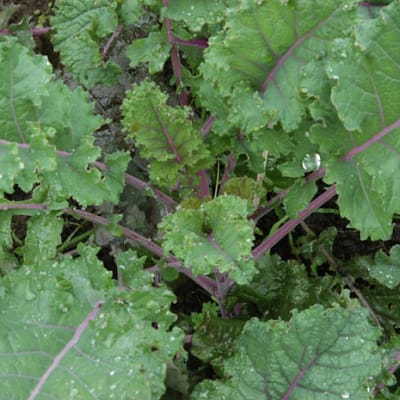
Brassica oleracea (acephala group) (61 days) Open pollinated. Lacinato crossed with Redbor. Curly edges, red veins, purple or blue-green leaves, diverse shapes and colors. Productive and cold-hardy.
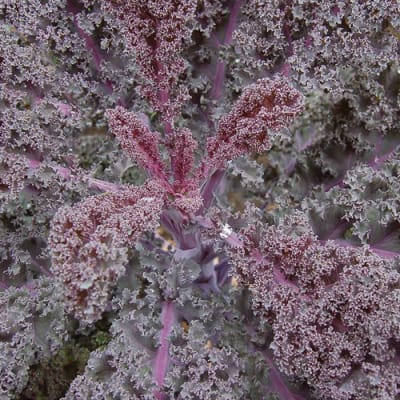
Brassica oleracea (acephala group) (30 days baby, 55 days mature) Open pollinated. Frilly purple leaves suitable for baby leaf or bunching. Similar to Redbor leaf shape and color.
Brassica napus (pabularia group) (60 days) Open pollinated. Unsurpassed tenderness and flavor. Green oakleaf with purple veining darkens in cold weather. Wilts quickly once picked. Great microgreens.
Brassica napus (pabularia group) (60 days) Open pollinated. Unsurpassed tenderness and flavor. Green oakleaf with purple veining darkens in cold weather. Wilts quickly once picked. Great microgreens.
Brassica napus (pabularia group) (55 days) Open pollinated. Cold hardy 18-28" purple and red-veined kale leaves grow frilly while remaining very tender. Good for bunches and mesclun mixes.
Brassica napus (pabularia group) (55 days) Open pollinated. Cold hardy 18-28" purple and red-veined kale leaves grow frilly while remaining very tender. Good for bunches and mesclun mixes.
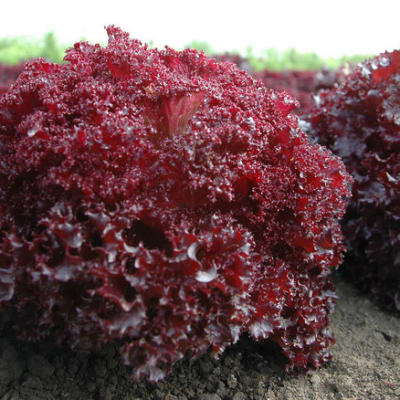
Lactuca sativa (56 days) Open pollinated. Beautiful compact Lollo-type has extremely dark purple-red leaves with ruffles and curls. Very mild flavor for type. Stays non-bitter longer.
Lactuca sativa (44 days baby, 63 days mature) Open pollinated. From England. Compact Winter Density-type mini-romaine with very deep purple-red leaves. Very cold tolerant, decent heat tolerance.
Syringa vulgaris Deep bluish-purple lilac with the biggest florets around: each single flower can reach up to 1½" wide! “So large they hang like clusters of immense grapes.” Z3.
Syringa vulgaris 10' x same. Very fragrant large single reddish-purple blooms, with each petal edged in pure white. Unique and beautiful! Upright rounded open form. Z3.
Ipomoea purpurea (70 days) Open pollinated. Climbs to at least 8-9' with trellising, rich deep purple bloom with a glowing magenta center and dark 5-pointed star pattern.
Allium cepa Purple-red skin. (110 days) Open pollinated. 19th century heirloom. Large medium-firm deep purple-red flattened globes with pinkish-white fine-grained flesh. Long-day. Keeps till late winter.
Origanum heracleoticum Open pollinated. Perennial to Zone 4, but survives some winters in Zone 3. The true culinary herb for Greek and Italian cooking. Low-growing with fragrant dull green and purple leaves and white flowers.
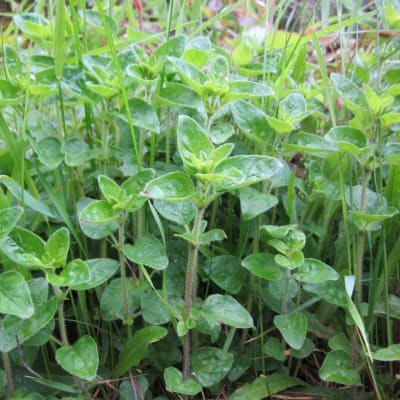
Origanum vulgare 18-20" tall. Fragrant green and purple leaves used for culinary purposes. Given plenty space in full sun, it sprawls and is attractive to pollinators. Z4.
Cerinthe major var. purpurescens Open pollinated. Annual. Features coin-shaped grey-green foliage and profuse blue shrimp-like bracts with purple flowers. Beloved by bumblebees. 12-30" tall.
Coix lacryma-jobi (100 days) Open pollinated. Sets pendulous sprays of globular pearly purple-grey seeds, which may be strung as beads for necklaces. Spiky 2–3' stalks good for planters or as filler in dried fall arrangements.
Limonium sinuatum (115 days) Open pollinated. Mix includes lavender, rose, purple, white, yellow. Especially suited for dried arrangements, also good in fresh. 2-2½' tall.
Agastache foeniculum Open pollinated. Perennial can grow 3' tall, 2' wide. Vigorous self-sower. Anise-scented foliage and purple flowers delightful as a tea or culinary seasoning, or filler in mixed bouquets.
Agastache foeniculum Open pollinated. Perennial can grow 3' tall, 2' wide. Vigorous self-sower. Anise-scented foliage and purple flowers are delightful as a tea or culinary seasoning, or filler in mixed bouquets.
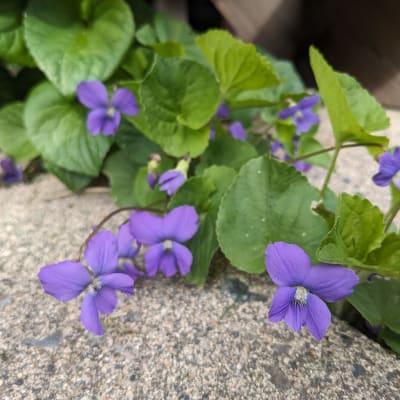
Viola sororia 6-10" tall. North American native with cheery blue-purple flowers and attractive heart-shaped leaves, all edible. Larval host plant for multiple species of butterflies. Z3.
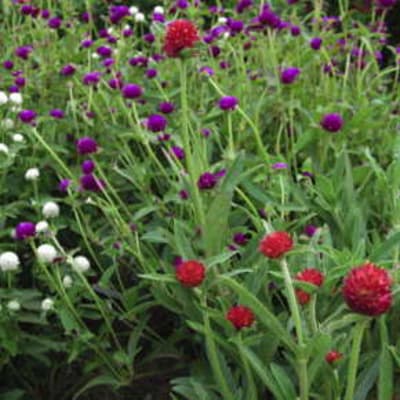
Scabiosa atropurpurea Open pollinated. Mix features purple, lavender, red, pink, white and almost-maroon. Each 2" bloom is a rounded mass of tiny florets.
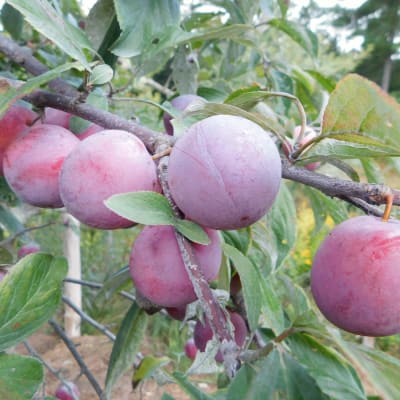
Prunus spp. Mid-late summer, red-purple skin, yellow-orange flesh. Large red-purple plums with translucent yellow-orange tart flesh. Clingstone. Good fresh eating or canning. Bears reliably. Z3.
Prunus spp. Midsummer, purplish red skin, red-blushed yellow flesh. Purple-red fruit with yellow-bleeding-to-red firm flesh. Excellent fresh eating. Seems plenty hardy once established with good pest and disease resistance. Z4/5.
Papaver Open pollinated. 3' tall. Mostly pink on the outer two thirds of the petal edge with a slight purple blush in the middle and on the petal backs. Double, but not a full pompon.
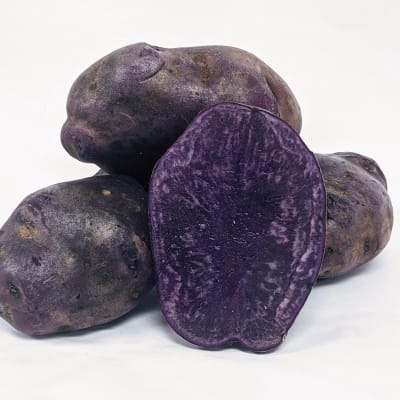
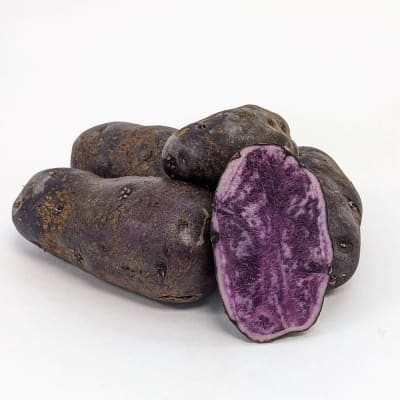
Solanum tuberosum Mid-season, blue skin, blue flesh. Maintains its purple color after boiling, roasting or frying. This spud is packed with powerful antioxidants.
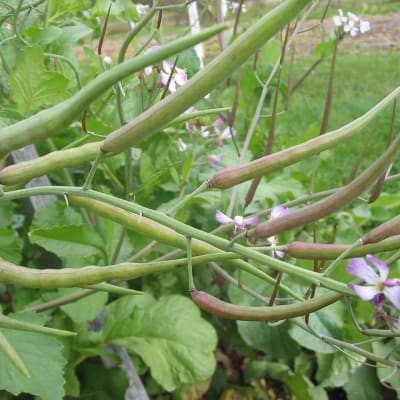
Raphanus sativus var. caudatus (50 days) Open pollinated. Asian heirloom, Specialty. Grown for its immature purple-green pungent seed pods. Harvest young for best quality.