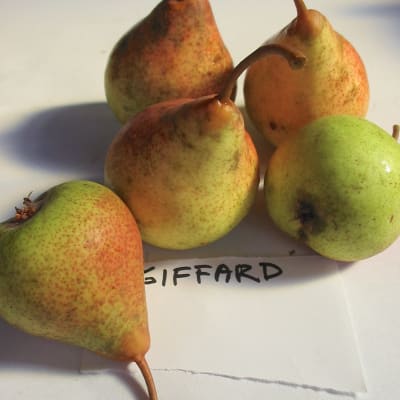
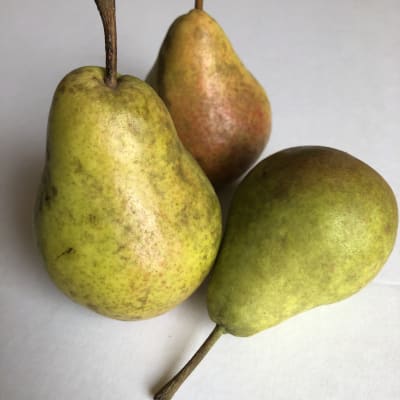
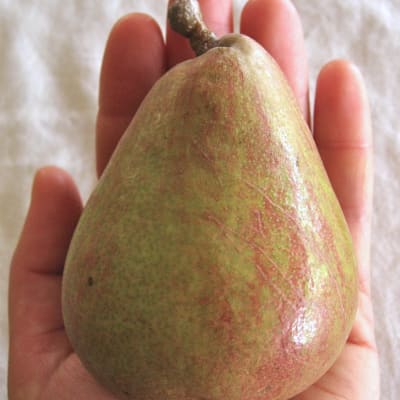
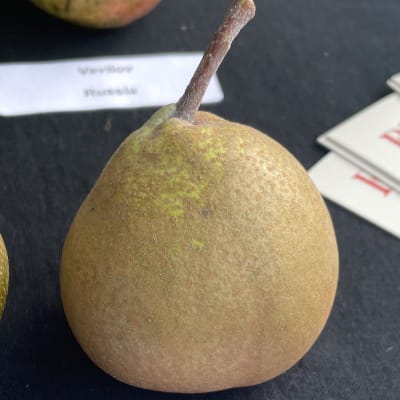
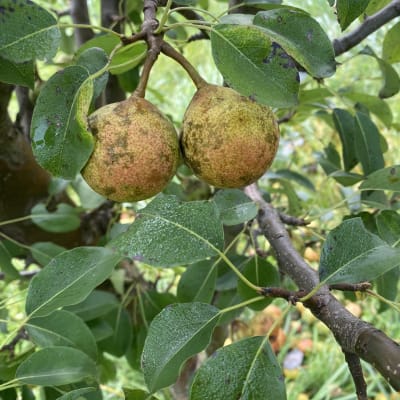
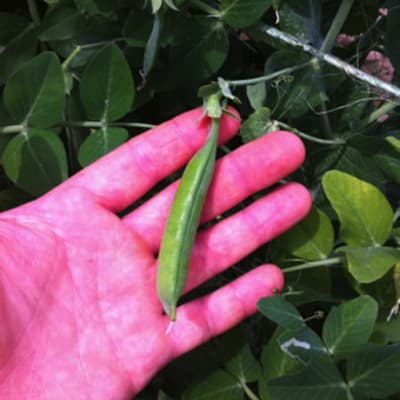
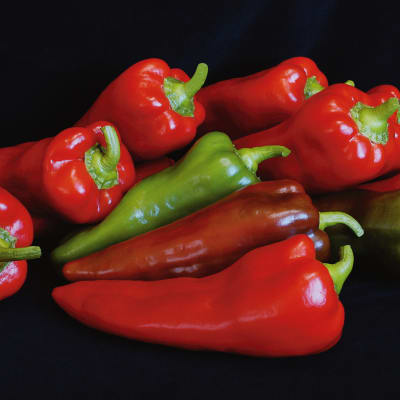
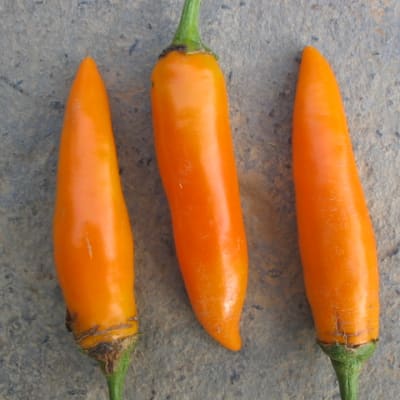
Pyrus communis Fall. Distinctive sweet rich spicy buttery flavor. Melting juicy tender white flesh. Bears huge crops annually. Good pollinator for other varieties. Z4.
read more
Pyrus communisThis is a twig for grafting. Fall. Distinctive sweet rich spicy buttery flavor. Melting juicy tender white flesh. Bears huge crops annually. Good pollinator for other varieties. Z4.
read more
Pyrus communisThis is a twig for grafting. Late fall-winter. Frankendorf, Germany. Coarse flesh, good flavor. Great storage pear. Can keep until April in the root cellar. Z4.
read more
Pyrus communisThis is a twig for grafting. Late summer. Maybe the best-tasting pear ever. Rich, melting, buttery, juicy, sugary, tender, highly perfumed and aromatic with almost no grit cells. Excellent fire blight resistance. Z4.
read more
Pyrus communis Winter. Great storage pear with fantastic flavor. One of our favorites! Highly attractive fruit shines and glows. High yielding. Z4.
read more
Pyrus communis Fall. Medium-sharp perry pear. Too bitter for fresh eating but very good for making a strong aromatic perry. Also suitable for cooking. Medium-small spreading tree. Probably Z4.
read more
Pisum sativum (65 days) Open pollinated. Standard mid-season variety, preferred by commercial growers for heavy yields and extreme weather tolerance. 3' vines.
read more
Pisum sativum (58 days) Open pollinated. Earliest snap pea, on 2' vines. Use to start the season, and allow extra space between rows if you do not stake.
read more
Pisum sativum (65 days) Open pollinated. Prolific Tendersweet bears 2½–3" dark green and slightly curved snap pods. Has a longer picking window than most quick and short types.
read more
Paeonia lactiflora 24–36" tall. A symphony of coral, peach, melon and pink shades in semi-double form. Very fragrant and packed with petals. Early. Z3.
read more
Paeonia lactiflora 32-36" tall. Fragrant flowers open with narrow red lines shot onto light rose-pink. Fully double. One of our favorites! Late. Z3.
read more
Capsicum annuum (70 days) F-1 hybrid. Deep carmine horn-shaped 2.5x6" fruits. Classic Italian Corno di Toro type. Unusually sweet. Widely adapted and early maturing.
read more
Capsicum annuum (76 days) Open pollinated. Shiny red thin-walled 8" long tapering frying pepper. Sweet mild flavor, good raw and especially fried. High yielding.
read more
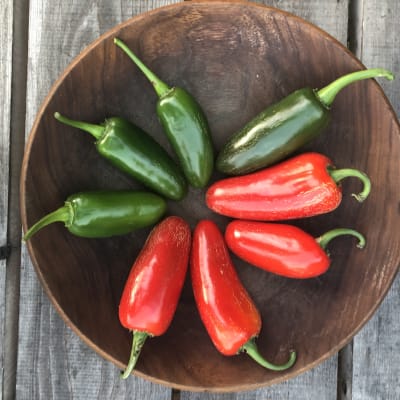
Capsicum annuum (68 days) Open pollinated. Thin-walled 1½–3½" tapered fruits are as hot as they look and make welcome additions to chutneys, marinades, salsas, and hot sauces. Also delicious dried and ground.
read more
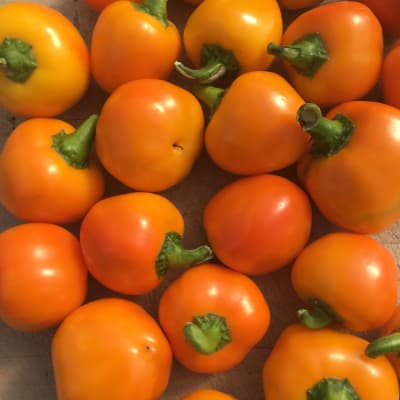
Capsicum annuum (74 days) Open pollinated. Round 1-2" shiny bright tangerine fruits on sturdy plants. Heat is comparable to a mild jalapeño, but varies with the weather.
read more
Capsicum annuum (100 days) Open pollinated. Shiny orange fruits are a bit longer than a habanero but they pull off the look. Bushy short plants bear about 2 dozen sweet—not hot— fruits.
read more
Capsicum annuum (75 days) Open pollinated. The 2½–3 x ½" bright scarlet fruits have thin walls and classic serrano heat. Perfect for fresh salsa, pickling and hot sauces
read more
Capsicum annuum (88 days) Open pollinated. This rare Pennsylvania Dutch heirloom packs considerable heat. Rarely eaten raw, the peppers were traditionally used for pickling and pepper vinegar.
read more
Capsicum chinense (90 days) Open pollinated. A Scotch Bonnet–type infamous for its extreme heat, their distinctive flavor makes them a key ingredient in West Indian jerk sauces.
read more
Capsicum annuum (64 days green, 80 days red ripe) F-1 hybrid. Uniform glossy dark red fruits are mostly 2-lobed, flattened and tapering with a recessed stem. Known as Poblano when green.
read more
Capsicum annuum (74 days) Open pollinated. Blocky 3x3" bells ripen from purple to green to deep red. At purple stage they sell at a premium. Early and prolific.
read more
Drape over trees or bushes to protect fruit or berries from birds. Strong and durable black polypropylene ⅝" mesh with UV inhibitors. Available in three sizes.
read more
Bird netting that doesn’t make you want to attack anyone in your general vicinity whilst trying to untangle it. Lasts significantly longer than other nettings. UV-resistant polyethylene.
read more
Use as temporary fencing to protect plantings and fruit crops from deer, birds and other pests. Strong and durable black polypropylene ⅝" mesh with UV inhibitors. Available in two sizes.
read more
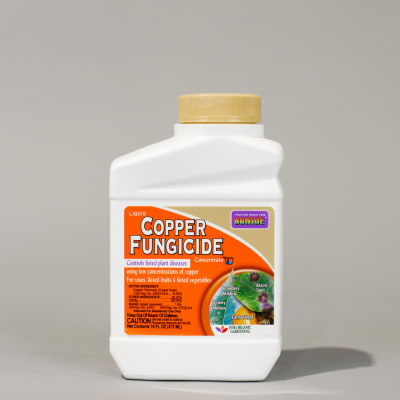
A copper fungicide for the home gardener. Copper is a very effective fungicide, but regular use may result in problematic concentrations in the soil or plant tissue: we advise regular soil testing!
read more
A soluble copper fertilizer combined with a fatty acid that controls most fungal diseases of plants and vegetables. Start treatment with copper before symptoms appear.
read more
Made with thyme oil and corn oil, greenhouse tests show CannControl to prevent and eliminate powdery mildew, gray mold, mites, aphids, whiteflies, thrips and fungus gnats.
read more
Used to control scab, powdery mildew and leaf spot. Sulfur is not water soluble; but small particles like these are better able to stay in suspension. Can also be applied as a powder.
read more
Helps induce systemic resistance to a broad range of fungal diseases in most edible crops. Preferable to copper fungicide on cannabis, and worth a try to prevent late blight in your potatoes!
read more
Rich in several bitter flavonoids that stimulate plant immune function. Shown to prevent many pests from feeding and laying eggs. Also shown to kill pests such as mites, aphids and leafminer larvae.
read more
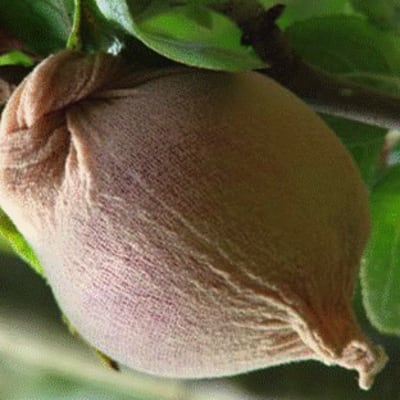
Stretchable nylon sleeves prevent damage to tree fruits from apple maggots, codling moths and plum curculio. Heavy weave and reinforced seam. Reusable and made in the USA.
read more
Microscopic sharp edges cut into insects’ bodies and cause death by dehydration. Insects cannot develop resistance to this mode of action. Good for cutworm protection.
read more
Biological insecticide made of commercial strength Bt, and labeled for a wide variety of caterpillar and moth pests on practically every agricultural crop there is.
read more