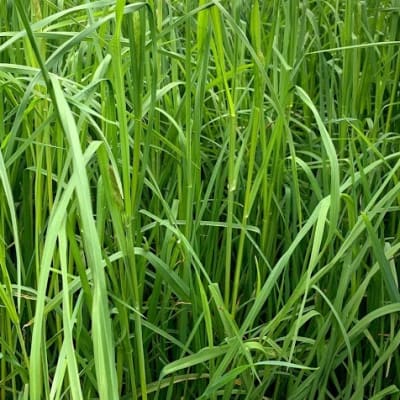
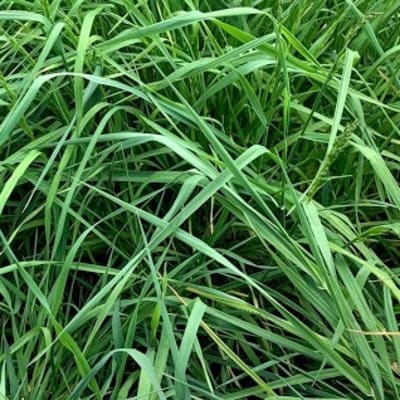
Hemerocallis 30-40" tall. Intensely fragrant trumpet-shaped lemon-yellow flowers with long bloom time. Widely planted on old farmsteads in Maine. Z2.
read more
Liatris spicata 30-36" tall. Dreamy white flower wands above fine grass-like foliage. Blooms from July to September. Great for cutflowers. Z3.
read more
Liatris pycnostachya 40-48" tall. . North American native with tall brilliant purple wands loved by butterflies in midsummer. Great cutflowers. Z3.
read more
Liatris spicata 20-30" tall. Magenta-purple flower spikes above fine grass-like foliage. Blooms from July to September. Great for cutflowers. Z3.
read more
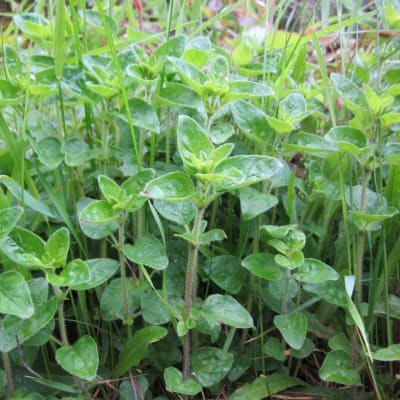
Origanum vulgare 18-20" tall. Fragrant green and purple leaves used for culinary purposes. Given plenty space in full sun, it sprawls and is attractive to pollinators. Z4.
read more
Veronicastrum virginicum 4-6' tall. Elegant towering native plant sends up large flower spikes of densely clustered tiny white blossoms. Attracts pollinators. Z3.
read more
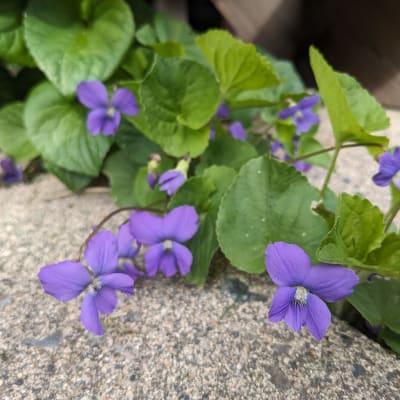
Viola sororia 6-10" tall. North American native with cheery blue-purple flowers and attractive heart-shaped leaves, all edible. Larval host plant for multiple species of butterflies. Z3.
read more
Arnica chamissonis Open pollinated. 20" perennial yields well with multiple stalks with yellow flowers blooming for most of the early season.
read more
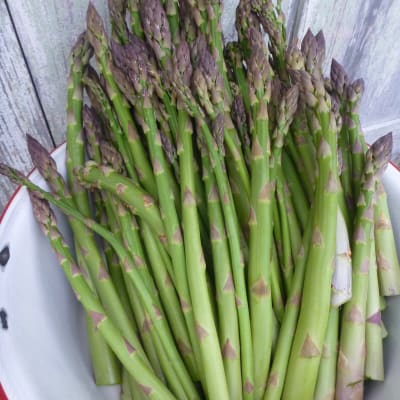
Asparagus officinalis High-yielding good-quality tender green spears are long-lived and very cold hardy. On the rise as an excellent replacement for Jersey, even outproducing Jersey in northern Minnesota trials! Z3.
read more
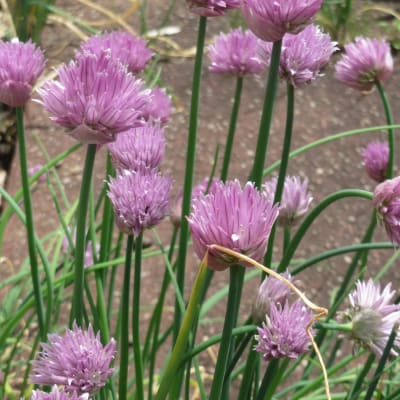
Allium schoenoprasum (80 days) Open pollinated. Hardy perennial. 1-2' dark blue-green leaves are medium-fine, long and slender. Lilac-colored flowers bloom in June and July.
read more
Medicago sativa Perennial legume, up to 3' high. This fragrant plant has beautiful purple flowers and is great for hay and as a cover crop. Herbalists consider it a valuable nutritive tonic.
read more
Trifolium repens Perennial legume. Up to 12". Vigorous large-leafed white clover. Readily self-seeds. Excellent for perennial grazing pasture and improving soil quality in areas transitioning from woody growth.
read more
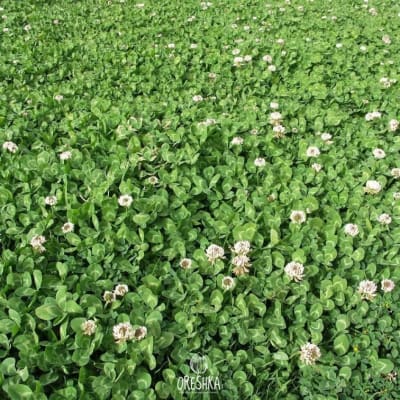
Trifolium repens Perennial legume. The lowest-growing clover. This shade- and traffic-tolerant perennial makes nice garden paths and living mulch. Our most popular clover.
read more
Trifolium pratense Short-lived perennial legume. Up to 24". A high-yielding red hay clover with glabrous stems for fast dry-down. Excellent winter hardiness and persistence. Good for acidic or wet soils.
read more
Trifolium repens Perennial legume. 8–12" tall. Fantastic nitrogen fixer with great protein and digestibility. Tall enough to be harvested for hay, silage, and green chop. Good choice for poorly drained soil.
read more
Trifolium pratense Short-lived perennial legume. Up to 24". Vigorous and high-yielding clover suitable for pastures, underseeding and cover-cropping. More drought-tolerant than white clover.
read more
Trifolium repens Perennial legume. Up to 9". Small-leafed perennial clover establishes quickly and withstands traffic and close mowing. Our favorite clover for organic pasture.
read more
Cichorium intybus Perennial broadleaf, up to 18". Very high digestibility. Protein levels up to 50% higher than alfalfa. Stands may live 5 years or longer, but it’s also valuable for pasture or green chop.
read more
Dactylis glomerata Perennial grass. Long-lived vigorous grass. Tall leafy plants grow rapidly even in poor soils, tolerates moderately drained soils. Can be established in spring, summer, or even late winter.
read more
Lolium arundinaceum Perennial grass. Long-lived, versatile and low-maintenance grass good for pasture, lawn, or hay. Deep and extensive root system protects against erosion. Tolerates most adverse conditions.
read more
Phleum pratense Perennial grass. A popular perennial hay species that produces good yields, resists lodging and is easily cut and cured. Very winter hardy. Does not tolerate heat or drought.
read more
All-purpose lawn blend for the Northeast. Good for a range of conditions, full sun to partial shade. Makes a great understory for orchards and other perennial woody crops.
read more
Perennial pasture mix of grasses and clover, well suited to Maine and other areas with similarly variable weather and temperatures. Provides season-long regrowth and good grazing.
read more
Allium tricoccum Open pollinated. Also called Wild Leeks. Bulb-forming perennial is a spring ephemeral. Not a good germinator; expect less than 50%.
read more
Eucalyptus cinerea Open pollinated. Perennial to Zone 8. Charming silvery blue-green 2" leaves make a fabulous bouquet filler that dries nicely and freshens the room with fragrant oils. 2–3' tall.
read more
Chasmanthium latifolium Open pollinated. Perennial. Strong 2' arching stems with airy flattened seedheads are beautiful for dried arrangements. Native ornamental grass.
read more
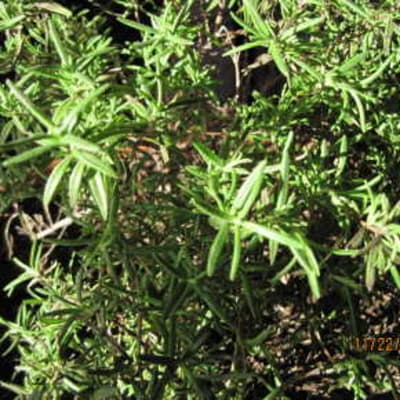
Rosmarinus officinalis Open pollinated. Beloved tender perennial growing to 3-4'. Cannot withstand temperatures below 17°, may be overwintered indoors if kept cool and moist.
read more
Rheum rhabarbarum Heirloom variety, considered the most important rhubarb variety of the 19th century. Unique seedlings; will show some variation. Z2.
read more
Viola × wittrockiana Open pollinated. Perennial to Zone 6. Heart-shaped leaves on mounded 4-6" plants covered with 3" mostly bicolor flowers, with darker whiskers and yellow eyes.
read more
Molasses is a source of important nutrients, including manganese, magnesium, copper, potassium and calcium. Food grade, shelf stable. Plants and beneficial microbes have a sweet tooth, too!
read more
Arnica chamissonis 8-12" tall. Low spreading groundcover with bright yellow daisy-like flowers used externally in oils and salves to treat bruises, sprains, inflammation. Z3.
read more
Symphyotrichum novae-angliae 4-6' tall. North American native. Blooms range from blue-purple to lavender-pink with yellow eyes. Attractive to pollinators. Z3.
read more
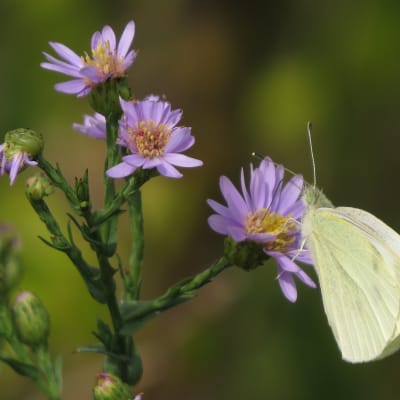
Symphyotrichum laeve 3-4' tall. North American native has Loose clusters of lavender-blue blossoms with yellow eyes. Smooth blue-green foliage. Attractive to pollinators in late season. Z3.
read more
Astilbe chinensis 16-24" tall. Creamy pink-white dense plumes fade to green—not brown—to extend this Astilbe’s time to shine. Full to part shade. Z3.
read more
Penstemon hirsutus 16-30" tall. Shorter than P. digitalis, with fuzzy stems topped by clusters of slender tubular nodding 1" lavender flowers with arching white lips. Z3.
read more
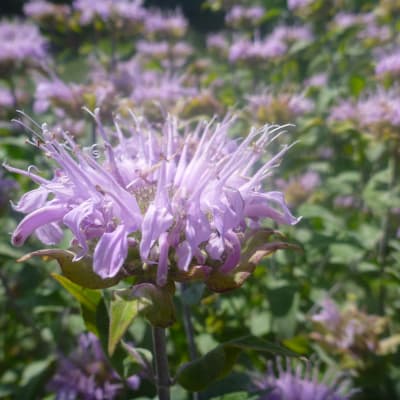
Monarda fistulosa 3-4' tall. Our native wildflower species with aromatic lavender blossoms. This is the variety most commonly used for medicinal purposes. Z3.
read more
Dicentra formosa 14-20" tall. Heart-shaped blossoms in late spring. With good moisture, the lacy foliage look nice all season. Full to dappled shade. Z3.
read more
Nepeta × faassenii 24-36" tall. Aromatic grey-green foliage with long arching stems topped by lavender-blue flowers. Rugged. Attractive to pollinators. Z3.
read more
Aquilegia canadensis 12-24" tall. This eastern North American native features delicate red-spurred sepals with yellow petaled skirts. Blooms late May to early June. Irresistible to hummingbirds! Z3.
read more
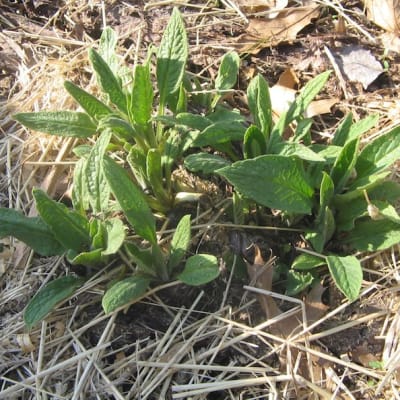
Symphytum × uplandicum 24–48" tall. Great companion plant for orchards. Excellent addition to the compost pile. Rich in silica, nitrogen, magnesium, calcium, potassium and iron. Z3.
read more