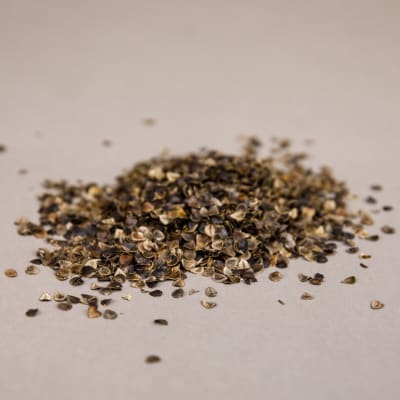
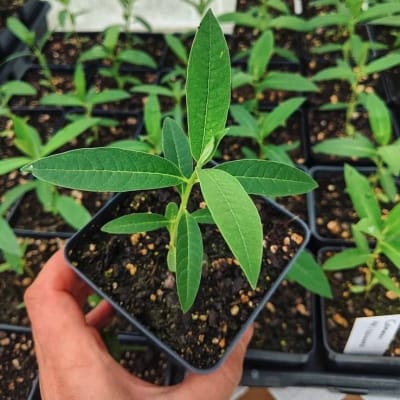
Lactuca sativa (53 days) Open pollinated. Grand Rapids-type with slow early growth and pale-green leaves. Excellent heat tolerance and bolt resistance. Recommended for summer production.
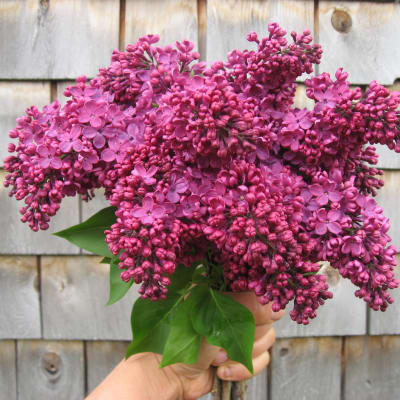
Syringa vulgaris Deep bluish-purple lilac with the biggest florets around: each single flower can reach up to 1½" wide! “So large they hang like clusters of immense grapes.” Z3.
The garden seems full of rocks until you need one to anchor the row cover! These galvanized steel staples neatly hold down landscape fabric, row covers, irrigation line or fencing.
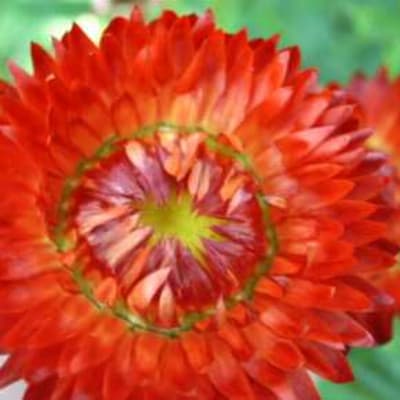
Spilanthes oleracea Open pollinated. Used as a ground cover in the south, it adds unusual beauty with its low growth habit and its cute yellow flowers with rayless red-orange centers.
Actaea racemosa 5-7' tall. Long arching racemes of creamy white serpentine flower spikes. Flowers mid to late summer. Medicinal. Woodland native and pollinator powerhouse. Z3.
Prunus persica Yellow flesh. Mid. Large fruit with yellow flesh is sweet and juicy. An overall great all-purpose peach for fresh eating, canning or baking. Freestone. Z5.
Pisum sativum (58 days) Open pollinated. Earliest snap pea, on 2' vines. Use to start the season, and allow extra space between rows if you do not stake.
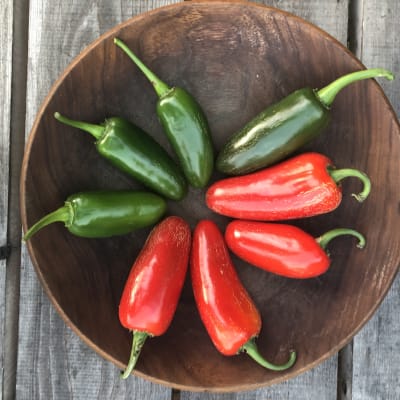
Capsicum annuum Red skin. (65 days green, 85 days ripe) Open pollinated. Dark green 1x3" sausage-shaped blunt fruits. Brown netting appears as fruits ripen to dark red. Hot! 4,000 to 6,500 Scovilles. Early.
Capsicum annuum Red skin. (75 days) Open pollinated. The 2½–3 x ½" bright scarlet fruits have thin walls and classic serrano heat. Perfect for fresh salsa, pickling and hot sauces
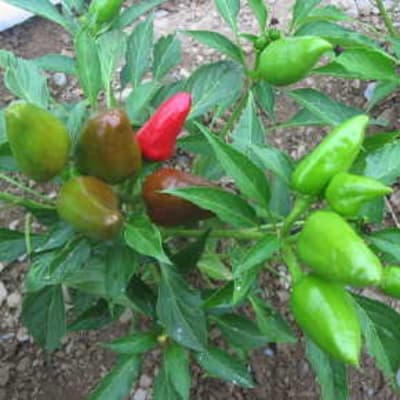
Capsicum annuum Red skin. (68 days) Open pollinated. Smooth waxy yellow 1.5x5.5" tapered fruits ripen to orange then red. Semi-hot, 5,000-10,000 Scovilles. Early and prolific.
Provides extremely uniform precise temperature over its entire surface. Makes the difference between success and failure when starting crops of tropical ancestry. Controller sold separately.
All the performance and safety features of SUNPACK’s standard heat mats, but with more power, larger size, linkability, and submersibility! Each 150W mat can accommodate five 1020 trays.
A premium high-test potting soil recommended for indoor growers, container gardening, soil-blocking, or slow-growing seedlings that will be in the greenhouse for six weeks or more. Made in New York.
Use this complete soil mix in Fabric Pots to take your cannabis plants from 12" to harvest. Contains a wide variety of organic fertilizers, including biochar to support microbial activity.
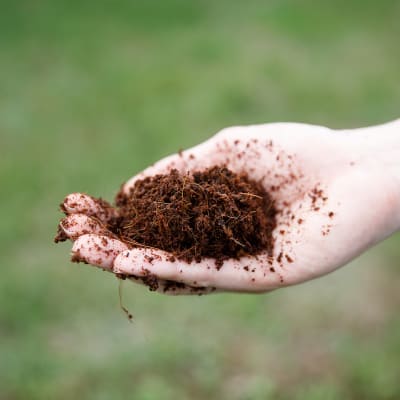
An environmentally sound substitute for peat moss. Use in potting mixes or to add organic matter to your soil. Improves aeration, nutrient retention, and moisture-retention capacity.
Ditch the bottled nutrients with this water-only mix that's supercharged for maximum yield in flowering plants! Recommended for all fruiting and flowering plants, cannabis, and heavy-feeding crops.
Optimized for strong root growth, and charged with a fine-tuned organic fertilizer blend. Recommended for seed starting, transplants, paper-pot trays and rooting cuttings.
A light-textured potting soil with extra perlite, screened to ½". Recommended for the smallest flower and herb seeds. Transplant to a more nutrient-rich blend to grow out. Made in Maine.
A lightweight, porous and stable material made from volcanic glass. Widely used in potting mixes to improve water retention and prevent compaction. Also great for rooting cuttings.
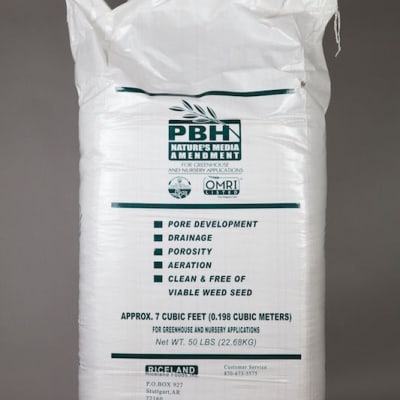
A great alternative to perlite in your growing medium—carbonaceous, renewable and less dusty to mix. Also used as a mulch for container plants. Parboiled to eliminate viable weed seeds.
Thick flexible plastic tray with a rim that is sturdy and easy to handle. We’ve never seen a sturdier tray! Works with standard 1020 trays. No drain holes.
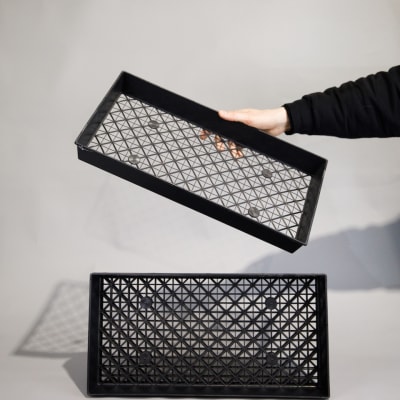
Like our standard 1020 trays, but with open mesh bottoms. Favored by many growers for soil block propagation, supporting plug flats, and hydroponic production. 2⅜" deep.
Maclura pomifera 35-60' x same. Long-lived native shade tree. Strong orange rot-resistant wood. Great for fences or hedges. Strange grapefruit-sized fruits inedible for humans. Seed collected in Maine. Z4.
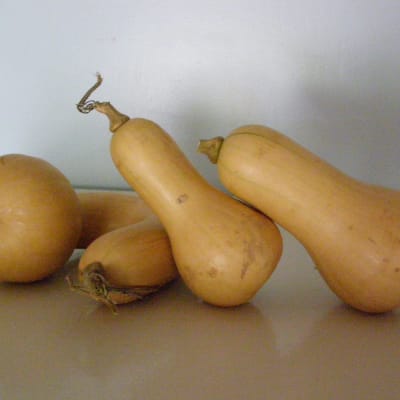
Cucurbita moschata Tan skin. (87 days) Open pollinated. Smooth, 2-3 lb butternut-type fruit with a small seed cavity and distinctive deep orange colored flesh.
Malus spp. Fall, deep red skin, yellowish flesh. A popular historic variety from the South. Great for fresh eating, cider and cooking. Reaches peak flavor in storage. Natural resistance to many pests and diseases. Z4.
Malus spp. Late summer, red-striped skin, yellowish flesh. From Russia, well before 1800. Known in New England as one of the very best pie apples! Extremely hardy. Scab resistant. Z3.
Malus spp.This is a twig for grafting. Late summer, red-striped skin, yellowish flesh. From Russia, well before 1800. Known in New England as one of the very best pie apples! Extremely hardy. Scab resistant. Z3.
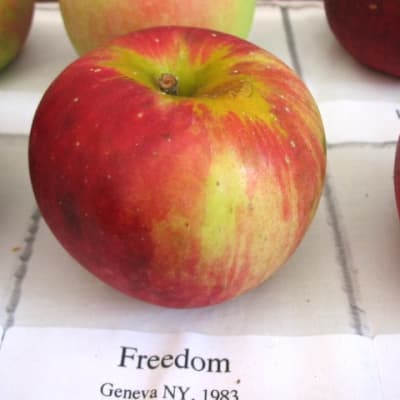
Malus spp. Early fall, red-striped skin. Very high-quality and highly disease-resistant all-purpose apple. Juicy, firm, spicy flesh. Ripens early October, keeps until New Year. Productive and annually bearing. Z4.
Malus spp.This is a twig for grafting. Early fall, red-striped skin. Very high-quality and highly disease-resistant all-purpose apple. Juicy, firm, spicy flesh. Ripens early October, keeps until New Year. Productive and annually bearing. Z4.
Malus spp. Summer, dark red skin, white flesh. The standard Maine summer cooking apple, especially pies. Medium-sized dark red fruit. Juicy subacid white flesh tinged with red. Z3.
Prunus mandshurica Extremely hardy drought-resistant tree native to northeast China, far east Russia and Korea. Useful in breeding new frost-resistant varieties. Fruit is of variable eating quality. Z3.