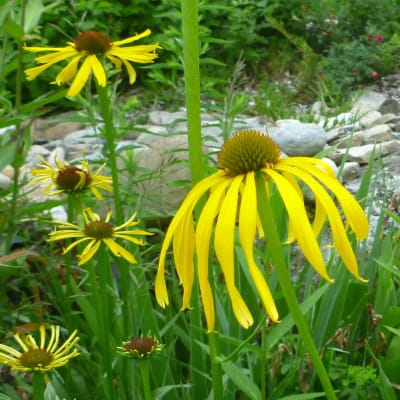
Echinacea paradoxa 3-5' tall. Bright pure-yellow flowers with drooping petals surround spiky dark brown seed cones—irresistible to gobbling goldfinches! Z3.
Gladiolus murielae 12-18" tall. Sword-like foliage is topped by wonderfully scented star-shaped white flowers with mahogany-purple centers on arching stems. Beautiful in the garden or as a cutflower. Z7.
Gladiolus 22-26" tall. Marvelous miniature glads in mixed colors, bicolors and butterfly types. Very satisfying clumped in a bed or as cuts. Darling! Z6.
Hosta Very large oval blue-green leaves, up to 16" long and 12" wide! Pale lavender flowers bloom midsummer. Foliage develops best blue color in light shade. Z3.
Hosta 18" tall and 36" wide. Rounded heavily corrugated blue leaves with wide chartreuse margins. White flowers smoked with lavender. Holds its margin color well through the season. Z3.
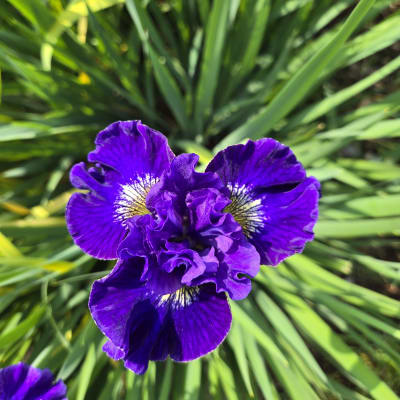
Iris versicolor 30-36" tall. Northeastern native species with gorgeous blue-violet flowers with bold purple veining and a white and lemon-yellow blaze. Early. Z2.
Iris sibirica 32" tall. Bred by legendary Maine hybridizer Currier McEwen in shades of creamy white with accents of yellow-green and buttery yellow. Early midseason to late. Z3.
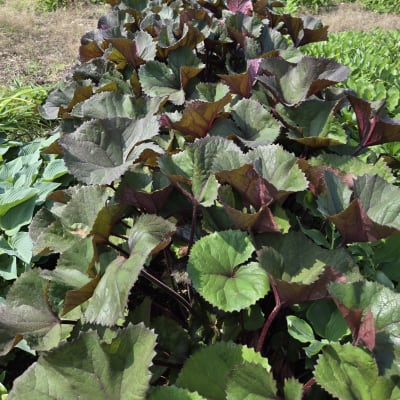
Lactuca sativa (50 days) Open pollinated. Very deep red savoyed leaves with extreme ruffling. Good flavor and texture. Fair heat resistance and good cold tolerance.
Lactuca sativa (51 days) Open pollinated. Large head with red ruffled leaves. Tender and sweet with almost no bitterness. Very bolt resistant and cold tolerant. Popular with market growers.
Lactuca sativa (67 days) Open pollinated. Deep dark red leaves with contrasting pink veins, and a smidgen of green in the center. Tall upright 8" heads.
Lilium This collection jumps off the silver screen into technicolor with style! A fragrant mix of 5 varieties in a classic palette of pinks and whites. Blooms in August.
Ipomoea purpurea (50 days) Open pollinated. Rich deep purple flowers vibrate against lush green foliage. Starts blooming while it is only 2' tall and still vining.
Urtica dioica 3-6' tall. Young shoots are high in minerals and leaves are delicious steamed as early spring greens. Cooking removes the sting. Spreads readily; choose your site carefully. Z2.
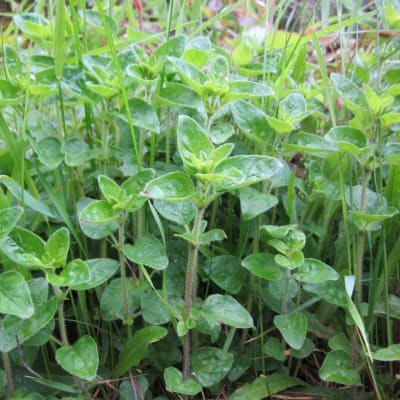
Origanum vulgare 18-20" tall. Fragrant green and purple leaves used for culinary purposes. Given plenty space in full sun, it sprawls and is attractive to pollinators. Z4.
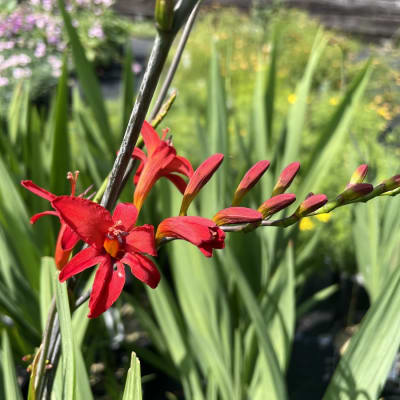
Crocosmia × crocosmiiflora 24-36" tall. Midsummer sprays of bright red flowers open from bottom to top on long arching bronze stems. Grows well in pots. Makes a long-lasting cutflower.
Pulmonaria 9-12" tall and eventually up to 2' wide. Periwinkle-blue buds open to pink flowers in spring. Large slate-green leaves with silver-white splotches. Woodland plant. Z3.
Sempervivum Low-growing rosette-forming succulents produce runners and babies. Drought and heat tolerant. Cold-hardy too! Colorful mix of reds, greens and purples. Z3.
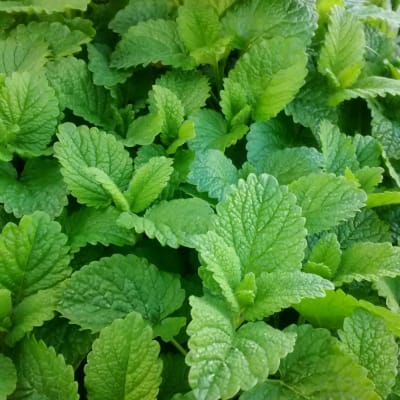
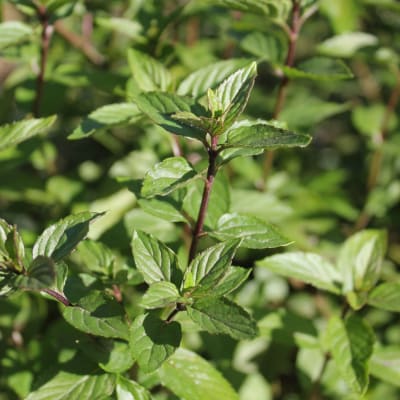
Pycnanthemum virginianum 24-36" tall. Makes a tasty minty tea traditionally used to settle indigestion. Spreads readily. Densely flowered, attractive to pollinators. Native. Z4.
Acorus americanus 24-36" tall. Water-loving bog plant with broad sword-like foliage that smells sweetly of citrus and vanilla when crushed. Roots traditionally used as an aromatic bitter for digestive upsets. Z3.
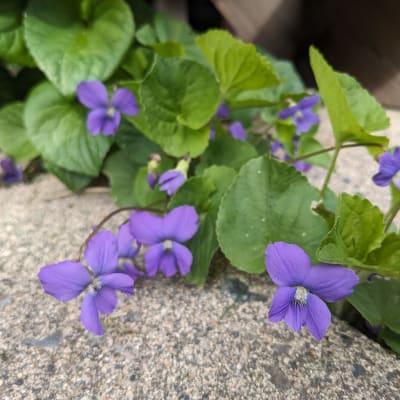
Viola sororia 6-10" tall. North American native with cheery blue-purple flowers and attractive heart-shaped leaves, all edible. Larval host plant for multiple species of butterflies. Z3.
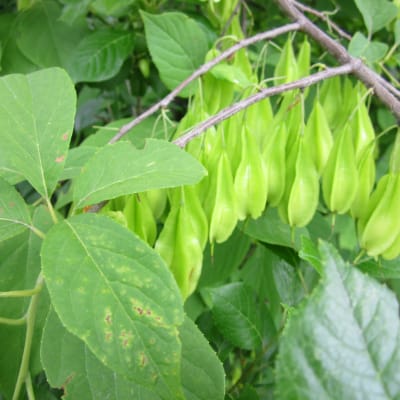
Halesia carolina 20-40' × 15-30'. Small tree or large multi-stemmed shrub. Edible flowers and fruit. Beautiful addition to woodland gardens! Native to Appalachia. Z4.