Iron is essential for chlorophyll development and function, and is also involved in nitrogen fixation by legumes. Contains 5% chelated iron derived from ferrous sulfate.
read more
Manganese helps plants to synthesize chlorophyll and is used in electron transport during photosynthesis. Contains 1% nitrogen from vegetable protein and 5% chelated manganese.
read more
Zinc is a component of auxin, an essential growth hormone, and is also necessary for proper root development. Improves cold tolerance. Contains 7% zinc derived from zinc sulfate.
read more
NPK: 4-4-0.5. Contains fish hydrolysate, kelp extract, humic and fulvic acids, and a dash of chilean nitrate to boost the nitrogen levels for rapid vegetative growth.
read more
Contains about 5% potassium in very slow-release form. Can be added to the soil in large amounts without altering the pH. Greatly enhances soil structure and promotes healthier plants.
read more
For soil: excellent source of naturally chelated elements, enzymes, and amino acids. For livestock: excellent source of iodine, vitamin A and dozens of other vitamins and trace minerals.
read more
Zeolites can improve the productivity of any texture of soil, improving water and mineral retention in sandy soils and improving aeration and minimizing compaction in heavier soils.
read more
NPK: 2.5-0.4-3.3 avg. Gives plants a noticeable boost and feeds soil organisms. Excellent vegan alternative to blood meal as a nitrogen source. Hands-down the best-smelling fertilizer out there.
read more
NPK: 0.5-0.5-0.3 apx, plus trace minerals. Worm castings limit plant disease and have beneficial effects including enhanced mycorrhizal activity and the suppression of parasitic nematodes.
read more
Malus spp. This is a twig for grafting. Late fall. Full bittersweet cider apple. Lots of tannin. Light yellow fruit mostly covered with tan russet. Combine with other late varieties. Z4.
read more
Malus spp. Winter. Excellent fresh eating. Very large russeted fruit with firm white fine-grained flesh and nutty sweet-sharp flavor. Good keeper. Z4.
read more
Malus spp. This is a twig for grafting. Winter. Excellent fresh eating. Very large russeted fruit with firm white fine-grained flesh and nutty sweet-sharp flavor. Good keeper. Z4.
read more
Brassica oleracea (45-60 days) F-1 hybrid. Also called Chinese Broccoli. Grown for succulent stems, leaves and florets. Uses and flavor similar to broccoli. Tolerant to heat and cold.
read more
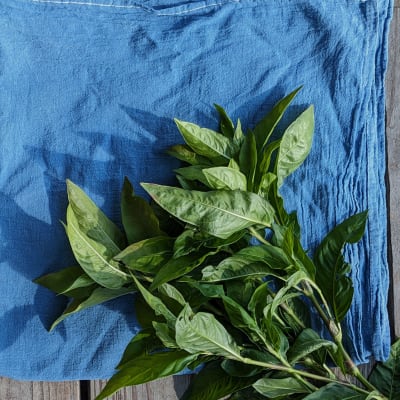
Ocimum basilicum (60 days) Open pollinated. An attractive 12-18" fine-leaved plant with purple stems, seed heads and flowers. Lends its distinctly strong licorice-anise basil flavor to Thai food.
read more
Phaseolus vulgaris (56 days) Open pollinated. High yields of tasty 5–7" straight slender round dark green beans. Holds quality well both on the plant and after harvest.
read more
Phaseolus vulgaris (56 days) Open pollinated. High yields of tasty 5–7" straight slender round dark green beans. Holds quality well both on the plant and after harvest.
read more
Phaseolus vulgaris (60 days) Open pollinated. Fortex begins producing early and keeps going into fall, long after others have quit. Its flavor and texture reign supreme, a distinctive nutty taste that can be enjoyed raw or cooked.
read more
Phaseolus vulgaris (68 days) Open pollinated. Heirloom bears 7-9" pods with nutty flavor. Very productive. Excellent for freezing. Brown seed.
read more
Phaseolus vulgaris (55 days) Open pollinated. Also known as Kwintus. A superior early pole bean. Somewhat flattened pods are slow to get tough.
read more
Phaseolus vulgaris (55 days) Open pollinated. 7–9' vines bear long stringless round-podded very dark green fresh beans, coming early. 2017 AAS.
read more
Monarda didyma Open pollinated. Perennial to Zone 3. Bushy clumping 30", bears 1-2 whorls of red tubular flowers on each stem from mid to late summer.
read more
Vaccinium corymbosum Early-Mid. 5-7'. One of the best blueberries for eating, freezing, canning and preserving. Loose clusters are easy to harvest. Productive bush is vigorous and upright. Disease resistant. Z4.
read more
Vaccinium corymbosum Early-Midseason. 4-6' Large firm high dessert quality berries are considered the best-tasting by nearly everyone who grows highbush blueberries. Very vigorous and consistently productive. Z4.
read more
Vaccinium corymbosum Mid-Late. 5-7'. Beloved old standard from 1928. Productive, adapted to a wide range of soils, highly praised, easy to grow and suited to the New England climate. Vigorous erect hardy bush. Z4.
read more
Vaccinium corymbosum Mid. 6-8' × 5'. High-quality medium light blue berries are firm, sweet and low in acidity. High yielding. Upright bush has shown some tolerance to clay soils. Z5.
read more
A must-read for anyone in the cannabis industry. Covers all aspects from soil and seed, to planting, growing and maintaining, through markets and product diversification. Funny and informative.
read more
Covers a wide range of crops, while addressing orchard design, dynamics and horticulture in unparalleled detail. Pruning, planting, companion planting, spraying, not spraying—it's all here!
read more
Brassica oleracea (capitata group) (75 days) Open pollinated. Distinctive violet-rose color. Small to medium 3-5 lb heads can be up to 7" across on a compact plant.
read more
Eschscholzia californica (60 days) Open pollinated. Cheery cup-shaped silky blooms range from light orange to deep rust, opening their faces to the sun each morning and closing up again at night.
read more
Daucus carota (85 days) Open pollinated. A stalwart storage carrot whose flavor improves with time. Also good for fresh eating and juicing. 7–9" heavy cylindrical roots.
read more
Apium graveolens (80 days) Open pollinated. Thick crisp stalks have rich flavor, not harsh even in less-than-ideal conditions. Ventura must receive adequate, even moisture for best growth.
read more
Celosia argentea var. spicata (75 days) Open pollinated. Upright 20-26" tall multi-branched wheat-type celosia produces showy spikes, light pink at the base turning to a deep rose-magenta at the tip. Green foliage starts at ground level.
read more
Prunus avium Summer. Good-quality dark red fruit. Survived –30° with minimal winterkill in central Maine. Vigorous. Requires second variety for pollination. Z4.
read more
Prunus avium Summer. All-around excellent sweet cherry for the Northeast. Sweet light-colored flesh. Good size, great flavor and heavy cropping. Disease and crack resistant. Self-pollinating. Z4.
read more
Snug-fitting knit poly-nylon shell is dipped in nitrile, a marvelously gripping soft rubber that latex-sensitive people can use. Snug fit and tacky surface preserve dexterity.
read more