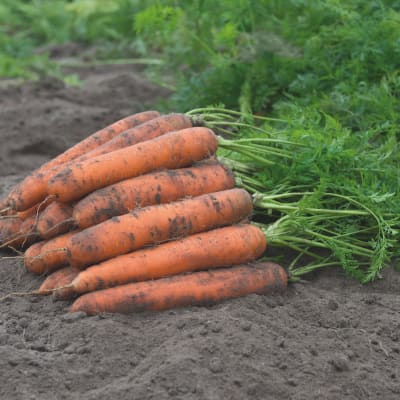
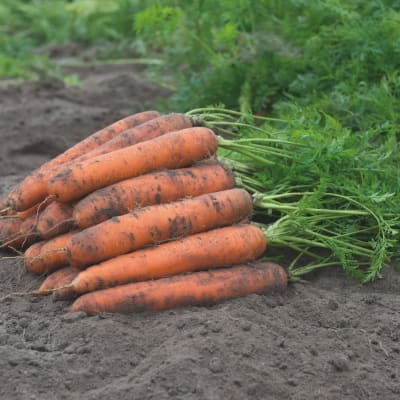
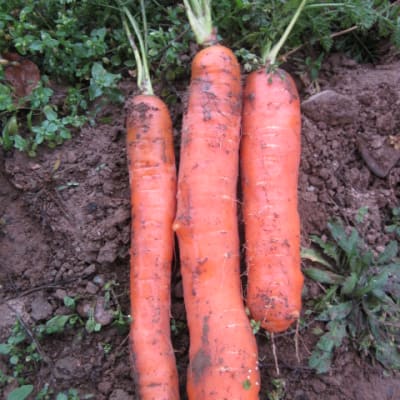
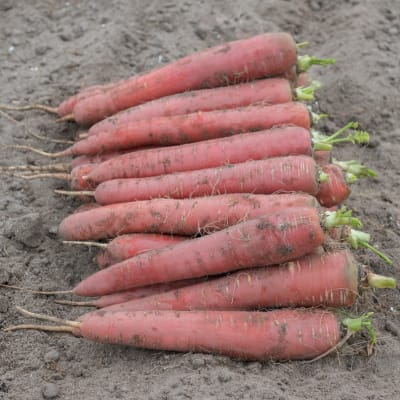
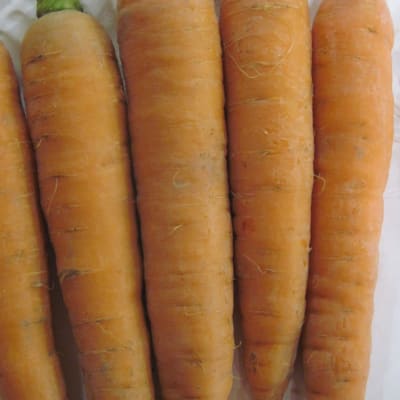
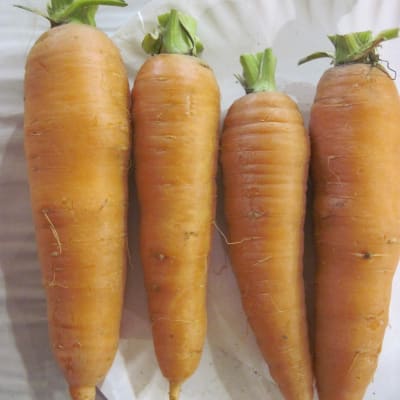
Daucus carota (68 days) Open pollinated. Uniform cylindrical 7" roots with unusually good interior color, crisp texture and fine flavor. Holds well; an excellent keeper too.
Daucus carota (55 days) F-1 hybrid. Blunt Nantes-type 7-8" orange carrot with strong green tops and a medium core. Snappy, sweet and juicy. Use fresh or store.
Daucus carota (70 days) Open pollinated. French heirloom. Thick 5-7" long red-orange carrot. Performs well in heavy soil. Excellent flavor and long storage.
Daucus carota (85 days) Open pollinated. A stalwart storage carrot whose flavor improves with time. Also good for fresh eating and juicing. 7–9" heavy cylindrical roots.
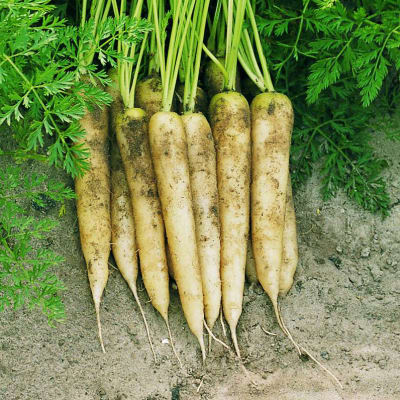
Daucus carota (70 days) F-1 hybrid. Straight 8" creamy-white carrot. Good texture and flavor, both raw and cooked. Develops green shoulders at full-size.
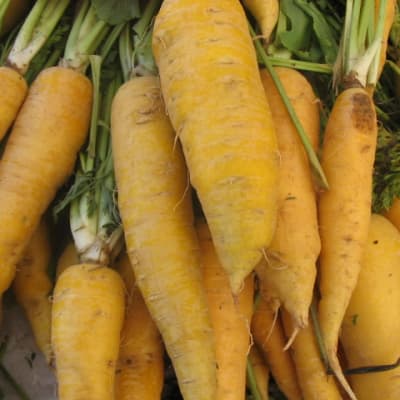
Daucus carota (72 days) Open pollinated. Large-shouldered 7-8" yellow carrot with greenish-yellow core. Performs well in diverse soil types.
Loading...
Carrots
500-1,000 seeds/g. Carrots average 18,000 seeds/oz with significant variations among varieties.
Days to maturity are from seeding date.
Culture: Very hardy. Early carrots can be sown by late April. For fall crop or winter storage, seed in early summer. Minimal germination temperature 40°, optimal range 75–85°. Can take up to 3 weeks to germinate; keep rows from drying out for faster emergence. Thinning is critical: At 3" high thin to ½" apart, at 6" thin again to 1-2" apart.
Diseases:
ALTS: Alternaria Leaf Spot
PM: Powdery Mildew
BR: Black Rot
TLS: Target Leaf Spot
LR: Licorice Rot
P: Pythium
ALTS shows up first on the oldest foliage as brown-black spots edged with yellow. Foliage blackens and shrivels as it develops and spreads. Maintaining a good crop rotation is the best preventive.