-
ships year-round

-
ships year-round
-
ships year-round
-
ships year-round
-
ships year-round
-
ships year-roundclearance!
-
ships year-round
-
ships year-round
-
ships year-round
-
ships year-round
-
ships year-roundToraziroh Mustard - OrganicSeedsunavailable, none this season
-
ships year-round
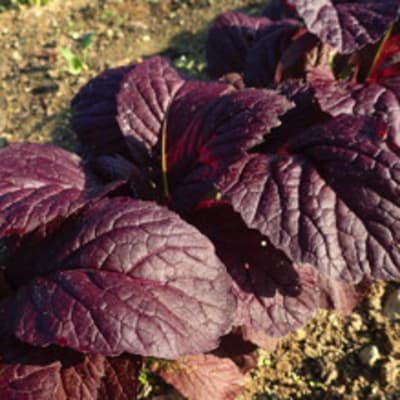


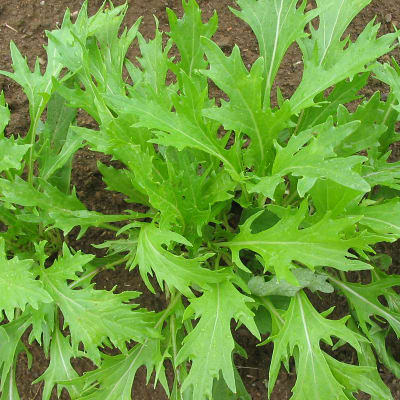

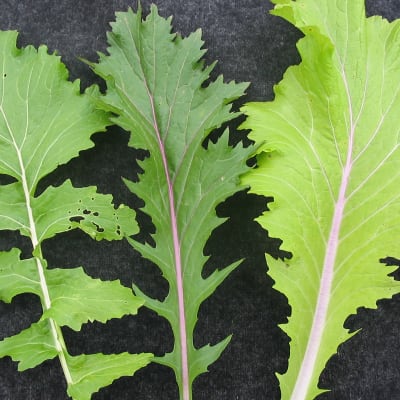

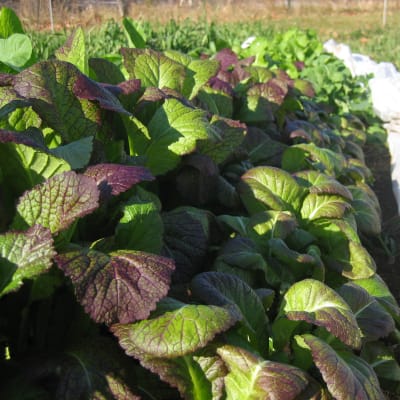


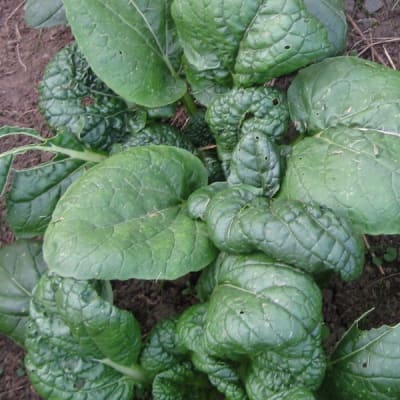
Asian Greens
- Days to maturity are from emergence after sowing; from transplant, subtract 20 days.
Culture: Wire hoops and row cover keep out flea beetles and are a must for pristine salad or braising mixes!
Diseases:
- ALTS: Alternaria Leaf Spot
- BL: Black Leg
- Black Rot
- BSR: Bacterial Soft Rot
- DM: Downy Mildew
Major pests: Cabbage Looper, Diamondback Moth, Imported Cabbageworm
Cultural controls: control cabbage-family weeds near crop fields, till under crop debris of early-season brassicas after harvest.
Material controls: Spinosad, Bt.
Pest: Flea Beetle
Cultural controls: floating row covers, mulch with straw, time plantings for fall harvested crops only, crop rotation, perimeter trap cropping.
Material controls: Spinosad, Pyganic.
Pest: Cabbage Root Maggot
Cultural controls: time planting to avoid first hatching, use row covers, control weeds.
Major diseases: Black Rot, Alternaria Leaf Spot, Blackleg, Club Root, Downy Milldew, White Mold
Cultural controls: avoid transplanting plants with yellow leaves or v-shaped lesions, crop rotation, destroy crop debris after harvest, avoid overhead irrigation, control weeds, allow for good air movement.
Material controls: Copper.
Note: because of a rule issued by Oregon, we cannot ship brassica packets larger than ½ oz. (14 grams) into the Willamette Valley, except those that have tested negative for Black Leg and Black Rot. Check descriptions for information.
Mustards
Versatile for tasty microgreens. Mustards are potent soil fumigants. Incorporating the residues of mustard crops into your soil can reduce fungal diseases in your succession crop. See Mustard from Organic Growers Supply for a cover crop, and Yellow (White) Mustard for culinary mustard.
Saving Seed: Saving mustard green seed is easy! Let your spring sowing of mustards bolt. The flowers develop into narrow seed pods. Once pods dry on the stems, they can be easily broken open for seed. To ensure true-to-type seed, grow only one open-pollinated variety per season (or let only one flower!)