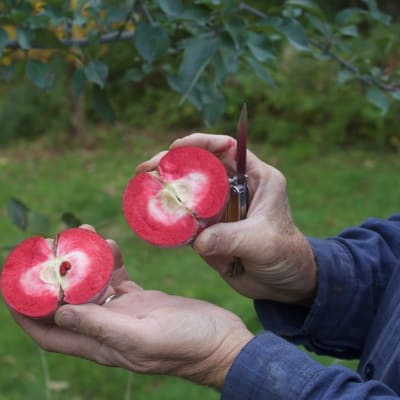
Malus spp. Summer, dark red skin, white flesh. The standard Maine summer cooking apple, especially pies. Medium-sized dark red fruit. Juicy subacid white flesh tinged with red. Z3.
Malus spp. Fall, rusty red skin, deep pinky red flesh. Medium-large red-fleshed apple. Use for sauce, pies. Very sharp and bitter in cider. Two-toned flowers, bronze-red foliage. Z3.
Malus spp. Fall-winter, green skin, light yellow-green flesh. Large, crisp and tart. Classic New England cooking apple; also great fresh eating. Keeps well into winter. Z4.
Malus spp. Fall-winter, russeted red skin. Medium-large, sharp, crisp, rich, aromatic dessert apple. Also good in cider. Great fresh eating till January. Blooms midseason. Z4.
Malus spp. Winter, russeted green skin. Rich, spicy and juicy. A great late-winter dessert apple; good cooking. Stores until summer. Scab resistant. Z4.
Malus spp. Late fall, russeted red skin. Exquisite dessert fruit is fine-grained juicy and snappy. Clean fruity finish with superior aromatics. Keeps until March. Likely hardy to Z3.
Malus spp. Fall-winter, yellow skin. Large high-quality sweet dessert fruit. A modern apple worthy of the grocery-store world. Keeps most of the winter. Z4.
Malus spp. Mid-late summer, deep purplish red skin, red-stained flesh. A fine summer dessert and cider apple. Makes delicious pink sauce. Tree is vigorous, precocious and annual bearing. Z4.
Malus spp. Fall, red skin, yellow flesh. Very sweet with low acidity. Creamy yellow aromatic flesh suitable for fresh eating or cooking. Presses into a sweet juice. Z4.
Malus spp. Fall-early winter, greenish yellow skin. One of the first American varieties. Unforgettably peculiar sweet flavor. Very low acidity. Truly all-purpose. Z4.
Malus spp. Fall, red-striped skin, white flesh. Medium-sized. Perfect texture and complex flavor. Famous all-purpose variety. Especially good pies. Small-med size tree. Z3.
Malus spp. Fall, rusty red-striped skin. Medium-sized firm crisp juicy apple is highly flavored. Famous heirloom dessert apple. Keeps till early winter. Blooms midseason. Z4.
Malus spp. Fall, bright red skin. Small and flavorful! Crisp, juicy, tart, tangy, spicy. Good in hard cider. Keeps till January. Precocious and productive. Z4.
Malus spp. Summer, deep purplish red skin, red-stained cream flesh. Nice balance of tart and sweet. Crisp and juicy fresh eating; fine cooking. Disease resistant; scab immune. Z4.
Malus spp. Summer, wine red skin, beet red flesh. Flesh is almost solid beet red: a real eye popper! Very good and extremely tart. Good addition to cider and sauce. Z3.
Malus spp. Fall-winter, bright red-blushed skin. Famous American heirloom apple. Large brilliant shiny yellow with a bright red blush. Best for fresh eating: aromatic, slightly crisp, juicy, mild. Good sauce. Z4.
Malus spp. Fall, red skin, creamy white flesh. Famous old-time apple. Huge fruit with firm but tender flesh. Aromatic tart flavor. Excellent cooking and drying. Scab-resistant. Z3.
Malus spp. Fall, blushed yellow skin, golden flesh. A new discovery! Tasty dessert apple, more flavorful than its presumed parent Wolf River. Great for fresh eating and cooking. Z4.
Malus spp. Winter, russeted greenish bronze skin, white flesh. Excellent fresh eating. Very large russeted fruit with firm white fine-grained flesh and nutty sweet-sharp flavor. Good keeper. Z4.
Malus spp. Late summer, red-striped skin. Medium-sized, highly-flavored fruit. Good balance of acid/sweet. Crisp and juicy fresh-eating. Stores up to seven weeks. Z3.
Malus spp. Fall, russeted green skin, creamy white flesh. Excellent bittersweet for blending in hard cider. Juicy firm quite bitter very astringent flesh has a very high sugar content. Rare. Z4.
Malus spp. Fall, pink-spotted yellow skin. Full bittersweet cider apple. Very bitter yellow fruit with spots of pink and orange when fully ripe in mid-October. Intense tannins. Some specimens measured 21 brix. Heavy annual crops. Z4.
Malus spp. Fall, dark red skin. Bittersharp cider apple. Dark red crabapples look like enlarged cranberries. Mostly tart and slightly sweet with a bitter finish. Z4.
Malus spp. Late fall, red-striped skin. Medium-bittersweet cider apple. One of the most popular cider varieties. Not for eating fresh. Annual bearer. Z4.
Malus spp. Fall, red-striped skin. High-quality bittersweet variety recommended for blending with other fall varieties. Soft astringent tannins. Narrow upright tree form. Becoming popular commercially in New England. Z4.
Malus spp. Fall, russeted red skin. Bittersharp cider apple high in tannin and acidity. Makes a full-bodied vintage cider with nice blend of acid, tannins and sugar. Decent fresh-eating. Z4.
Malus spp. Late fall, russeted yellow skin. Full bittersweet cider apple. Lots of tannin. Light yellow fruit mostly covered with tan russet. Combine with other late varieties. Z4.
Malus spp. Fall, dark red skin, red flesh. Bittersharp cider apple. Among the best red-fleshed cultivars. Prized for its size, vigor, disease resistance and deep red juice. Z4.
Malus spp. Fall, red-striped skin. Bittersharp cider apple. Small astringent very juicy fruit. The most bitter apple you’ll ever taste. Not for eating fresh! Z4.
Malus spp. Late fall, green skin. Full bittersweet cider apple. Low acidity and a nice astringency. If you’ve been looking for late-ripening bittersweets, try this one. Z4.
Malus spp. Multi-colored skin. Bitter, sharp and sweet—this collection covers all the bases for making great cider. Z4.
Loading...
Apples
Choosing the Right Apple
Not sure where to start? Check out our Apple Chart!
Choosing a variety: Not every variety may be right for you.
All-purpose apples are just that—they’re good for
a bunch of jobs. If you're planting just one tree, perhaps start there.
However, if you’re a history buff, consider the historical varieties
and maybe plant one that originated nearby. If you don’t eat many
apples but love pies, go for the pie apples. If you’re a dessert
connoisseur, skip all the others and go for the highly flavored dessert
varieties. Some are strictly for cider. Some are great to put out at the
camp for summer use. Some are perfect for those who want fall fruit but
don’t have a root cellar. Others keep all winter and into the
following summer.
Summer apples ripen in summer, are generally crisp
only for a short period, do not store well, and are often best for
cooking.
Fall apples store longer and are useful for a wide
variety of purposes.
Winter apples ripen mid to late fall, store well, and
reach their best flavor after weeks, or even months, of storage.
Dessert apples are delicious eaten raw.
Crabapples are less than 2" in diameter. Some
crabs bear edible or culinary or cider-making fruit. Some have
persistent wildlife fruit that hangs on the tree for weeks or even
months. Others have hardly any fruit at all. Some are beautiful
ornamentals.
Cider apples are especially suited to making
fermented “hard” cider. Some cider apples are also good
dessert fruit, but most are not.
Subacid means tart!
Russet or russeting is a skin
texture (fairly common on apple varieties and on a few pears and
potatoes) which looks and feels somewhat like suede.
Bloom is a naturally occurring dust-like yeast film
on the skin of some varieties of apples, plums, grapes and blueberries.
Cider Apples
Each year we offer a different assortment of the best
European and American
cider varieties, including new wild apple introductions from local fruit
explorers and cidermakers. Many of these are NOT for fresh eating. They do
however possess qualities that make them very desirable for fermented cider
production.
Seedling Apples
These trees were grown from seeds, rather than grafted onto rootstock like the other apple varieties we offer. These standard-sized trees will grow to 20–30'.
Flowering and Culinary Crabapples
A crabapple is any apple with fruit smaller than 2" in
diameter. All
crabs bear edible fruit, some more favorable for culinary use than others.
Some fruits are persistent, hanging on the branch through winter and
providing forage for robins, jays and waxwings in the early spring. The
flowers, tree form and even the shape of the leaves can vary subtly or
profoundly. Most are magnificent in bloom and ornamental year round,
especially in winter when the leaves drop and the trees show off their
interesting forms.
Growing Apples
Soil: Adaptable, but prefers well-drained fertile
soil.
Sun: Full.
Pollination: Requires a second variety for
pollination.
Any apple or crabapple blooming within a quarter mile will probably
do.