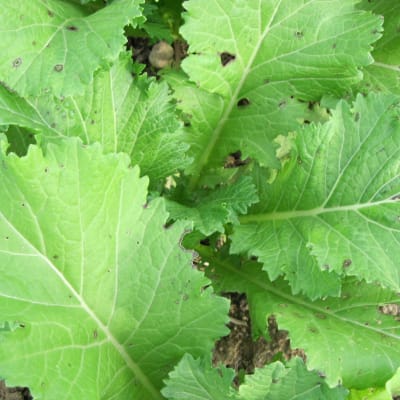
Brassica juncea (47 days mesclun, 62 full size) Open pollinated. Sweet succulent ribs and moderately pungent winter-hardy greens. Good for summer mesclun; excellent cut-and-come-again.
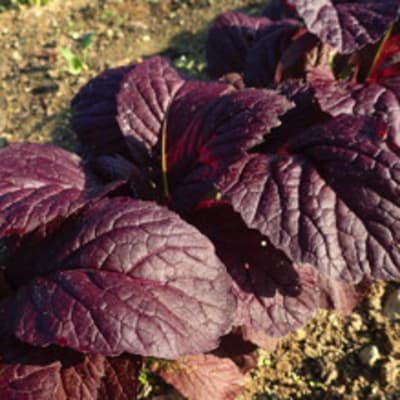
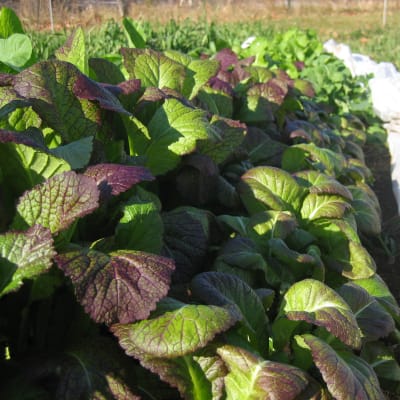
Brassica juncea (20 days baby; 45 days mature) Open pollinated. A favorite for cutting at the purple baby stage. Vibrant maroon slightly toothed leaves on lime-green stems. Good for salads or braising.
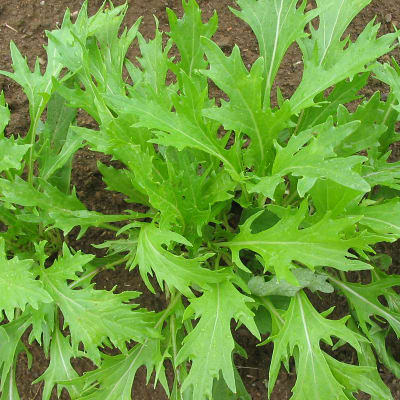
Brassica juncea (20 days baby, 40 days mature) Open pollinated. Light golden-green leaves are curled and lacy, adds lift to salad mixes. Mustardy zing. Resists bolting in heat.
Brassica juncea (45 days) Open pollinated. Best-adapted mustard for northern climates. Hot mustardy flavor. Will come back when cut. Slow to bolt. Can be overwintered.
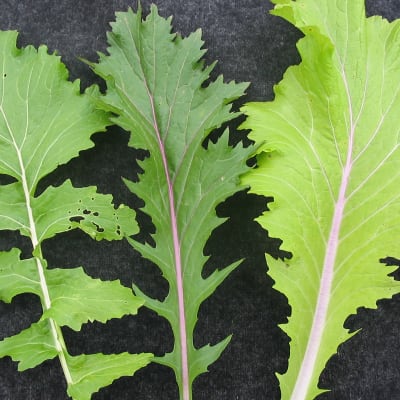
Brassica rapa (japonica group) (40 days) Open pollinated. Japanese heirloom. Deeply cut fringed leaves on slender white stalks. For microgreens, cut-and-come-again, succession plantings and baby leaf production.
Brassica juncea (40 days) Open pollinated. Bold purple-blushed delicately serrated mizuna-type leaves with sweet and spicy flavor. For spring and fall plantings. Bolts in heat.
Brassica oleracea (alboglabra group) (45 days) Open pollinated. Dark green large tender leaves with just the right kind of mustardy bite. Prolific yields can be harvested at full size or as baby greens.
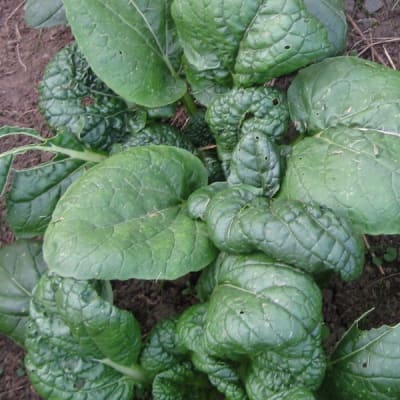
Brassica rapa (45 days full size; 21 baby) Open pollinated. Grows in rosettes like tatsoi, but bigger, more upright with leaves less shiny and more puckered. Harvest young for salad greens or mature for braising.
Sinapis alba (70-85 days) Open pollinated. As easy to grow as the leafy mustards. The variety of mustard most familiar to American palates, but pallid without the addition of turmeric.