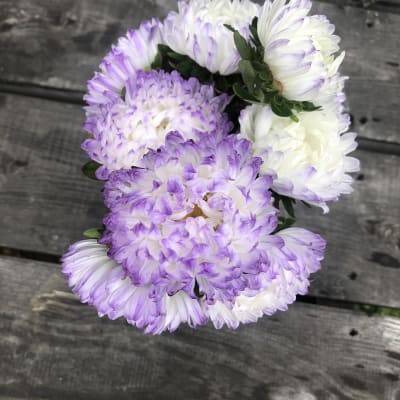
Callistephus chinensis (110 days) Open pollinated. Irresistible bicolor 2–3" peony-type blooms of iridescent white and purple. Bred for uniform height and bloom time.
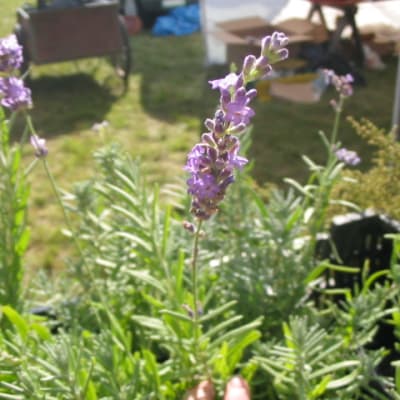
Allium schoenoprasum (80 days) Open pollinated. Hardy perennial. 1-2' dark blue-green leaves are medium-fine, long and slender. Lilac-colored flowers bloom in June and July.
Coreopsis tinctoria Open pollinated. Beautiful native ornamental. Provides a full palette of color from yellows and greens to rusts and browns-and even black.
Zea mays (72 days baby, 110 dry) Open pollinated. For baby corn, harvest ears about five days after silks appear. Or grow to full size for popcorn. 5' plants each bear 3-6 4" ears with white kernels.
Cosmos bipinnatus (75-90 days) Open pollinated. Delicate cosmos in rich hues ranging from burgundy to deep amber rose. The 2¼–3¼" flowers contrast nicely with bright green foliage. 3–4' tall.
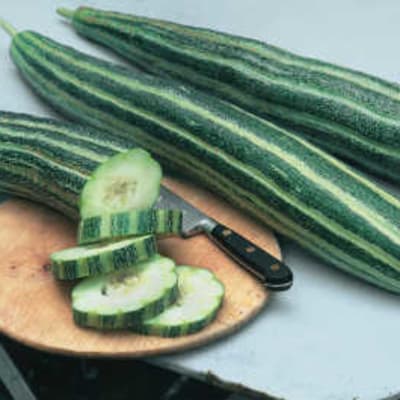
Cucumis melo var. flexuosus (55 days from transplant) Open pollinated. Specialty heirloom "snake melon" cuke. Curved coiled slender fruit with light and dark green stripes. Best eaten at 8-18".
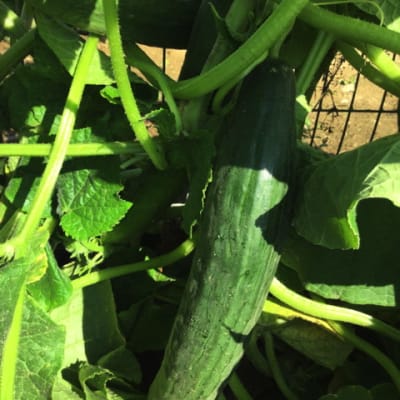
Cucumis sativus (60 days) Open pollinated. Heirloom performs in tunnels and outdoors. 10-14" slim Euro-type cuke with mild flavor; not bitter, few seeds. Trellis for straight fruits.
Cucumis sativus (60 days) Open pollinated. Parthenocarpic pickler. Blocky, smaller than average fruit. Compact growth and small leaves. Can be grown under row cover.
Solanum melongena White-streaked lavender skin. (88 days) Open pollinated. Italian heirloom. White with lavender streaking, plump, 3-4" wide by 5" long. Fruits avg 2 lb. Creamy, delicate, great for gourmet markets.
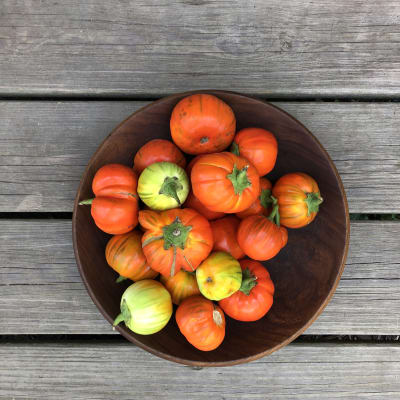
Solanum aethiopicum Orange skin. (65 days) Open pollinated. Sometimes called Ethiopian Eggplant or Garden Egg. Fruits mature to orange but are sweetest when they first turn from green to white. Great in curries and spreads.
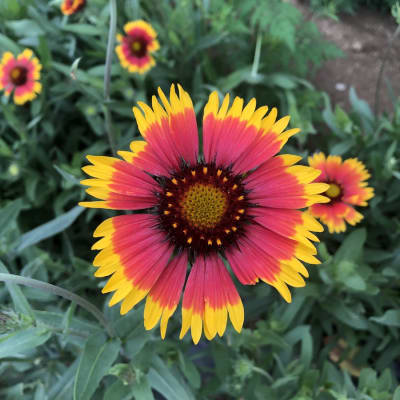
Gaillardia aristata (90 days) Open pollinated. Sun-loving native wildflower of the American Southwest is a favorite of butterflies and of gardeners who make bouquets. Perennial.
Gaillardia pulchella Open pollinated. Daisy-type flowers in reds, yellow, rust and orange with a prominent colored center. Free flowering, low maintenance and easy to grow. Attracts butterflies. Good cutflower.
Cucurbita pepo var. ovifera (95 days) Open pollinated. Eight kinds of early-maturing types, with small spoon, bicolored pear and small orange most prevalent.
Cucurbita pepo var. ovifera Green skin. (93 days) Open pollinated. Heirloom ornamental. Tiny 2-3" green-and-white striped bottle gourds. Rampant vines. Hard shells dry to tan.
Amaranthus tricolor (120 days) Open pollinated. Very red Jamaican traditional green for Callaloo stew. Beautiful tricolor blaze makes it ornamental as well.
Beta vulgaris (56 days) Open pollinated. Gold, yellow, orange and pink stems, midribs and veins. Tender dark green to bronze leaves with mild chard flavor.
Cichorium endivia (85 days) Open pollinated. Also known as Escarole. Smooth broad green outer leaves with creamy yellow closely bunched center leaves. Especially good as a fall crop; tolerates frost under row cover.
Cichorium endivia (42 days) Open pollinated. French heirloom. Large frizzy sweet endive with very fine ribs. For late spring and early summer harvests.
Montia perfoliata (40 days) Open pollinated. Small, heart-shaped leaves with a mild but succulent flavor. Use in mesclun and cut-and-come-again culture.
Valerianella locusta (45 days) Open pollinated. Very cold-hardy small-seeded small-leaved strain of this winter staple salad green. Can be overwintered.
Brassica oleracea (acephala group) (30 days baby, 56 days mature) Open pollinated. The most commonly grown kale. Dense finely curled blue-green leaves on upright hardy plants. Best as a fall crop, planted July or August.
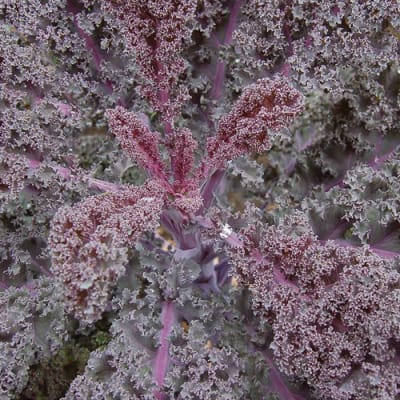
Brassica oleracea (acephala group) (30 days baby, 55 days mature) Open pollinated. Frilly purple leaves suitable for baby leaf or bunching. Similar to Redbor leaf shape and color.
Brassica napus (pabularia group) (60 days) Open pollinated. Unsurpassed tenderness and flavor. Green oakleaf with purple veining darkens in cold weather. Wilts quickly once picked. Great microgreens.
Brassica oleracea (gongylodes group) Green skin, white flesh. (130 days) Open pollinated. Czechoslovakian heirloom. Green kohlrabi can exceed 10" and 10 lb without getting woody. Crisp white interior is mildly tangy.
Lactuca sativa (65 days) Open pollinated. Compact hardy plants with reddish-amber–tipped green leaves and crunchy batavian taste. French heirloom stands the test of time as well as the chill of fall.
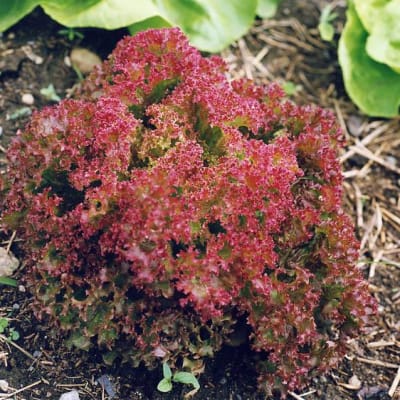
Lactuca sativa (58 days) Open pollinated. Attractive frizzy foliage is light red on top, light green at base. Use in salad for loft and texture, for accent or garnish. Very cold tolerant.
Lactuca sativa (68 days) Open pollinated. Market standard romaine. Upright 8-9" heads fold inward to form compact greenish-white centers. Resists bolting, even in heat.
Lactuca sativa (60 days) Open pollinated. French heirloom has substance with succulence. Begins like a bibb, matures into a well-wrapped romaine. Thick tender dark green leaves. Cold hardy.
 Tower Silver China Aster - OrganicSeedsunavailable, crop failure