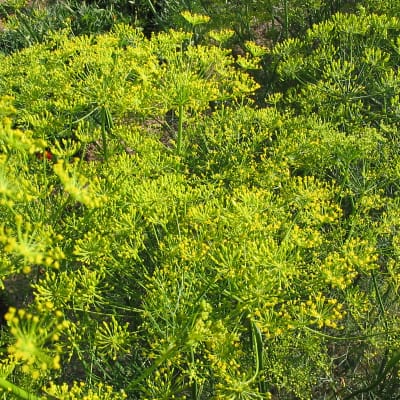
Anethum graveolens Open pollinated. Variety generally grown for its seeds. Can also be used as dill weed, but the foliage is slightly darker, coarser and stronger-tasting than that of Bouquet.
Solanum melongena White-streaked lavender skin. (88 days) Open pollinated. Italian heirloom. White with lavender streaking, plump, 3-4" wide by 5" long. Fruits avg 2 lb. Creamy, delicate, great for gourmet markets.
Solanum melongena Pink-lavender skin. (84 days) Open pollinated. Pink-lavender with white shoulders, pear-shaped, 4-6" wide by 6-8" long. Sweet tender white flesh. Early and productive.
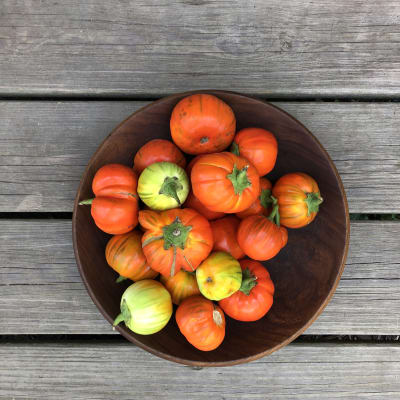
Solanum aethiopicum Orange skin. (65 days) Open pollinated. Sometimes called Ethiopian Eggplant or Garden Egg. Fruits mature to orange but are sweetest when they first turn from green to white. Great in curries and spreads.
Foeniculum vulgare (65 days) Open pollinated. Slow grower with very thin stems valued for its striking feathery bronze foliage. Delicious and decorative.
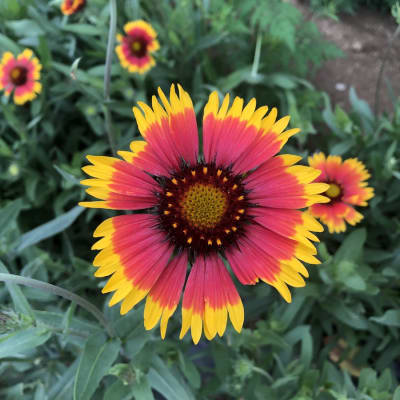
Gaillardia aristata (90 days) Open pollinated. Sun-loving native wildflower of the American Southwest is a favorite of butterflies and of gardeners who make bouquets. Perennial.
Gaillardia pulchella Open pollinated. Daisy-type flowers in reds, yellow, rust and orange with a prominent colored center. Free flowering, low maintenance and easy to grow. Attracts butterflies. Good cutflower.
Cucurbita pepo var. ovifera (95 days) Open pollinated. Eight kinds of early-maturing types, with small spoon, bicolored pear and small orange most prevalent.
Lagenaria siceraria Tan skin. (120 days) Open pollinated. Large gourd with bulbous base and narrow neck. Fruit can grow 14" tall and 12" in diameter. Start indoors.
Lagenaria siceraria Tan skin. (120 days) Open pollinated. Dark green skin with pale green splotches. Round 8-10" base tapers into a long neck capped by a small bulb near the stem to make the swan’s head.
Luffa aegyptiaca Green skin. (110 days) Open pollinated. Used to make sponges and scrubbies. Also edible when harvested young. Requires a long season; start indoors.
Cucurbita pepo var. ovifera Green-dipped yellow skin. (100 days) Open pollinated. A vivid mix of greens, yellows, creams and whites on straight and curved necks, all with double sets of wings and fins.
Cucurbita pepo var. ovifera Green skin. (93 days) Open pollinated. Heirloom ornamental. Tiny 2-3" green-and-white striped bottle gourds. Rampant vines. Hard shells dry to tan.
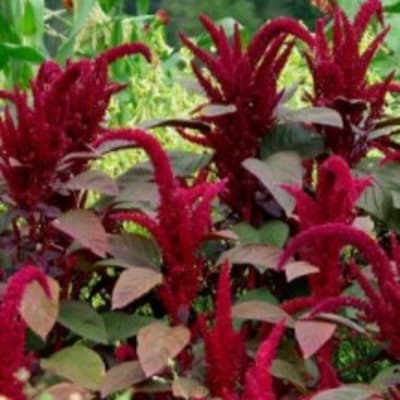
Amaranthus hybridus (65 days to flower, 125 days to seed) Open pollinated. Is it a green vegetable? An ornamental? A gluten-free grain? Why, yes! No wonder Amaranth was sacred in pre-Columbian Mexico.
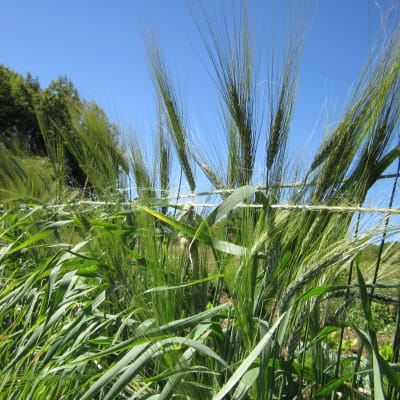
Hordeum vulgare Open pollinated. An historic 6-rowed barley selected by Luther Burbank from California hulless barley. In his final seed catalog he called it “one of [his] greatest grain creations.”
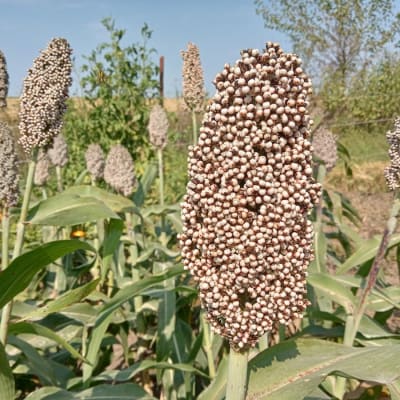
Sorghum bicolor (105 days) Open pollinated. Sprays of ornamental seedheads in gold, bronze, brown, black, burgundy, red and cream are great for making natural straw brooms and classic autumnal displays. Small shiny seeds are beloved by birds.
Pennisetum glaucum (120 days) Open pollinated. Ornamental grass with deep-purple foliage and large purple seed spikes. Popular in arrangements. 4-5' tall.
Pennisetum glaucum (120 days) Open pollinated. Ornamental grass with deep-purple foliage and large purple seed spikes. Popular in arrangements. 3-5' tall.
Avena nuda (100 days) Open pollinated. Grain that’s easier to thresh than most other oats, though it still has a small hull that must be removed. A good variety to re-introduce growing grain on home ground.
Oryza sativa (115 days) Open pollinated. Upland short-grain hardy Russian variety adapted to dry-land production. Can withstand a light frost. May be direct seeded in warmer regions.
Oryza sativa (115 days) Open pollinated. Upland variety from Japan. This great-tasting short-grained brown rice is much easier to hull and process with human-powered equipment than other varieties. Does not require flooding.
Oryza sativa (120 days) Open pollinated. Short grain light brown rice, can work in Zone 5b in paddies from direct sowing but does best from transplants.
Oryza sativa (120 days) Open pollinated. Lowland variety from northern Japan. Pearly white short-grain sweet-sticky rice is great for mochi and fries well.
Sorghum bicolor (100 days) Open pollinated. A white-seeded 4' grain sorghum, can be popped, but it is more commonly ground into a mild-flavored flour, cooked as a grain, or sometimes nixtamalized like corn and made into tortillas.
Amaranthus tricolor (120 days) Open pollinated. Very red Jamaican traditional green for Callaloo stew. Beautiful tricolor blaze makes it ornamental as well.
Lupinus mutabilis (130 days, longer to seed) Open pollinated. “Lost” crop of the Incas. Wild-looking 3' lupine native to the high Andes. Attractive, many-colored flowers. Protein-rich seeds.
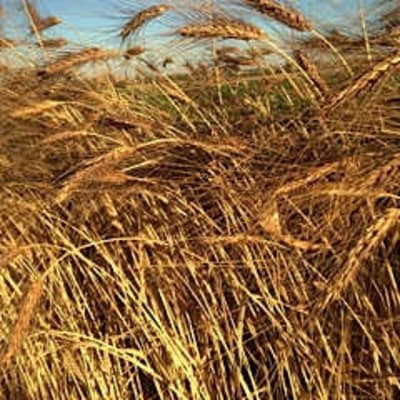
Triticum aestivum Open pollinated. Winter annual grain. Extremely cold hardy hard red wheat. Flour has great flavor and texture, and sturdy plants make great straw. Good for small spaces. Well adapted to New England. Will Bonsall fave!
Triticum durum Open pollinated. Too beautiful to eat! Used for wheat weaving and flower arrangements. Four rows with blue-grey husks and long black awns. Sow in April, reap in Sept.
Open pollinated. Five or more kinds chosen from among arugulas, beets, chards, chervil, mustards, orachs, purslane, and kales. All organic, exact components vary.
Open pollinated. Two packets: one mixed lettuces, one mixed greens. Plant lettuces first, then greens for fabulous salad mixes. Cut then water, and they grow again.
Eruca sativa (47 days) Open pollinated. Great-tasting musky greens. Bolt resistant strain. Cold tolerant, great for early spring, late fall, over-wintering.
Eruca sativa (47 days) Open pollinated. Musky, cold tolerant greens, great for early spring, late fall, over-wintering. Eat the flowers if you miss some of the greens.
Eruca sativa (21 days baby, 35 days mature) Open pollinated. Profuse basal growth. Dense clusters of tasty lush leaves. Grows well in hot and cool seasons.
Eruca sativa (44 days) Open pollinated. Cross of two European heirlooms and selected for vigor and cold hardiness. Turns purple when it freezes. Full of flavor.
Diplotaxis erucoides (21 days baby, 50 days mature) Open pollinated. Wild Arugula. Deeply lobed dark green narrow leaves. Excellent for cold-season salads, but also shows good summer endurance.

 Duborskian Rice - ECOSeedssold out