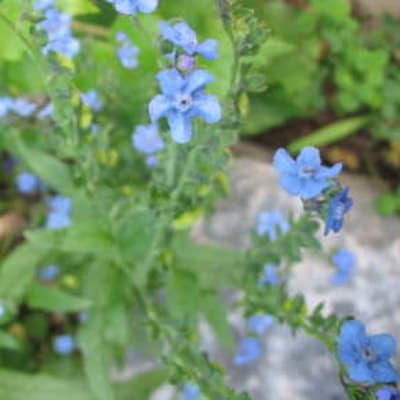
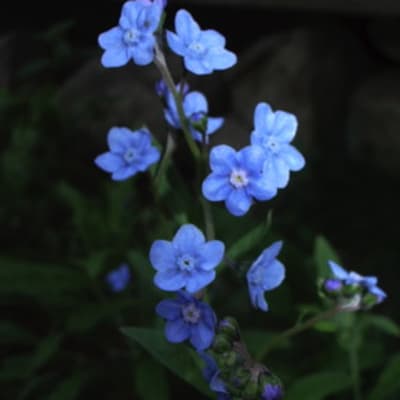
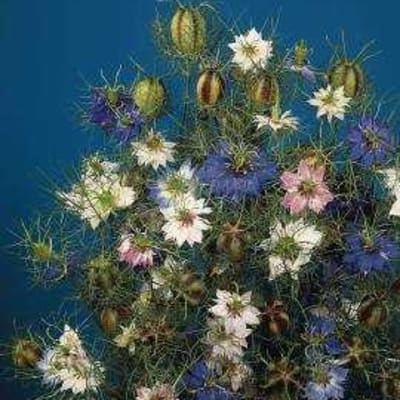
Cerinthe major var. purpurescens Open pollinated. Annual. Features coin-shaped grey-green foliage and profuse blue shrimp-like bracts with purple flowers. Beloved by bumblebees. 12-30" tall.
Clarkia amoena (90 days) Open pollinated. 3" “satin flowers” blooms in red, pink, salmon, lavender and white, and with a bright red patch in the heart of the four petals. Best for cutting.
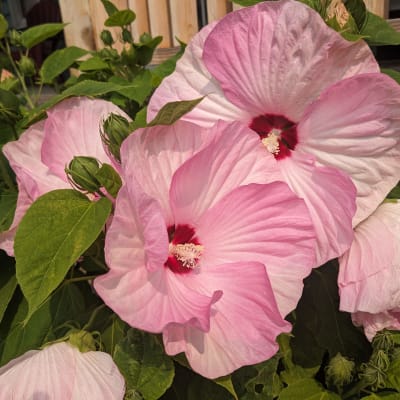
Hibiscus moscheutos Open pollinated. Perennial to Zone 5. 6-8" saucer-shaped flowers in a mix of pinks, red and white, with contrasting red eyes where a contrast is to be had.
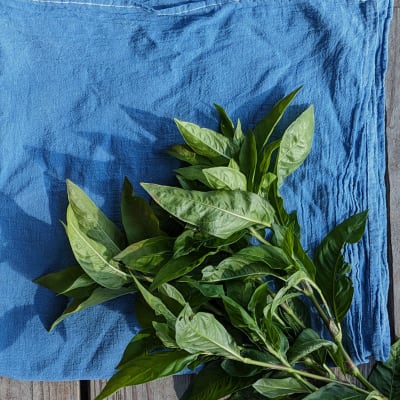
Persicaria tinctoria Open pollinated. Japanese indigo preferred by dyers in Maine. A tender annual, indigo thrives in fertile soil and likes heat and humidity.
Rubia tinctorum Open pollinated. Ancient and excellent source of red dye. Harvest roots after three years and grind to yield a wash- and light-fast red dye par excellence. 4' plants.
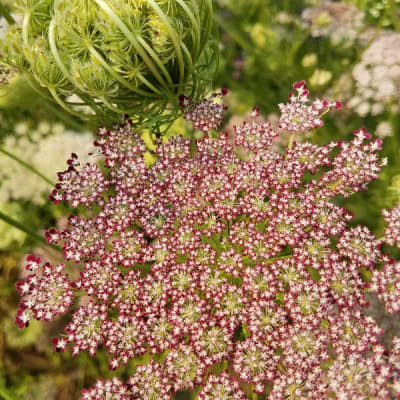
Ageratina altissima Open pollinated. Perennial. Native to North America. Flat-topped fuzzy clusters of white flowers bloom August through October, attracting scads of pollinators.
Limonium sinuatum (115 days) Open pollinated. Mix includes lavender, rose, purple, white, yellow. Especially suited for dried arrangements, also good in fresh. 2-2½' tall.
Artemisia annua (120 days) Open pollinated. The scent of the Common Ground Fair. Light green leaves valued for wreaths, flower crowns and other dried arrangements. Grows up to 5'.
Ammobium alatum (75 days) Open pollinated. Shimmery ½" pearl-like buds on long stems add a studded silvery sparkle to both fresh summer arrangements and to dried bouquets and wreaths.
Viola × wittrockiana Open pollinated. Perennial to Zone 6. Heart-shaped leaves on mounded 4-6" plants covered with 3" mostly bicolor flowers, with darker whiskers and yellow eyes.
Phacelia tanacetifolia Open pollinated. The small frizzy curling lavender-blue sprays provide high-quality pollen and nectar. Can be used to increase beneficial insect diversity and populations while suppressing weeds. Great for honey.
Scabiosa atropurpurea Open pollinated. Mix features purple, lavender, red, pink, white and almost-maroon. Each 2" bloom is a rounded mass of tiny florets.
Scabiosa stellata (90 days) Open pollinated. Delicate periwinkle flowers pass by into ethereal bronze globes of transparent seedheads studded with black stars.
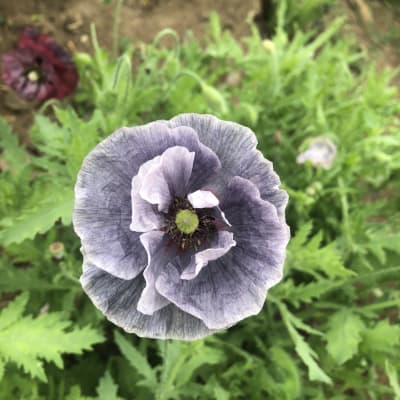
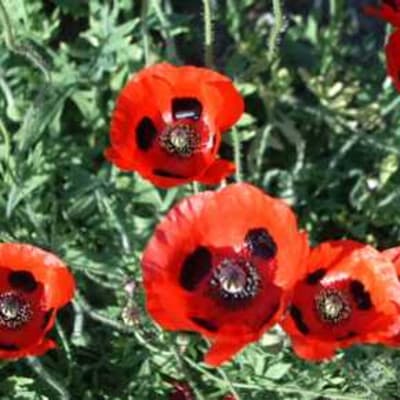
Papaver Open pollinated. 3' tall. Mostly pink on the outer two thirds of the petal edge with a slight purple blush in the middle and on the petal backs. Double, but not a full pompon.
Kniphofia uvaria Open pollinated. Perennial to Zone 5. A riot of yellow, orange and fiery red tubular flowers. Blooms July-September. An unusual accent in arrangements.
Rudbeckia fulgida Open pollinated. Perennial. Golden-yellow flowers with dark central cones. Much larger flowers—up to 5" across—than the common wildflower. Ideal for cutting. 2' tall.
Rudbeckia hirta (88 days) Open pollinated. Very large and distinctive. Pointy golden petals with light yellow tips. Branching 24-30" plants have long stems, ideal for cutflowers.
Salvia splendens (70-85 days) Open pollinated. Glowing red tubular flowers grow along spikes on a big bushy low-maintenance shrub-like plant. Pollinators love them. 24" tall.
Salvia viridis Open pollinated. White and blue flowers set off by large pink-to-purple bracts. Leaves entirely green. Remains colorful when dried. 18" stalks.
Antirrhinum majus (90 days) Open pollinated. Spikes of magenta and buttercream blossoms yellow throats bloom from mid-July into September. Ideal for beds, borders, and of course, cutflowers. A star in our 2023 flower trials.
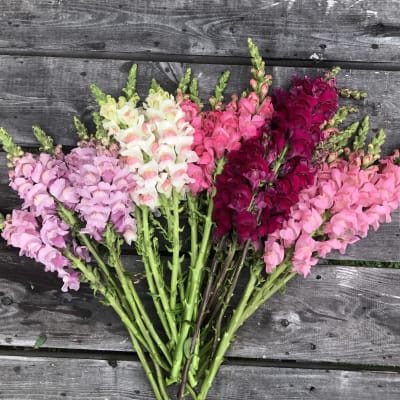
Antirrhinum majus (110 days) F-1 hybrid. A marvelous assembly of our favorite pinks and purples from the Potomac Snapdragon series. All colors mature at the same time and have impressively sturdy stems and a long vase life.
Matthiola incana (90 days) Open pollinated. Soft lovely mostly double blooms sit atop sturdy 24" stems. A bouquet of this stock can perfume an entire room with its deep warm peppery scent.
Matthiola incana Open pollinated. Fragrant mix of pink, lavender, red, rose, peach, yellow, copper and white bred for larger flowers and early bloom. Sturdy, well-branched. 15-20".