Sorghum bicolor (105 days) Open pollinated. Sprays of ornamental seedheads in gold, bronze, brown, black, burgundy, red and cream are great for making natural straw brooms and classic autumnal displays. Small shiny seeds are beloved by birds.
Lobelia cardinalis Open pollinated. Perennial. This gorgeous wetland native wildflower and hummingbird magnet can be grown in moist garden soils or meadows. 2–4' tall
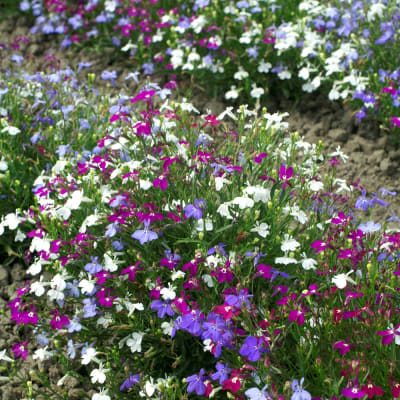
Lobelia pendula (60 days) Open pollinated. Very uniform tiny lush flowers bloom continuously from early summer to early fall to grace your garden, window boxes and hanging baskets. Annual.
Lupinus polyphyllus Open pollinated. Perennial. Genetics determine that blues will dominate in lupine mixes. Revitalize your patch with a new burst of red.
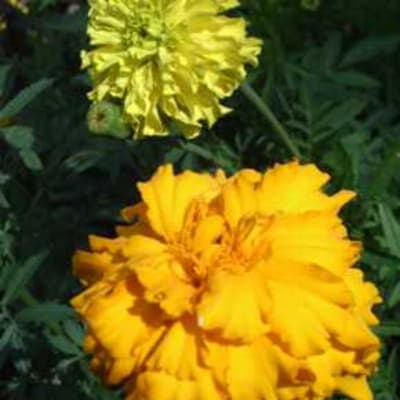
Tagetes erecta (60 days) F-1 hybrid. Fully double 4" pompon blooms in gold, orange and yellow. Perfect for stringing into garlands. Early to bloom, 18" tall.
Tagetes tenuifolia (68 days) Open pollinated. Bears tiny abundant “gems” in shades of crimson, burnt orange and yellow. Excellent for containers and companion planting. Edible flowers. 12–15" tall.
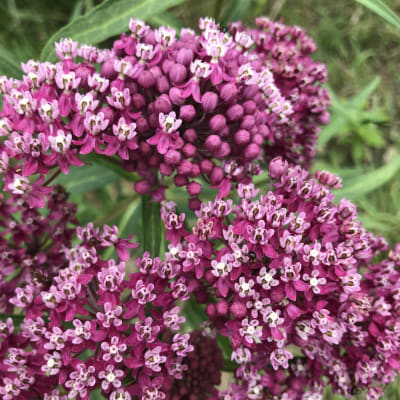
Asclepias syriaca Open pollinated. Perennial to Zone 4. These 5' tall showy native wildflowers are an important member of the wild habitat. Buds open to large balls of sweetly fragrant pink flowers.
Ipomoea purpurea (70 days) Open pollinated. Climbs to at least 8-9' with trellising, rich deep purple bloom with a glowing magenta center and dark 5-pointed star pattern.
Ipomoea purpurea (50 days) Open pollinated. Rich deep purple flowers vibrate against lush green foliage. Starts blooming while it is only 2' tall and still vining.
Convolvulus tricolor (50 days) Open pollinated. Each trumpet appears hand painted, with royal blue exteriors and iridescent white-to-gold centers. Eye-catching in beds, borders and pots. 18" tall bushes are covered in blooms all summer.
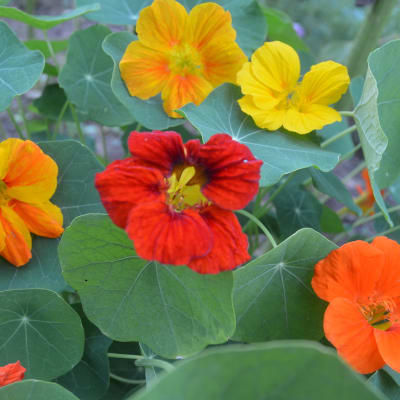
Tropaeolum majus (60 days) Open pollinated. Striking variegated green and white foliage and tangy yellow and orange blossoms. Great plant for hanging baskets. 16" plants.
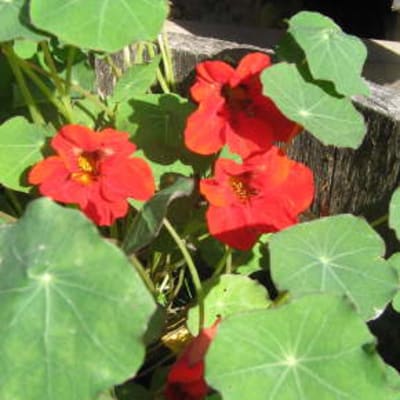
Tropaeolum majus (60 days) Open pollinated. Dark purplish-green leaves with brilliant crimson-scarlet flowers contrast well with other varieties. 16" plants.
Tropaeolum majus (42 days) Open pollinated. Bushy variety holds its blooms above the foliage. Early free-flowering blend of orange, yellow, red and gold. 16".
Tropaeolum majus (42 days) Open pollinated. Bushy variety holds its blooms above the foliage. Early free-flowering blend of orange, yellow, red and gold. 16".
Tropaeolum minus (60 days) Open pollinated. Named for the dessert. Primrose-cream blossoms with pearly red centers. Sets abundant blooms above compact lily-pad foliage.
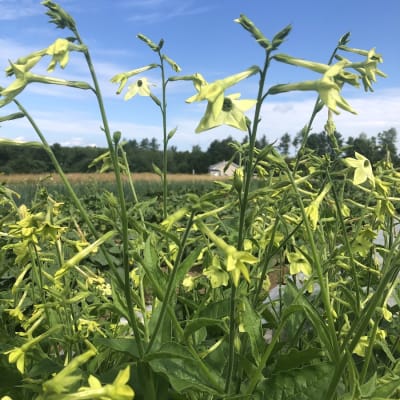
Nicotiana sylvestris Open pollinated. Clusters of drooping tubular white blossoms that perfume the garden day and night. Full powerful scent. 4–5' tall.
Centaurea americana (90 days) Open pollinated. Annual. Resembles a thistle, but no prickles. Grassy honey-like fragrance. Native to south-central U.S. and northeastern Mexico.
Moluccella laevis (110 days) Open pollinated. Everlasting annual. Spikes of bright green bell-shaped “flowers” turn creamy white when dried for winter arrangements.
Bupleurum griffithii (90 days) Open pollinated. Everlasting annual. Features round leaves and unusual yellowish flowers air dry perfectly, retaining their color. Great filler for bouquets.
Campanula carpatica Open pollinated. Perennial. Also known as Bellflower or Carpathian Harebell. Masses of periwinkle bellflowers above a tidy mound of foliage. Pelleted for ease of sowing.
 Cardinal Flower Lobelia - ECOSeedsnot available yet, check back later