Lorimer profiles 235 native plants, describing their growing needs and habits, wildlife value and native habitat, with gorgeous color photos to emphasize the unique beauty of each species.
read more
Monarda punctata Open pollinated. A whimsical beauty with complex blossoms and many culinary and medicinal uses. Its oregano-like aroma and flavor is lovely for tea and seasoning.
read more
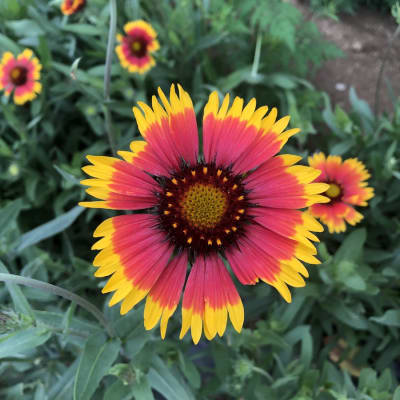
Gaillardia aristata (90 days) Open pollinated. Sun-loving native wildflower of the American Southwest is a favorite of butterflies and of gardeners who make bouquets. Perennial.
read more
Lobelia cardinalis Open pollinated. This gorgeous wetland native wildflower and hummingbird magnet can be grown in moist garden soils or meadows. 2–4' tall
read more
Verbena hastata Open pollinated. Perennial. 5-6' plant grows naturally in moist thickets and meadows does well in similar garden conditions, sending up many terminal spikes of bristly blue-violet flower clusters the entire season.
read more
Coreopsis tinctoria Open pollinated. Beautiful native ornamental. Provides a full palette of color from yellows and greens to rusts and browns-and even black.
read more
Asclepias syriaca Open pollinated. Perennial to Zone 4. These 5' tall showy native wildflowers are an important member of the wild habitat. Buds open to large balls of sweetly fragrant pink flowers.
read more
Phacelia tanacetifolia Open pollinated. The small frizzy curling lavender-blue sprays provide high-quality pollen and nectar. Can be used to increase beneficial insect diversity and populations while suppressing weeds. Great for honey.
read more
Scutellaria lateriflora Open pollinated. Native spreading 1–2' perennial with numerous small blue flowers. Also known as Virginia Skullcap. Herbalists use it for headaches and insomnia.
read more
Arnica chamissonis Open pollinated. 20" perennial yields well with multiple stalks with yellow flowers blooming for most of the early season.
read more
Pycnanthemum incanum Open pollinated. A culinary herb, excellent cutflower and pollinator fave! “Mintier than mint” and less likely to spread.
read more
Centaurea americana (90 days) Open pollinated. Annual. Resembles a thistle, but no prickles. Grassy honey-like fragrance. Native to south-central U.S. and northeastern Mexico.
read more
Talinum paniculatum (95 days) Open pollinated. Petite pink flowers on thin stems mature into airy glistening bronze-to-burgundy sprays of teensy seedpods. Annual.
read more
Ageratina altissima Open pollinated. Flat-topped fuzzy clusters of small pure white disk flowers bloom August through October, attracting multiple species of bees, moths and butterflies.
read more
Agastache foeniculum Open pollinated. Perennial can grow 3' tall, 2' wide. Vigorous self-sower. Anise-scented foliage and purple flowers delightful as a tea or culinary seasoning, or filler in mixed bouquets.
read more
Agastache foeniculum Open pollinated. Perennial can grow 3' tall, 2' wide. Vigorous self-sower. Anise-scented foliage and purple flowers are delightful as a tea or culinary seasoning, or filler in mixed bouquets.
read more
Allium tricoccum Open pollinated. Also called Wild Leeks. Bulb-forming perennial is a spring ephemeral. Not a good germinator; expect less than 50%.
read more
Hypericum perforatum Open pollinated. 1-3' perennial hardy to Zone 3. Pretty yellow flower of fields and meadows turns tinctures and oils deep red.
read more
Veronicastrum virginicum 4-6' tall. Elegant towering native plant sends up large flower spikes of densely clustered tiny white blossoms. Attracts pollinators. Z3.
read more
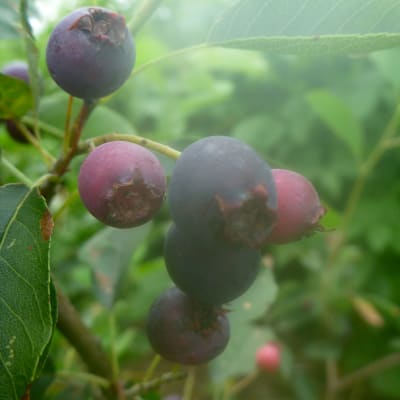
Amelanchier stolonifera 3-5' x same. Berries are small but very flavorful—perfect combo of sweet and tangy. Would do well in a rock garden, hedge or thicket. Native. Z4.
read more
Raphanus sativus (25 days) Open pollinated. Rosy-pink color with bright white flesh, crisp and mild. Oblong plump roots hold longer than others without cracking or getting soft and pithy.
read more
Rubia tinctorum Open pollinated. Ancient and excellent source of red dye. Harvest roots after three years and grind to yield a wash- and light-fast red dye par excellence. 4' plants.
read more
Eryngium yuccifolium 3-6' tall. Globe-thistle-like 1" greenish-white flowerheads. Subtle honey-like scent. North american native. Great for cutflower production. Z3.
read more
Diospyros virginiana 35-60' x 20-35'. Medium-sized native tree produces edible orange fruit used in pies, jams and jelly. May not always ripen north of Boston. Plant two or more for fruit. Z4/5.
read more
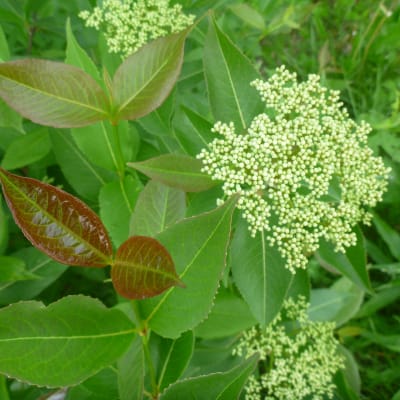
Viburnum cassinoides 5-6' × same. Dense suckering native shrub. White flowers from spring to early summer. Edible black fruit. Plant more than one for fruit. Z3.
read more
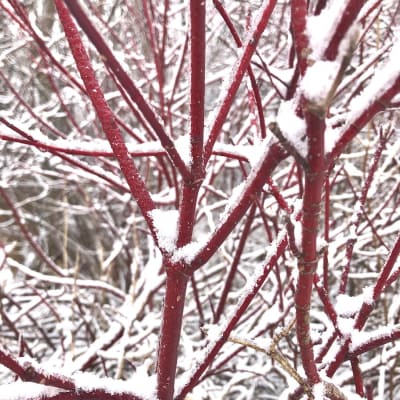
Cornus sericea 8-10'. Multi-stemmed spreading shrub excellent for hedges and borders. Red stems admirable in the winter. Valuable native wildlife plant. Z2.
read more
Juglans nigra 70-90'. Spectacular shade tree with open rounded crown. Nuts have sweet earthy rich flavor. May begin to bear in 5-10 years. Z4.
read more
Aronia arbutifolia 6-10' x 3-6'. Each one is genetically unique. Beautiful in mass plantings and borders. Plant several in a hedge and make the birds happy! Native. Z3/4.
read more
Sambucus canadensis 6-12' x same. Each grown from a cold-hardy seed and will be a totally unique plant. Some of our best plants grew from batches of such seedlings. Z3.
read more
Corylus americana 12-18' x 10-15'. Multi-stemmed native shrub with sweet nuts. Showy catkins in spring. Patchwork of colors in autumn. Can bear in 3-5 years. Z4.
read more
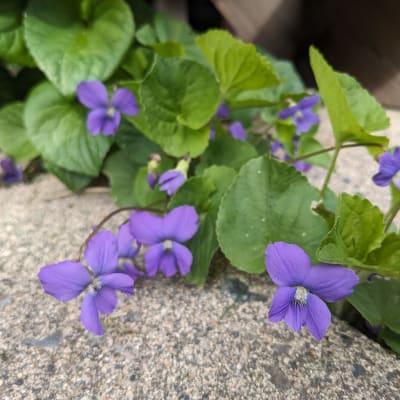
Viola sororia 6-10" tall. North American native with cheery blue-purple flowers and attractive heart-shaped leaves, all edible. Larval host plant for multiple species of butterflies. Z3.
read more
Calycanthus floridus 6-10' x 6-12'. Beautiful native shrub with dark burgundy-maroon flowers and shiny leaves. Blooms early, flowers through summer. Highly fragrant. Z4/5.
read more
Prunus maritima 6' × 5-6'. Rounded dense suckering shrub found along ocean beaches. Showy white blooms in spring. Edible plums in late summer. Plant two for fruit. Z3.
read more
Lindera benzoin 6-12' x 8-12'. Large rounded multi-stemmed fragrant native shrub suited to moist or wet areas. Soft-yellow flowers. Glossy red edible berries. Z5.
read more
Spiraea tomentosa 2-4' x same. Adorable little plant. Rosy pink steeples emerge as terminal spikes about 4–6" tall. Easy to grow. A must for every butterfly garden. Z3.
read more
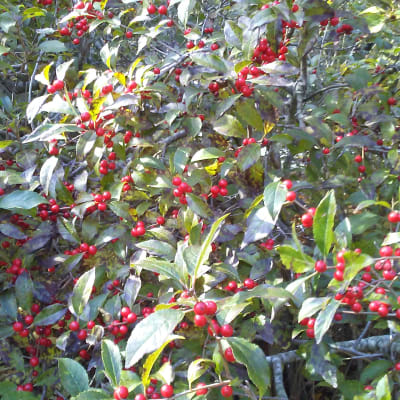
Ilex verticillata Bright-red berries stand out through the winter, providing late-spring forage for birds. A staple of the Maine landscape. Unsexed seedlings, plant several for berries. Z4.
read more
Rosa carolina 2-4' x 5-10'. Single light pink 5-petaled flowers emerge May-June. Small red hips in fall. Found along streams, roads and open woods throughout New England. Full sun to partial shade. Native. Z2.
read more
Maclura pomifera 35-60' x same. Long-lived native shade tree. Strong orange rot-resistant wood. Great for fences or hedges. Strange grapefruit-sized fruits inedible for humans. Seed collected in Maine. Z4.
read more
Rhus aromatica 5-6' x 6-8'. Leaves emit a pleasing aroma when crushed. Phenomenal fall colors. Adaptable and easy to transplant. Useful in erosion control. Native to eastern U.S. Z3.
read more