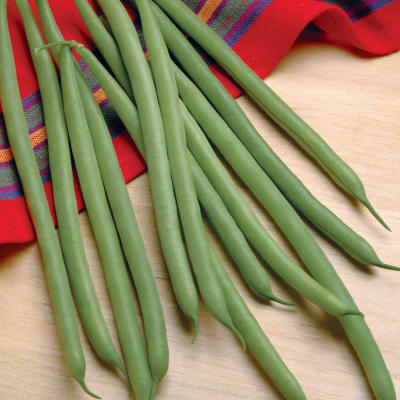
Phaseolus vulgaris (56 days) Open pollinated. High yields of tasty 5–7" straight slender round dark green beans. Holds quality well both on the plant and after harvest.
Phaseolus vulgaris (56 days) Open pollinated. High yields of tasty 5–7" straight slender round dark green beans. Holds quality well both on the plant and after harvest.
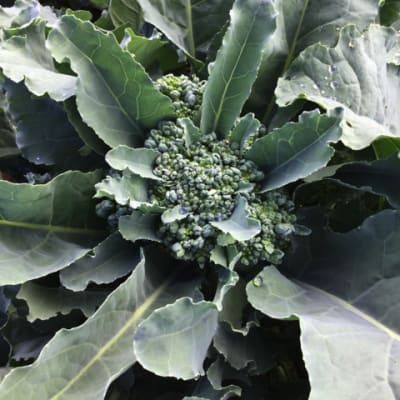
Brassica oleracea (botrytis group) (56 days) Open pollinated. Sweet stalks and stems produce succulent small green loose heads with very large beads. Abundant side shoots. Excellent flavor and heat tolerance.
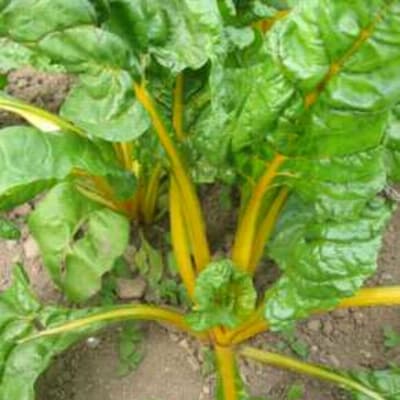
Beta vulgaris (56 days) Open pollinated. Gold, yellow, orange and pink stems, midribs and veins. Tender dark green to bronze leaves with mild chard flavor.
Beta vulgaris (56 full size; 30 days baby leaf) Open pollinated. Much like Fordhook, except it’s more compact, deeply savoyed, more uniform and with a narrower stem. Long harvest window.
Brassica oleracea (acephala group) (30 days baby, 56 days mature) Open pollinated. The most commonly grown kale. Dense finely curled blue-green leaves on upright hardy plants. Best as a fall crop, planted July or August.
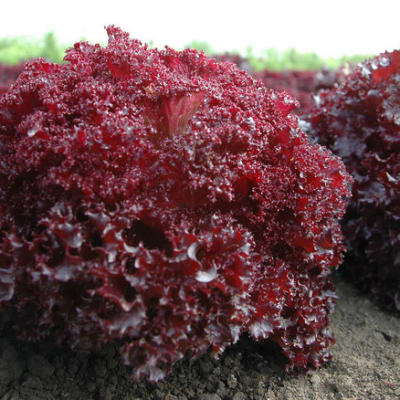
Lactuca sativa (56 days) Open pollinated. Beautiful compact Lollo-type has extremely dark purple-red leaves with ruffles and curls. Very mild flavor for type. Stays non-bitter longer.
Lactuca sativa (56 days) Open pollinated. German heirloom. Attractive romaine has deep green leaves flecked with wine-red splotches. Excellent flavor and decent heat tolerance. Bestseller.
Lactuca sativa (56 days) Open pollinated. German heirloom. Attractive romaine has deep green leaves flecked with wine-red splotches. Excellent flavor and decent heat tolerance. Bestseller.
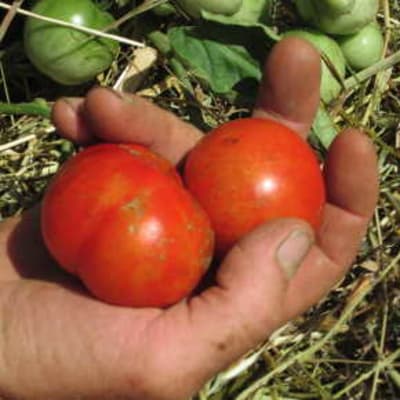
Solanum lycopersicum Red skin. (56 days) Open pollinated. Red 1-2" fruit with no cosmetic defects besides yellow shoulders. Superior to other sub-arctics. Potato-leaf foliage. Determinate.
Cucumis melo Green flesh. (80 days) F-1 hybrid. Green flesh. Round uniform 1.5-3 lb fruit with light but full net. Skin blushes yellow as fruit ripens. Harvest at full slip.
Lathyrus odoratus Open pollinated. An antique striated variety. Blossoms contain subtle variations of bright reds with creamy white streakings. Heavily perfumed. Vines grow to 3'.
Lathyrus odoratus × L. belinensis Open pollinated. Pale mauve-pink and deeper-hued lavender-blue wings, grandiflora type, growing to 6', with 3-4 flowers per stem.
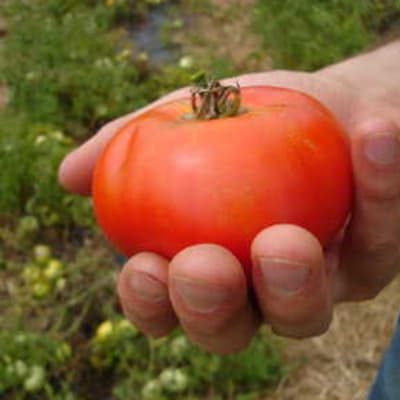
Solanum lycopersicum Red skin. (74 days) Open pollinated. Red 4 oz round paste. Delicious flavor, also good in salads. Ripens over a long season. Determinate.
The best garden cart on the market today. Weighs only 35 lbs and has a central balance point so that even when fully loaded it is easy to push or pull, and the heavy plastic withstands a lot of abuse!
This long-handled weeder is plenty strong but light as a feather, and makes quick work of small weeds, slicing the stem from the root just below the soil surface. Made in Vermont by Two Bad Cats.
Malus spp.This is a twig for grafting. Late summer-early fall, purplish red skin. Summer-Fall. Very hardy high-quality cooking apple. Large and glossy purplish-red roundish fruit. Firm juicy flesh. Good for fresh cider. Stores 2 months. Z3.
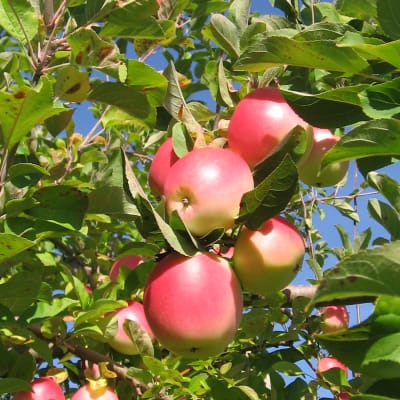
Malus spp. Fall-winter, russeted red skin. Medium-large, sharp, crisp, rich, aromatic dessert apple. Also good in cider. Great fresh eating till January. Blooms midseason. Z4.
Malus spp.This is a twig for grafting. Fall-winter, bright red-blushed skin. Famous American heirloom apple. Large brilliant shiny yellow with a bright red blush. Best for fresh eating: aromatic, slightly crisp, juicy, mild. Good sauce. Z4.
Phaseolus vulgaris (90 days) Open pollinated. Produces 4-5 beautiful black-and-white beans per pod, with a texture similar to Yellow Eye. Doubles in size when cooked.
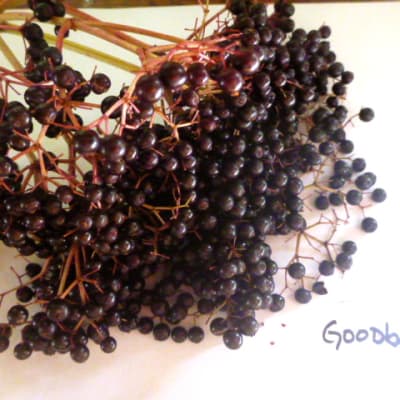
Aronia melanocarpa 5-10' x same. Cultivar selected for use in windbreaks and wildlife conservation plantings. Fruits abundantly. Medicinal and edible. Z3/4.
Pinus strobus 100'+. Magnificent and massive when mature. Smooth bark becomes rough, deeply furrowed with age. Makes a beautiful hedge. Shade tolerant. Z3.
Cornus alternifolia 20' x 30-35'. Small tree or large multi-stemmed shrub with tiers of horizontal branches and fragrant white 2-3" flower clusters. Z3.
Cornus amomum 8-12' x same. Large rounded long-limbed shrub. Effective for erosion control, wildlife or pollinator habitat. Maroon bark visible in winter. Suckers and spreads. Native to eastern U.S. Z4.
Foeniculum vulgare (65 days) Open pollinated. Slow grower with very thin stems valued for its striking feathery bronze foliage. Delicious and decorative.
Lepidium sativum (30 days) Open pollinated. Broad leaves are extremely ruffled, wrinkled and savoyed. Spicy, tangy and sweet. Good in salad mix and bunched for market.
Brassica napus (pabularia group) (55 days) Open pollinated. Cold hardy 18-28" purple and red-veined kale leaves grow frilly while remaining very tender. Good for bunches and mesclun mixes.
Lactuca sativa (51 days) Open pollinated. Best of the speckled types. Dark green ruffled leaves mottled with maroon-red spots. Sweet juicy veins, blushed pink heart. Poor heat tolerance.
Asclepias syriaca Open pollinated. Perennial to Zone 4. These 5' tall showy native wildflowers are an important member of the wild habitat. Buds open to large balls of sweetly fragrant pink flowers.
Allium cepa Yellow skin. (125 days) Open pollinated. Long day. These large onions are renowned for their mild flavor, and have been in commerce since around 1900.
Artemisia annua (120 days) Open pollinated. The scent of the Common Ground Fair. Light green leaves valued for wreaths, flower crowns and other dried arrangements. Grows up to 5'.