Beta vulgaris (54 days) Open pollinated. Gold beet with Lutz shape, size and mild sweet flavor. Green tops with some golden stem. Golden orange roots with orange shoulders.
Malus spp. Fall, orange-red skin. Juicy, distinctly tart, full-flavored fresh eating apple. Very popular at our Common Ground Country Fair taste tests! Keeps about a month. Z4.
Beta vulgaris (54 days) Open pollinated. Gene pool based on 3 heirlooms. Expect 3 colors: pink-red with orange, bright gold and vivid orange. 3.5 x 7-8" tapered form.
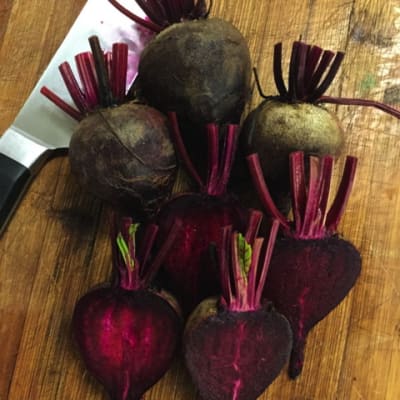
Beta vulgaris (53 days baby; 85 days full size) F-1 hybrid. Baby bunching beet or full-size storage beet. Smooth dark red roots with excellent sweet flavor.
Tagetes erecta (60 days) F-1 hybrid. Fully double 4" pompon blooms in gold, orange and yellow. Perfect for stringing into garlands. Early to bloom, 18" tall.
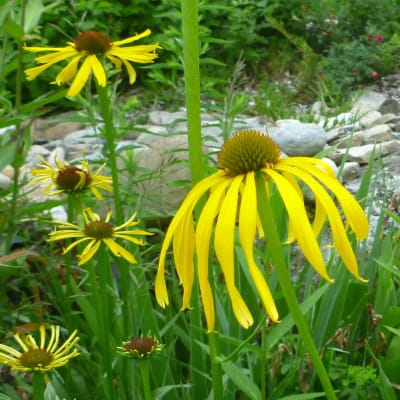
Echinacea paradoxa 3-5' tall. Bright pure-yellow flowers with drooping petals surround spiky dark brown seed cones—irresistible to gobbling goldfinches! Z3.
Rudbeckia fulgida Open pollinated. Golden-yellow flowers with dark central cones. Much larger flowers—up to 5" across—than the common wildflower. Ideal for cutting. 2' tall.
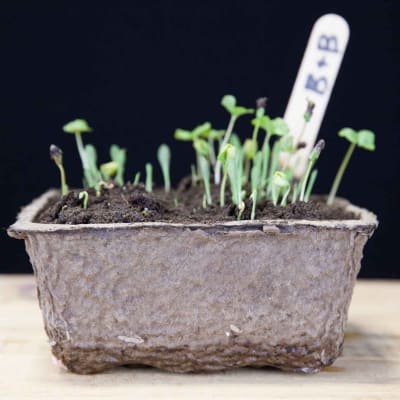
Made of recycled cardboard fiber, these handy planters breathe much like clay pots. Reusable with care—one customer says he got ten years out of his before he had to order new ones.
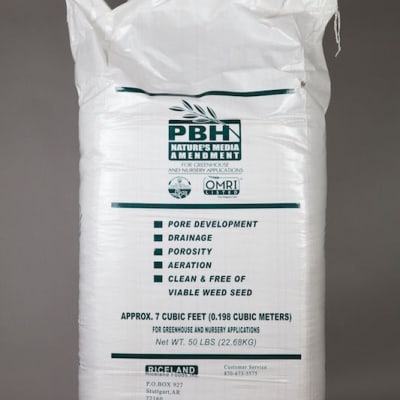
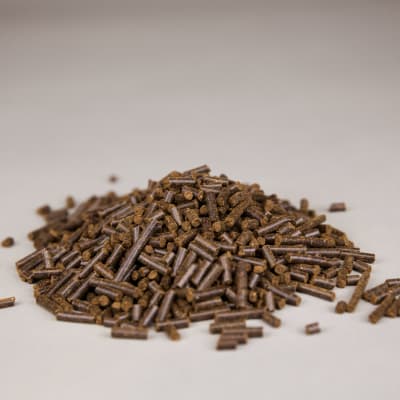
A great alternative to perlite in your growing medium—carbonaceous, renewable and less dusty to mix. Also used as a mulch for container plants. Parboiled to eliminate viable weed seeds.
Formulated to build humus, enhance CEC, and condition the soil in which the ancient roots reside, whether they be abandoned heirlooms or wild seedlings. Can be applied in fall or spring.
NPK: 4-4-0.5. Contains fish hydrolysate, kelp extract, humic and fulvic acids, and a dash of chilean nitrate to boost the nitrogen levels for rapid vegetative growth.
Soluble borate for fluid fertilizers and nutrient sprays. Boron is essential for all stages of tree growth and fruit set. Powder mixes easily in any spray solution.
NPK: 4.6-0.9-1.3 avg. A favorite of earthworms and other beneficial soil organisms, and inhibits the growth of some notorious pathogenic soil microbes. Beloved by hemp and cannabis growers.
NPK: 6-1-3 avg. Rich in the basic nutrients, nitrogen, phosphorus and potassium, it makes an excellent fertilizer and soil additive. Can help suppress fusarium infestations.
Malus spp. Fall-winter, russeted purplish red skin. Medium to very large apple has a good balance of sweet and tart with hints of pear. All-purpose. Keeps until midwinter. Z4.
Malus spp.This is a twig for grafting. Fall-winter, russeted purplish red skin. Medium to very large apple has a good balance of sweet and tart with hints of pear. All-purpose. Keeps until midwinter. Z4.
Malus spp.This is a twig for grafting. Late summer, yellow skin, cream flesh. Golden Delicious seedling with classic Delicious shape. Juicy crisp flesh is a bit sharper, but still quite sweet for an early apple. Great for salads. Z4.
Malus spp.This is a twig for grafting. Fall, red-blushed and striped skin. Possible Red Delicious seedling with a similar shape but a superior eating experience! Crisp flesh and balanced sweet-tart flavor. Good fresh, great dried. Stores into winter. Z4.
Malus spp.This is a twig for grafting. Fall, russeted lime green skin, slightly yellow flesh. Large, distinctive “cathead” shape. Mild, moderately crisp, moderately tart and subtle. All-purpose; excellent for cooking, especially sauce. Z4.
Malus spp.This is a twig for grafting. Fall, deep red skin. Supremely flavorful dessert apple. Large brilliant deep red fruit. Crisp, sweet, tart and juicy. Best eaten fresh, but also considered a good cooking apple. Good keeper. Z4.
Malus spp. Winter, russeted greenish bronze skin, white flesh. Excellent fresh eating. Very large russeted fruit with firm white fine-grained flesh and nutty sweet-sharp flavor. Good keeper. Z4.
Malus spp.This is a twig for grafting. Winter, russeted greenish bronze skin, white flesh. Excellent fresh eating. Very large russeted fruit with firm white fine-grained flesh and nutty sweet-sharp flavor. Good keeper. Z4.
Brassica rapa (45 days) F-1 hybrid. Slow-growing 8-10" deep purple rounded leaves stand beautifully, and are mild and delectable all the way through the season.
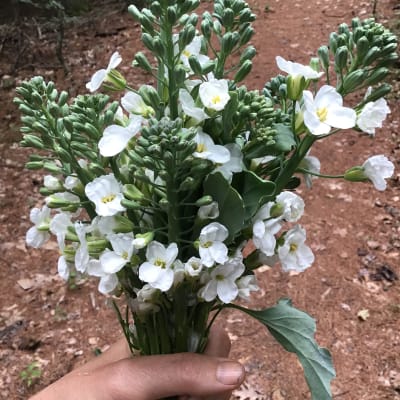
Brassica oleracea (45-60 days) F-1 hybrid. Also called Chinese Broccoli. Grown for succulent stems, leaves and florets. Uses and flavor similar to broccoli. Tolerant to heat and cold.
Ocimum basilicum (55 days) Open pollinated. Bright, lemony and fragrant. Upright, mounded plants doesn’t get leggy. Delightful in salads, teas, desserts, marinades, lemonade and more.
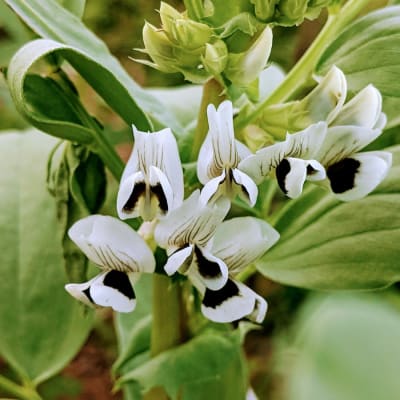
Phaseolus lunatus (95 days) Open pollinated. A pole lima that will actually ripen in the Northeast! Vigorous vines produce large pods of tender, sweet and delightfully beany limas.
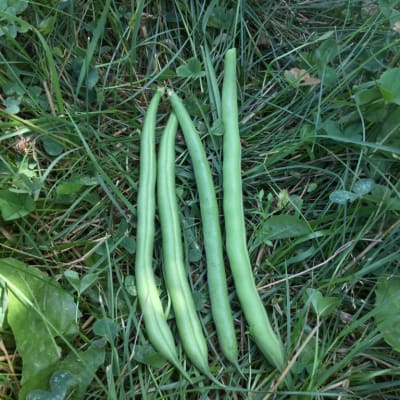
Phaseolus vulgaris (70 days) Open pollinated. Beautiful 6-7" green pods with purple streaking. Tan seed with dark stripes. Also known as Preacher Bean.
A must-read for anyone in the cannabis industry. Covers all aspects from soil and seed, to planting, growing and maintaining, through markets and product diversification. Funny and informative.
An approachable botany textbook and herbal field guide to North American plants with colorful illustrations on nearly every page. Regularly updated by the author since its release in 1996.
Filled with clear how-to and how-not-to instructions, along with useful illustrations and laugh-out-loud humor, Turnbull walks through the basics and delves into specifics for more than 150 plants.
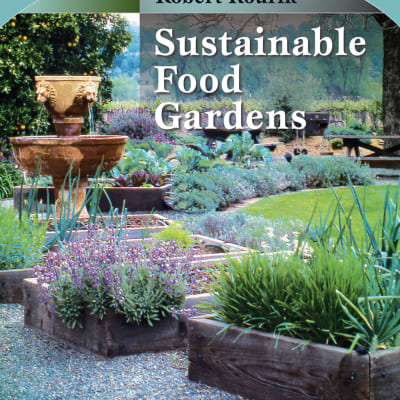
Full of tools to plan for success before your first seed hits the soil. If I’d had this book when I started farming, I would have avoided many mistakes!
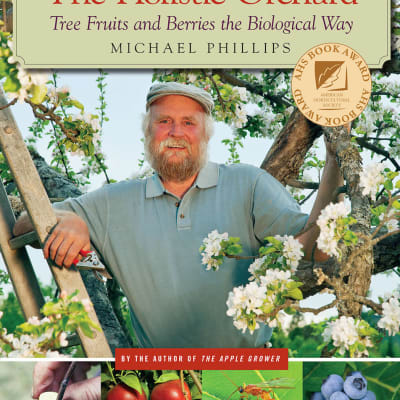
Covers a wide range of crops, while addressing orchard design, dynamics and horticulture in unparalleled detail. Pruning, planting, companion planting, spraying, not spraying—it's all here!
With plenty of scientific detail and practical knowledge about a variety of regenerative practices, Phillips reveals how mycorrhizal fungi are deeply embedded in healthy soils and plant physiology.
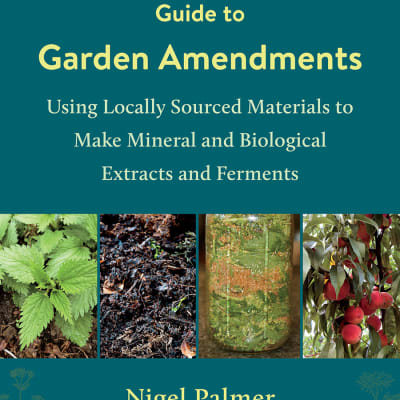
This book dives deep into the chemical and biological workings of your garden soil! Plenty of in-depth science, but also includes 12 soil amendment recipes simple enough for a layperson to follow.
If you are a fan of the Eyewitness educational books from the ’90s, this one is for you. Covers 45 insect and spider species, with photos of every life stage! Includes an easy comparison guide.
Brassica oleracea (botrytis group) (91 days) F-1 hybrid. Large plants set uniform medium-green 8" domed heads with medium-tight bead. Very few side shoots. Reliable production even under stress.
Brassica oleracea (capitata group) (75 days) Open pollinated. Distinctive violet-rose color. Small to medium 3-5 lb heads can be up to 7" across on a compact plant.