Lorimer profiles 235 native plants, describing their growing needs and habits, wildlife value and native habitat, with gorgeous color photos to emphasize the unique beauty of each species.
Coreopsis tinctoria Open pollinated. Beautiful native ornamental. Provides a full palette of color from yellows and greens to rusts and browns-and even black.
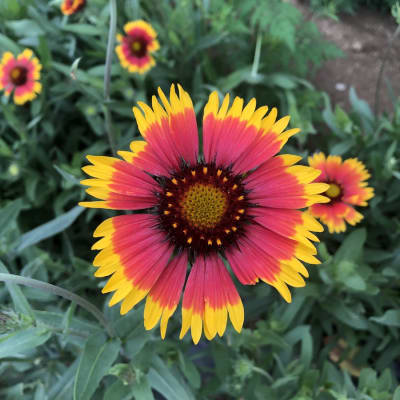
Gaillardia aristata (90 days) Open pollinated. Sun-loving native wildflower of the American Southwest is a favorite of butterflies and of gardeners who make bouquets. Perennial.
Lobelia cardinalis Open pollinated. This gorgeous wetland native wildflower and hummingbird magnet can be grown in moist garden soils or meadows. 2–4' tall
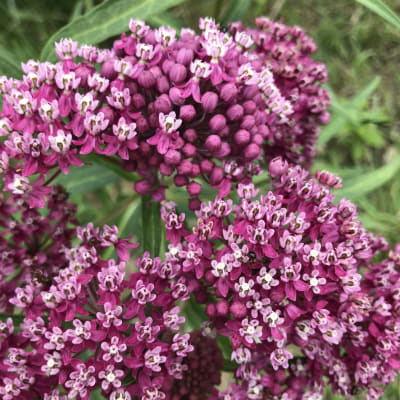
Asclepias syriaca Open pollinated. Perennial to Zone 4. These 5' tall showy native wildflowers are an important member of the wild habitat. Buds open to large balls of sweetly fragrant pink flowers.
Centaurea americana (90 days) Open pollinated. Annual. Resembles a thistle, but no prickles. Grassy honey-like fragrance. Native to south-central U.S. and northeastern Mexico.
Scutellaria lateriflora Open pollinated. Native spreading 1–2' perennial with numerous small blue flowers. Also known as Virginia Skullcap. Herbalists use it for headaches and insomnia.
Monarda punctata Open pollinated. A whimsical beauty with complex blossoms and many culinary and medicinal uses. Its oregano-like aroma and flavor is lovely for tea and seasoning.
Talinum paniculatum (95 days) Open pollinated. Petite pink flowers on thin stems mature into airy glistening bronze-to-burgundy sprays of teensy seedpods. Annual.
Agastache foeniculum Open pollinated. Perennial can grow 3' tall, 2' wide. Vigorous self-sower. Anise-scented foliage and purple flowers delightful as a tea or culinary seasoning, or filler in mixed bouquets.
Agastache foeniculum Open pollinated. Perennial can grow 3' tall, 2' wide. Vigorous self-sower. Anise-scented foliage and purple flowers are delightful as a tea or culinary seasoning, or filler in mixed bouquets.
Phacelia tanacetifolia Open pollinated. The small frizzy curling lavender-blue sprays provide high-quality pollen and nectar. Can be used to increase beneficial insect diversity and populations while suppressing weeds. Great for honey.
Verbena hastata Open pollinated. Perennial. 5-6' plant grows naturally in moist thickets and meadows does well in similar garden conditions, sending up many terminal spikes of bristly blue-violet flower clusters the entire season.
Allium tricoccum Open pollinated. Also called Wild Leeks. Bulb-forming perennial is a spring ephemeral. Delectable pungent flavor, a mix of garlic and onion, is true wildwood fare—worth the long wait.
Ageratina altissima Open pollinated. Flat-topped fuzzy clusters of small pure white disk flowers bloom August through October, attracting multiple species of bees, moths and butterflies.
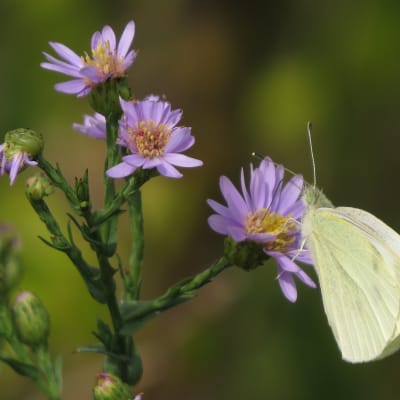
Symphyotrichum novae-angliae 4-6' tall. North American native. Blooms range from blue-purple to lavender-pink with yellow eyes. Attractive to pollinators. Z3.
Symphyotrichum laeve 3-4' tall. North American native has Loose clusters of lavender-blue blossoms with yellow eyes. Smooth blue-green foliage. Attractive to pollinators in late season. Z3.
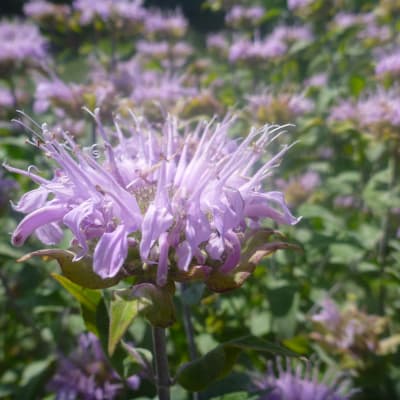
Monarda fistulosa 3-4' tall. Our native wildflower species with aromatic lavender blossoms. This is the variety most commonly used for medicinal purposes. Z3.
Aronia arbutifolia 6-10' x 3-6'. Each one is genetically unique. Beautiful in mass plantings and borders. Plant several in a hedge and make the birds happy! Native. Z3/4.
Aquilegia canadensis 12-24" tall. This eastern North American native features delicate red-spurred sepals with yellow petaled skirts. Blooms late May to early June. Irresistible to hummingbirds! Z3.
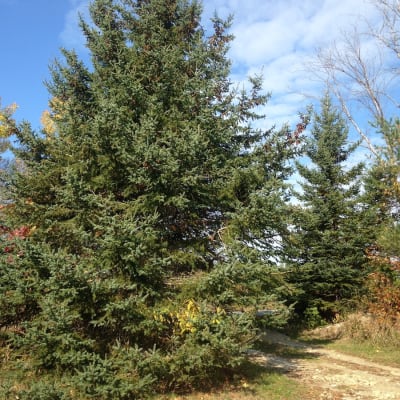
Picea pungens var. glauca 30-60'. Very popular specimen tree with frosty blue needles. Excellent for privacy screens, as it is fast growing after 3'. Native to western U.S. Z2.
Cornus racemosa 3-8' x 10-15'. Native multi-stemmed thickly branched suckering shrub with rounded domes of small 4-petaled white flowers that bloom in early summer. White berries on bright red fruit stalks. Z4.
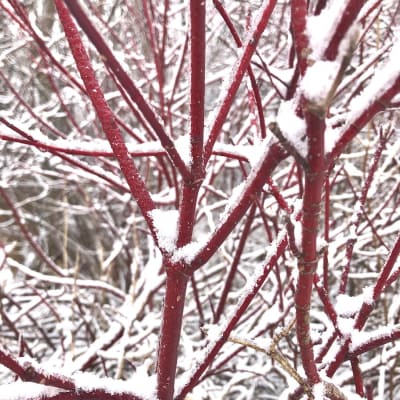
Cornus sericea 8-10'. Multi-stemmed spreading shrub excellent for hedges and borders. Red stems admirable in the winter. Valuable native wildlife plant. Z2.
Cornus amomum 8-12' x same. Large rounded long-limbed shrub. Effective for erosion control, wildlife or pollinator habitat. Maroon bark visible in winter. Suckers and spreads. Native to eastern U.S. Z4.
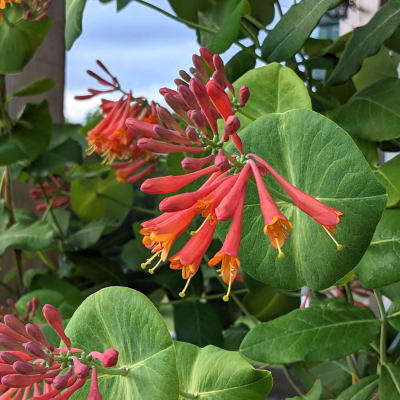
Lonicera × brownii 10-20'. Tall climbing honeysuckle. Non-invasive! Attractive to pollinators, especially hummingbirds. Species is native to North America. Z3.
Iris versicolor 30-36" tall. Northeastern native species with gorgeous blue-violet flowers with bold purple veining and a white and lemon-yellow blaze. Early. Z2.
Castanea pumila 15-30' x 10-20'. Once an important food for indigenous peoples. Somewhat resistant to chestnut blight. Native to much of central/eastern U.S. Z4.
Corylus americana 12-18' x 10-15'. Multi-stemmed native shrub with sweet nuts. Showy catkins in spring. Patchwork of colors in autumn. Can bear in 3-5 years. Z4.