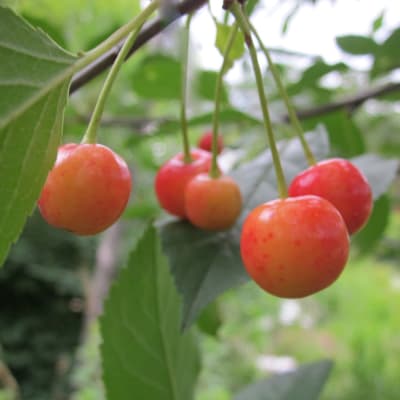
Prunus cerasus Summer, bright red skin. French heirloom. Most famous of all pie cherries. Aromatic firm-fleshed bright red fruit makes a clear light pink juice. Great for processing. Z3/4.
Prunus avium Summer, black-mahogany red skin. Large sweet fruit. Vigorous, productive, upright; bears consistently in central Maine. Self-pollinating, but benefits from second variety. Z4/5.
Prunus avium Summer, dark red skin. Good-quality dark red fruit. Survived –30° with minimal winterkill in central Maine. Vigorous. Requires second variety for pollination. Z4.
Prunus avium Summer, red-blushed yellow skin. Classic dessert cherry. Very large. Good fresh or canned. One of the hardiest sweet cherries. Requires second variety for pollination. Z5.
Prunus cerasus × P avium Midsummer, black skin. Hardy good-quality sweet cherry with juicy medium-firm black flesh. Self-pollinating, and will pollinate other sweet cherries. Z4/5.
Prunus avium Summer, red-blushed gold skin. All-around excellent sweet cherry for the Northeast. Sweet light-colored flesh. Good size, great flavor and heavy cropping. Disease and crack resistant. Self-pollinating. Z4.
Aronia arbutifolia 6-8' x 3-4'. Upright multi-stemmed form with dense clusters of small white flowers. Abundant persistent bright red fruit. Brilliant fall foliage. Z3/4.
Aronia melanocarpa 5-10' x same. Cultivar selected for use in windbreaks and wildlife conservation plantings. Fruits abundantly. Medicinal and edible. Z3/4.
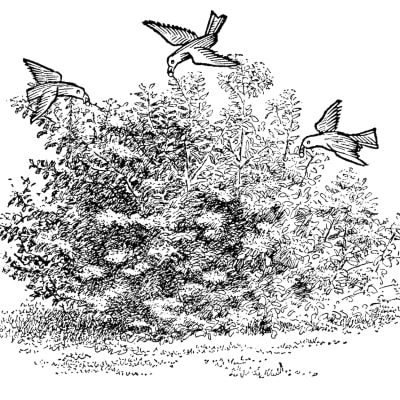
Aronia arbutifolia 6-10' x 3-6'. Each one is genetically unique. Beautiful in mass plantings and borders. Plant several in a hedge and make the birds happy! Native. Z3/4.
Aquilegia canadensis 12-24" tall. This eastern North American native features delicate red-spurred sepals with yellow petaled skirts. Blooms late May to early June. Irresistible to hummingbirds! Z3.
Symphytum officinale 24-48" tall. Clusters of pinkish purple flowers above bristled foliage. Known for skin-soothing properties. Recommended as an orchard companion. Z3.
Metasequoia glyptostroboides 100'. A spectacular ornamental tree! Wide trunk with iridescent golden-orange bark and bright green deciduous needles turn orange in the fall. Highly adaptable. Z4.
Thuja occidentalis 20-60'. Narrow and tall with twiggy branches, soft fibrous orange-brown bark, and distinct flat foliage. Good for screens and hedges. Z2.
Abies koreana 15-30' x 6 -12' Upright 3" purple-blue cones perch atop bright green boughs on a conical to pyramidal tree. Nice as a specimen or in hedges. Z5.
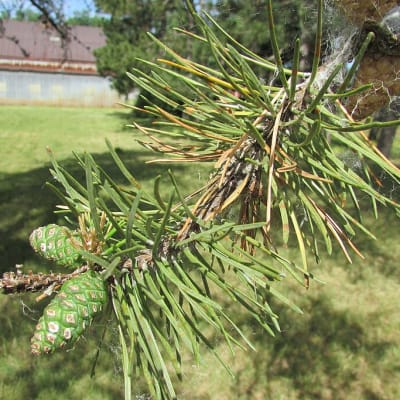
Pinus strobus 100'+. Magnificent and massive when mature. Smooth bark becomes rough, deeply furrowed with age. Makes a beautiful hedge. Shade tolerant. Z3.
Picea pungens var. glauca 30-60'. Very popular specimen tree with frosty blue needles. Excellent for privacy screens, as it is fast growing after 3'. Native to western U.S. Z2.
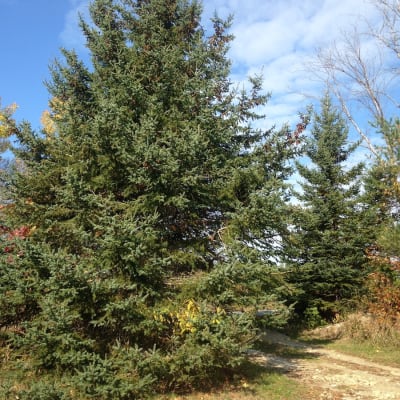
Picea abies 80-100'. Fast-growing wide-spreading upright picturesque tree with graceful long pendulous branches that often reach the ground. Showy cones. Z2.
Cornus racemosa 3-8' x 10-15'. Native multi-stemmed thickly branched suckering shrub with rounded domes of small 4-petaled white flowers that bloom in early summer. White berries on bright red fruit stalks. Z4.
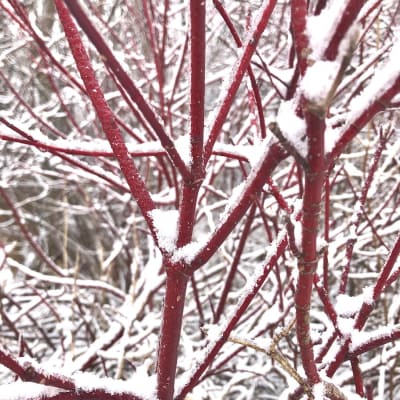
Cornus sericea 8-10'. Multi-stemmed spreading shrub excellent for hedges and borders. Red stems admirable in the winter. Valuable native wildlife plant. Z2.
Cornus amomum 8-12' x same. Large rounded long-limbed shrub. Effective for erosion control, wildlife or pollinator habitat. Maroon bark visible in winter. Suckers and spreads. Native to eastern U.S. Z4.
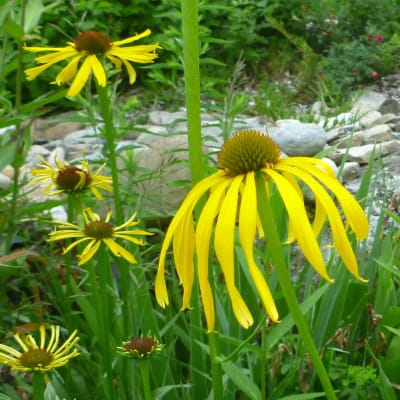
Echinacea paradoxa 3-5' tall. Bright pure-yellow flowers with drooping petals surround spiky dark brown seed cones—irresistible to gobbling goldfinches! Z3.
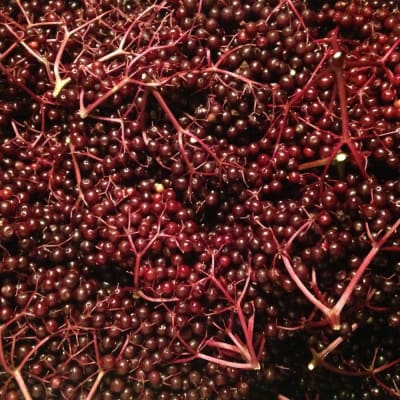
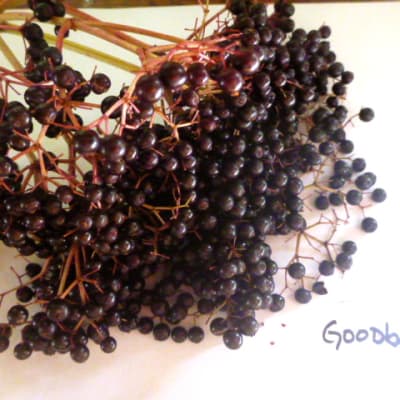
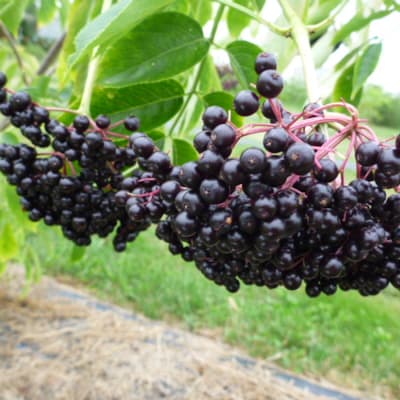
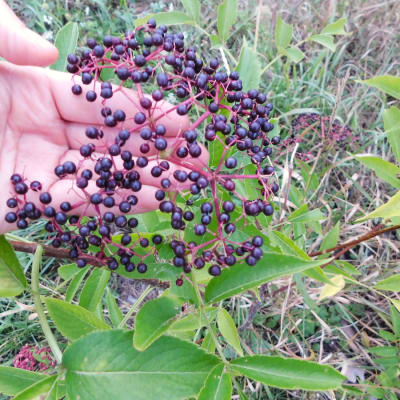
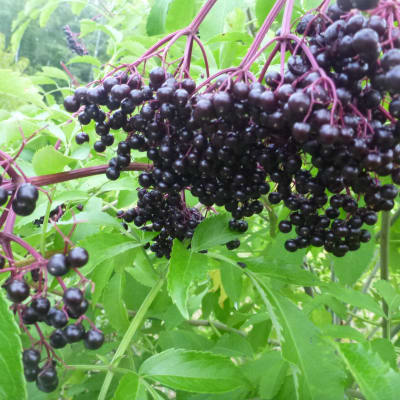
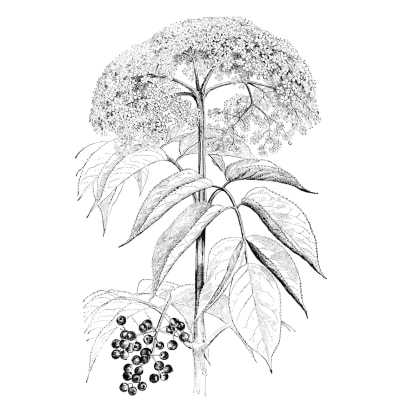
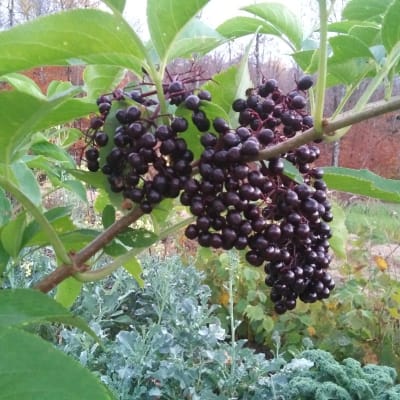
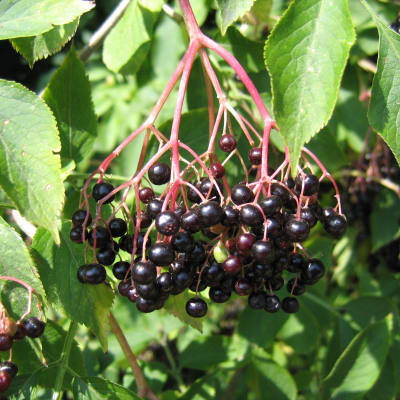
Sambucus canadensis 6-12' x same. Large elderberries and fruit clusters make for easy and fast picking. Very large vigorous strong productive bush. Z3.
Sambucus canadensis 6-12' x same. Each grown from a cold-hardy seed and will be a totally unique plant. Some of our best plants grew from batches of such seedlings. Z3.
Sambucus canadensis 6-12' x same. Fedco intro. Sourced from a wide swath of plants growing in Aroostook County. Robust elderberry with consistently high fruit yields. Z3.
Sambucus canadensis 4-10' x same. An old reliable elderberry, considered by some to be the largest-fruited and heaviest-bearing cultivar. Rounded shrub. Z3.
Sambucus nigra 6-8' x 2-5'. Bred for heavy fruit clusters and excellent juicing quality. High in immune-boosting anthocyanins. Upright habit, vigorous. Z4/5.
Lolium multiflorum Annual or winter annual grass. Extremely frost hardy. Widely adaptable. Will establish quickly in cool wet spring weather, providing a dense cover crop and outcompeting weeds. Good erosion control.
Lolium multiflorum Annual or winter annual grass. Extremely frost hardy. Widely adaptable. Will establish quickly in cool wet spring weather, providing a dense cover crop and outcompeting weeds. Good erosion control.
Echinochloa frumentacea Annual grass. Vigorous and versatile! Good for hay, forage, weed-smothering, building soil, and controlling erosion. Tolerates waterlogged soils, low fertility and cool conditions.
Geranium sanguinium 4-9" tall. Magenta cups with purple-blue anthers cover tidy deep green lacy foliage. Compact form works well in containers. Considered more drought tolerant than others in the genus. Z3.