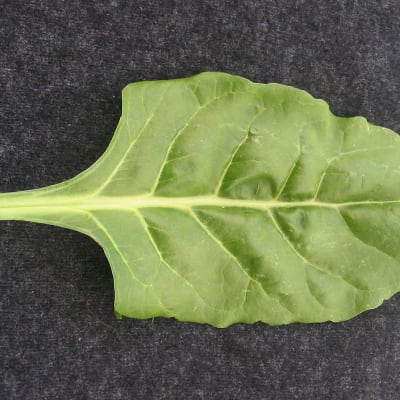
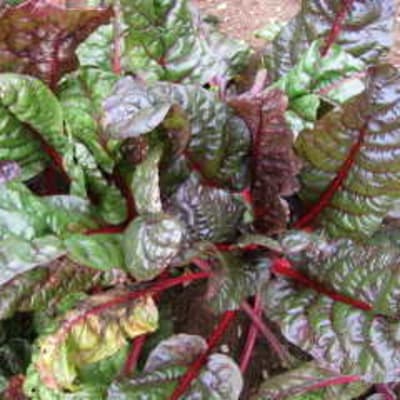
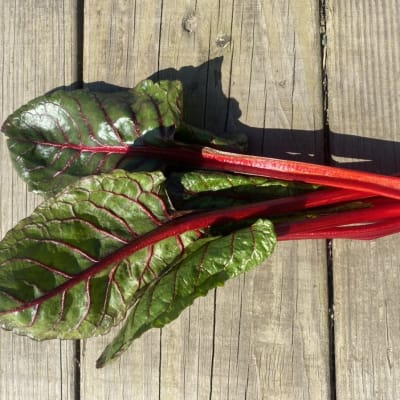
Beta vulgaris (56 full size; 30 days baby leaf) Open pollinated. Much like Fordhook, except it’s more compact, deeply savoyed, more uniform and with a narrower stem. Long harvest window.
Cichorium intybus (60 days) Open pollinated. Savory Italian chicory with deeply toothed red-veined leaves. Best in cool weather, can become bitter in heat.
Cichorium intybus (80 days) Open pollinated. Italian heirloom grown for its fused stems which form a swollen bulb. Sweet stalks eaten in salad or cooked.
Cichorium endivia (85 days) Open pollinated. Also known as Escarole. Smooth broad green outer leaves with creamy yellow closely bunched center leaves. Especially good as a fall crop; tolerates frost under row cover.
Cichorium endivia (42 days) Open pollinated. French heirloom. Large frizzy sweet endive with very fine ribs. For late spring and early summer harvests.
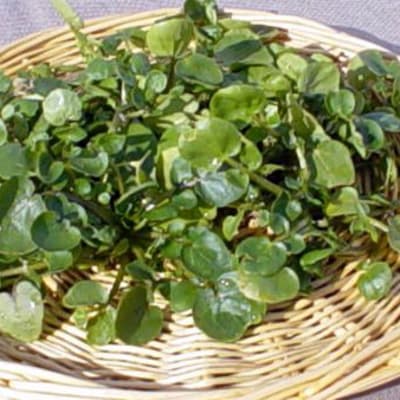
Montia perfoliata (40 days) Open pollinated. Small, heart-shaped leaves with a mild but succulent flavor. Use in mesclun and cut-and-come-again culture.
Lepidium sativum (30 days) Open pollinated. Broad leaves are extremely ruffled, wrinkled and savoyed. Spicy, tangy and sweet. Good in salad mix and bunched for market.
Laser-cut birchwood markers. Each tag is engraved with a crop’s name and a charming line drawing to represent it. Set of 20 stakes covers the most common annual garden crops. Made in WA.
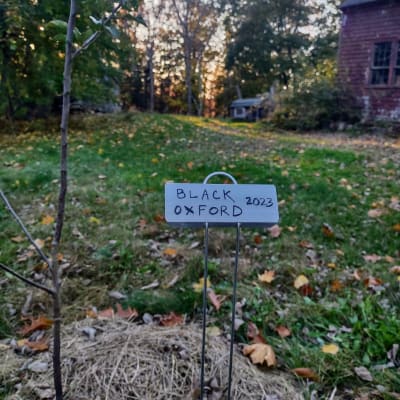
Zinc-coated nameplates on galvanized steel legs provide permanent outdoor labeling. 10½" tall with a ⅞"x2½" horizontal nameplate. Comes with marking pencil.
Nicotiana sylvestris Open pollinated. Clusters of drooping tubular white blossoms that perfume the garden day and night. Full powerful scent. 4–5' tall.
Arctium lappa (120 days) Open pollinated. Standard Japanese variety. Thin 1-2' long mild earthy root for stir-fries, soups and herbal medicine. Can be dug in spring with parsnips.
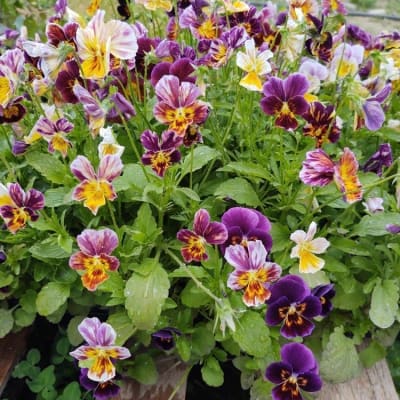
Viola × wittrockiana Open pollinated. Perennial to Zone 6. Heart-shaped leaves on mounded 4-6" plants covered with 3" mostly bicolor flowers, with darker whiskers and yellow eyes.
Solanum tuberosum Mid-season, buff skin, white flesh. The quintessential Maine potato, with large uniform tubers that store extremely well. High yielding and adaptable to various soil and growing conditions.
Raphanus sativus Rosy pink skin, white flesh. (25 days) Open pollinated. Rosy-pink color with bright white flesh, crisp and mild. Oblong plump roots hold longer than others without cracking or getting soft and pithy.
Antirrhinum majus (90 days) Open pollinated. Spikes of magenta and buttercream blossoms yellow throats bloom from mid-July into September. Ideal for beds, borders, and of course, cutflowers. A star in our 2023 flower trials.
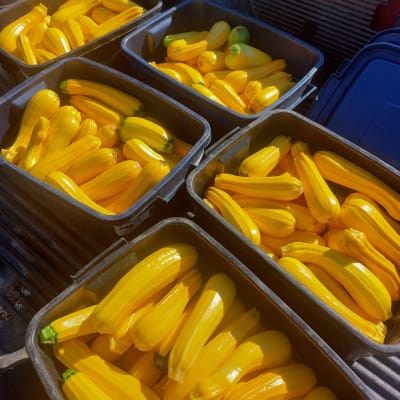
Cucurbita pepo (55 days) Open pollinated. Fast-maturing shiny ridged gold zucchini. Large fruits hit perfection at 1 lb, and are good for slicing and drying.
Solanum lycopersicum Red skin. (65 days) Open pollinated. Prolific clusters of 10–12 1½" very shiny red fruits hold on the vine and can be picked all at once. Excellent fresh, stewed or added to sauce.
Lightweight and affordable shears. Useful for light pruning, deadheading and cutting stems for arranging. Made with the same fine steel as the more expensive Felco tools.
Cucurbita maxima Green skin. (95 days) Open pollinated. Slightly smaller than the standard Burgess, with a lighter green rind. Very high-quality fruits.
Lupinus mutabilis (130 days, longer to seed) Open pollinated. “Lost” crop of the Incas. Wild-looking 3' lupine native to the high Andes. Attractive, many-colored flowers. Protein-rich seeds.
Brassica oleracea (gongylodes group) Green skin, white flesh. (130 days) Open pollinated. Czechoslovakian heirloom. Green kohlrabi can exceed 10" and 10 lb without getting woody. Crisp white interior is mildly tangy.
Pimpinella anisum (130 days) Open pollinated. White umbel flowers in July have delicate ornamental value. Seed ripens in August and September—wait until the tips of the fruits turn grey, and collect seeds before they turn black.