Pulmonaria 9-12" tall and eventually up to 2' wide. Periwinkle-blue buds open to pink flowers in spring. Large slate-green leaves with silver-white splotches. Woodland plant. Z3.
read more
Ageratina altissima Open pollinated. Flat-topped fuzzy clusters of small pure white disk flowers bloom August through October, attracting multiple species of bees, moths and butterflies.
read more
Limonium sinuatum (115 days) Open pollinated. Mix includes lavender, rose, purple, white, yellow. Especially suited for dried arrangements, also good in fresh. 2-2½' tall.
read more
Withania somnifera Open pollinated. Upright shrub 2' with green-to-yellow flowers ripening to red berries. Roots are dried at the end of the growing season and used internally powdered or tinctured.
read more
Cuminum cyminum (100-115 days) Open pollinated. Foliage is fragrant and ferny, somewhat like dill; but unlike dill, plants grow only 1-2'. Annual, takes a long time to mature so start indoors in cold climates.
read more
Trigonella foenum-graecum (30 days leaf, 120 days seed) Open pollinated. Leaf and seeds are used culinarily, imparting a sweet nutty flavor reminiscent of maple syrup. If not pinched back, the plant will
read more
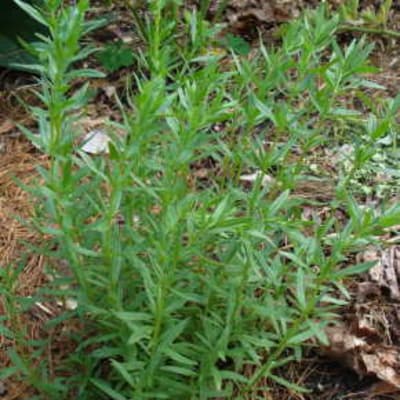
Hyssopus officinalis Open pollinated. Perennial. Normally hardy to Zone 3. Beautiful aromatic perennial border plant that produces spikes of indigo flowers.
read more
Spilanthes oleracea Open pollinated. Used as a ground cover in the south, it adds unusual beauty with its low growth habit and its cute yellow flowers with rayless red-orange centers.
read more
Spilanthes oleracea Open pollinated. Used as a ground cover in the south, it adds unusual beauty with its low growth habit and its cute yellow flowers with rayless red-orange centers.
read more
Stevia rebaudiana (100-120 days) Open pollinated. Stevia is several hundred times sweeter than sugar, and is used fresh, dried, powdered or in a liquid as a sugar substitute.
read more
Hypericum perforatum Open pollinated. 1-3' perennial hardy to Zone 3. Pretty yellow flower of fields and meadows turns tinctures and oils deep red.
read more
Rheum rhabarbarum Heirloom variety, considered the most important rhubarb variety of the 19th century. Unique seedlings; will show some variation. Z2.
read more
A wetting agent and spreader-sticker. Increases the longevity and effectiveness of pesticide applications and forces hydrophobic potting media (like dry peat moss) to more readily absorb water.
read more
A square replacement bottom, sticky on one side, for use in our now discontinued wing traps. Remove the old insect-covered bottom and fit in the new one.
read more
Prunus domestica Late summer. Often considered the sweetest European plum. Use fresh, dried, frozen, canned and in preserves. Abundant annual crops. Z3.
read more
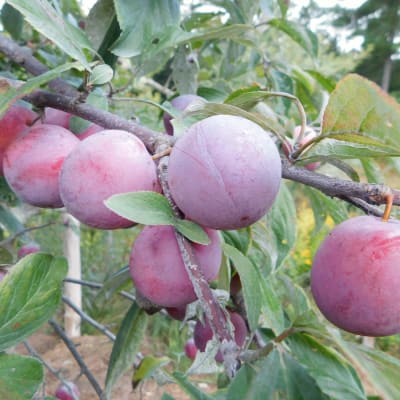
Prunus spp. Mid-late summer. Large red-purple plums with translucent yellow-orange tart flesh. Clingstone. Good fresh eating or canning. Bears reliably. Z3.
read more
Solanum tuberosum For those with limited space and an expansive palate, this collection of three varieties includes 2# each of an early, a midseason and a fingerling potato.
read more
Solanum tuberosum Late season, yellow-netted skin, yellow flesh. The most consistent fingerling in shape and size. Versatile in the kitchen and a great keeper.
read more
Solanum tuberosum Late season, yellow-netted skin, yellow flesh. The most consistent fingerling in shape and size. Versatile in the kitchen and stores beautifully through the winter.
read more
Solanum tuberosum Mid-season, red skin, yellow flesh. Gorgeous, with excellent flavor, smooth texture and hearty yields. Late-blight resistant.
read more
Solanum tuberosum Late season, rose skin, yellow flesh. Large and long oval tubers have distinct flavor, with satiny rose-red skin and creamy yellow flesh. Rugged plants are high yielding in fertile soil.
read more
Solanum tuberosum Mid-season, red skin, white flesh. Excellent dormancy retention in winter storage. Order your extra crates now to accommodate staggering yields to come!
read more
Solanum tuberosum Late season, red skin, white flesh. Large round potatoes with attractive red skin and succulent white flesh that keeps moist all winter long.
read more
Solanum tuberosum Very late season, tan skin, white flesh. Known to most as the Idaho Potato, the dry mealy texture makes it a trusty old favorite. A great baking or mashing potato. Its reliably high yields mature late in the season.
read more
Solanum tuberosum Late season, buff skin, white flesh. Easy to grow with a solid yield, delicious Elba keeps solidly all winter long, despite slow spring emergence.
read more
Solanum tuberosum Late season, buff skin, white flesh. Easy to grow with a solid yield, delicious Elba keeps solidly all winter long, despite slow spring emergence.
read more
Solanum tuberosum Very early season, buff skin, white flesh. The earliest of the early. Mid-sized to large round tubers with a floury texture (good for mashing and baking). Stores quite well for such an early potato.
read more
Solanum tuberosum Late season, buff skin, white flesh. We climbed every mountain, searched high and low, until we found certified seed stock for this beloved Vermont heirloom. A potato lover's potato.
read more
Solanum tuberosum Late season, buff skin, white flesh. Released in 1932 by the USDA and Maine, it is the standard to which all storage potatoes are compared. Very well suited to a Maine growing season.
read more
Solanum tuberosum Late season, yellow skin, yellow flesh. These buttery tubers are hands-down the best-tasting roasting potato in the winter. High yields, good storage qualities.
read more