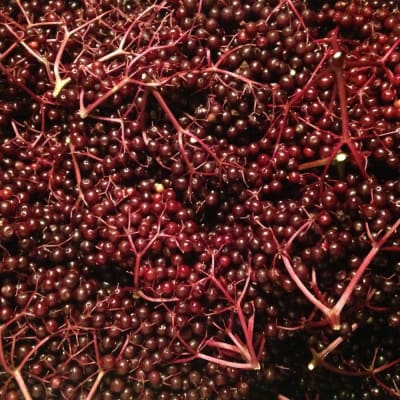
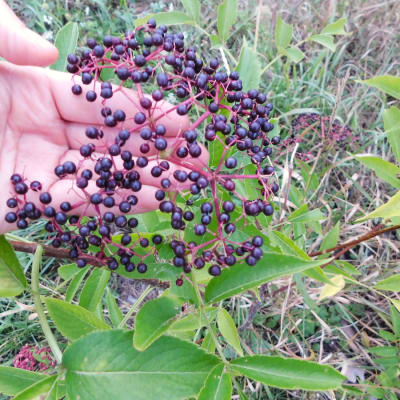
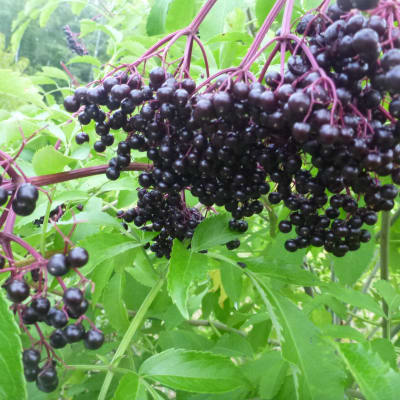
Sambucus canadensis 6-8' x same. Large clusters of large dark berries. High Brix level; great for winemaking. Upright, slightly spreading habit. Z4.
read more
Sambucus canadensis 6-12' x same. Fedco intro. Sourced from a wide swath of plants growing in Aroostook County. Robust elderberry with consistently high fruit yields. Z3.
read more
Sambucus canadensis Up to 5'. Moderate yields of medium-sized berries ripen uniformly and early. From the same program as Wyldewood, a staff fave. Z3.
read more
Sambucus canadensis 6-12' x same. Vigorous consistently high-yielding elderberry cultivar. Competitive with Adams and ripens a little bit later. Z3.
read more
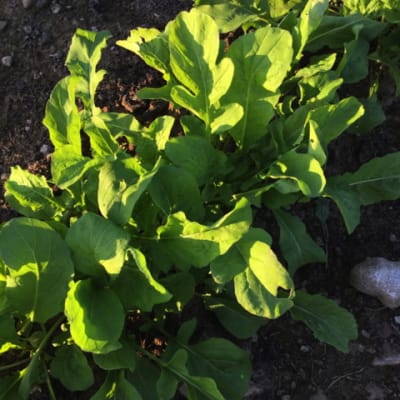
Eruca sativa (47 days) Open pollinated. Great-tasting musky greens. Bolt resistant strain. Cold tolerant, great for early spring, late fall, over-wintering.
read more
Eruca sativa (47 days) Open pollinated. Musky, cold tolerant greens, great for early spring, late fall, over-wintering. Eat the flowers if you miss some of the greens.
read more
Hablitzia tamnoides (45 days) Open pollinated. Perennial spinach-like green. Hardy vine from the Caucasus grows 6-9' long for 2-3 months beginning very early spring. Heart-shaped attractive leaves.
read more
Bunias orientalis Open pollinated. Perennial, Zones 4-8. Tender spicy mustard greens and florets for stir-frying. Drought-tolerant with a deep taproot.
read more
Lonicera sempervirens 6–10' long. Scarlet-red and yellow flowers. Straight species. Selected for excellent blossom set and outstanding resistance to powdery mildew. Z3.
read more
Brassica oleracea (gongylodes group) (38 days) F-1 hybrid. A nicely rounded head, with rampant health and vigor. Crunch crisp texture and mild nutty sweetness.
read more
Lactuca sativa (50 days) Open pollinated. Heirloom. Red butterhead. Dark green butterhead base is fully blushed carmine and pebbled with bronze and brown.
read more
Lactuca sativa (48 days) Open pollinated. Compact tight uniform heads form upright rosettes for a clean market and salad harvest. Pebbled leaves shaded red and light plum on a green base.
read more
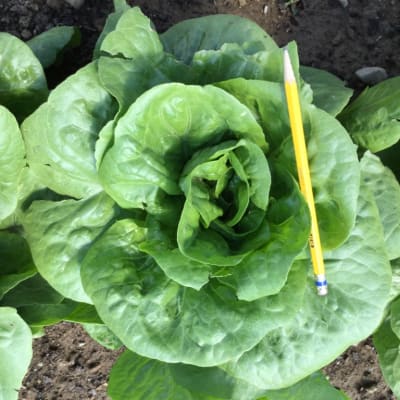
Lactuca sativa (52 days) Open pollinated. Dark green uniform Nancy-type butterhead with large plant and head size, juicy sweetness and silky texture.
read more
Lactuca sativa (50 days) Open pollinated. Bright green leaf with deeply cut lobes, crowned in extra-extended narrow tips. Compact form, easy salad cutting or clean full-head presentation.
read more
Lactuca sativa (44 days baby, 63 days mature) Open pollinated. From England. Compact Winter Density-type mini-romaine with very deep purple-red leaves. Very cold tolerant, decent heat tolerance.
read more
Herbal blend. Preliminary research at California State U showed that Vermi-tox performed as well as injectable Ivermectin in reducing strongyle eggs in the feces just-weaned goat kids.
read more
Cucumis melo (77 days) F-1 hybrid. Thick silky firm orange flesh. Tan-green round 3 lb fruit. Harvest at full slip and ripen off the vine 1-3 days.
read more
Cucumis melo (80 days) F-1 hybrid. Green flesh. Round uniform 1.5-3 lb fruit with light but full net. Skin blushes yellow as fruit ripens. Harvest at full slip.
read more
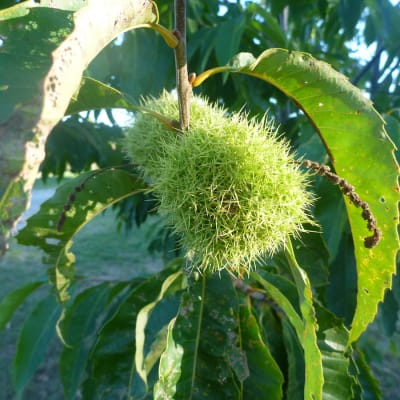
Castanea dentata Up to 100'. Once common in the eastern US. Important food source for people and wildlife. Not immune to blight but likely to thrive 10-30 years. Fast growing and precocious. Z4.
read more
Allium cepa (107 days) F-1 hybrid. 16-18 oz glossy deep red globes similar to Redwing, but it sizes more consistently regardless of dry or wet conditions.
read more
Allium cepa (110 days) F-1 hybrid. Uniform blocky globes, 2 lbs each, with tall tops. Best for storage; keeps until mid-May. Flavor a balance of sweet and tang. Long-day northern type.
read more
Pisum sativum (65 days) Open pollinated. Prolific Tendersweet bears 2½–3" dark green and slightly curved snap pods. Has a longer picking window than most quick and short types.
read more
Capsicum annuum (60 days) F-1 hybrid. Red thin-walled bell peppers, not consistently blocky. Easy to grow. Consistently early. Good for home gardens.
read more
Durable UV-resistant mesh floating row cover. Excludes all manner of insect pests, even those as small as flea beetles, thrips and aphids. Also excludes birds and rabbits.
read more
Durable UV-resistant mesh floating row cover. Excludes all manner of insect pests, even those as small as flea beetles, thrips and aphids. Also excludes birds and rabbits.
read more
Ultra-durable UV-resistant mesh row cover. Excludes most pests, even those as small as flea beetles and aphids, but not fine enough to exclude thrips. Also protects against birds, rabbits, even deer.
read more
Solanum tuberosum Mid to late season, purple skin, purple flesh. Dig them as sweet little fingerlings early or hold out for larger potatoes later in the season. Distinctively earthy flavor and pleasantly waxy texture.
read more
Solanum tuberosum Mid to late season, purple skin, purple flesh. Dig them as sweet little fingerlings early or hold out for larger potatoes later in the season. Distinctively earthy flavor and pleasantly waxy texture.
read more
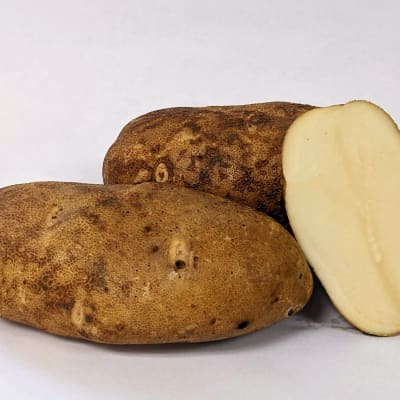
Solanum tuberosum Mid-season, russeted skin, white flesh. Bred for cool climates. Vigorous plants produce good yields of large oblong russet potatoes. Using organic practices, we've grown really big Caribou.
read more
Solanum tuberosum Mid-season, russeted skin, white flesh. Bred for cool climates. Vigorous plants produce good yields of large oblong russet potatoes. Using organic practices, we've grown really big Caribou.
read more
Solanum tuberosum Mid-season, buff skin, white flesh. The quintessential Maine potato, with large uniform tubers that store extremely well. High yielding, adaptable and late-blight resistant.
read more
Solanum tuberosum Mid-season, buff skin, white flesh. The quintessential Maine potato, with large uniform tubers that store extremely well. High yielding and adaptable to various soil and growing conditions.
read more