Fagopyrum esculentum Annual broadleaf. Excellent cover crop for outcompeting summer weeds. Makes tasty flour for pancakes or baked goods. Bees like its abundant nectar.
Cucurbita pepo var. ovifera (95 days) Open pollinated. Eight kinds of early-maturing types, with small spoon, bicolored pear and small orange most prevalent.
Lagenaria siceraria Tan skin. (120 days) Open pollinated. Large gourd with bulbous base and narrow neck. Fruit can grow 14" tall and 12" in diameter. Start indoors.
Lagenaria siceraria Tan skin. (120 days) Open pollinated. Dark green skin with pale green splotches. Round 8-10" base tapers into a long neck capped by a small bulb near the stem to make the swan’s head.
Luffa aegyptiaca Green skin. (110 days) Open pollinated. Used to make sponges and scrubbies. Also edible when harvested young. Requires a long season; start indoors.
Cucurbita pepo var. ovifera Green skin. (93 days) Open pollinated. Heirloom ornamental. Tiny 2-3" green-and-white striped bottle gourds. Rampant vines. Hard shells dry to tan.
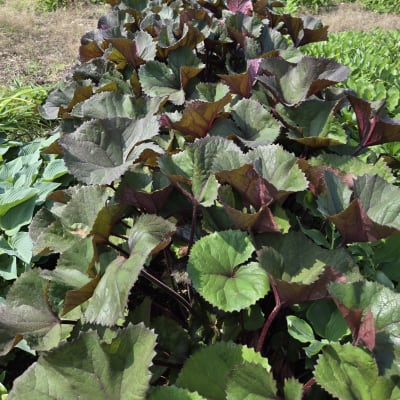
Rumex acetosa (60 days) Open pollinated. Thick sword-shaped lemony-flavored leaves picked when young and tender. A special treat in early spring. Perennial hardy to Z3.
Bunias orientalis Open pollinated. Perennial, Zones 4-8. Tender spicy mustard greens and florets for stir-frying. Drought-tolerant with a deep taproot.
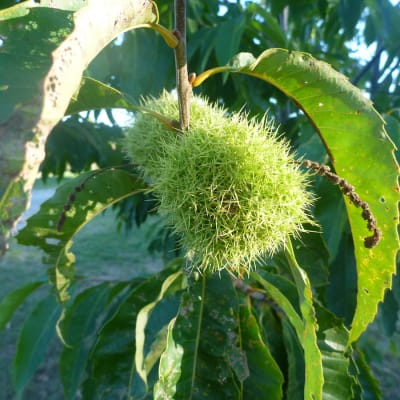
Castanea dentata Up to 100'. Once common in the eastern US. Important food source for people and wildlife. Not immune to blight but likely to thrive 10-30 years. Fast growing and precocious. Z4.
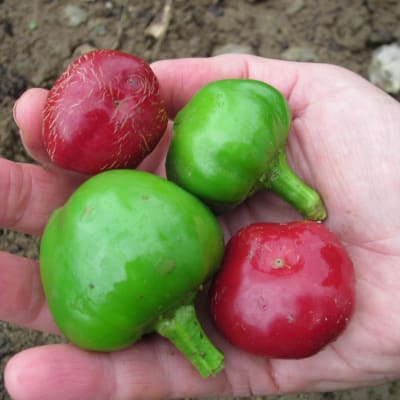
Capsicum annuum Red skin. (75 days) F-1 hybrid. Shiny green ripens to blazing red in a small strawberry-shaped cherry-type. Sweet and spicy, 2,500-5,000 Scovilles.
Solanum tuberosum Early season, yellow skin, yellow flesh. A modern take on Yukon Gold, with higher yields and better PVY and scab resistances. Matures about 10 days later than Yukon Gold, but worth the wait.
Salvia viridis Open pollinated. White and blue flowers set off by large pink-to-purple bracts. Leaves entirely green. Remains colorful when dried. 18" stalks.
Also known as Pro Trays. Made of lightweight black plastic with bottom drain holes. 50 round cells in a sheet, 1.88" wide, 2.31" deep, fits into standard 1020 Trays.
Tired of ineffectively mixing fertilizers or potting soil ingredients together in a wheelbarrow or tractor bucket? Let us do the dirty work for you! Buy ingredients from us or bring your own.
Don’t guess—test! You’ll learn your soil pH, organic matter percentage, levels of common minerals and nutrients, plus we’ll offer customized recommendations to correct any deficiencies or imbalances.
Solanum lycopersicum Red skin. (78 days) Open pollinated. Red 1" cherry. Similar to Sweet 100, bearing gazillions of clusters of sweet fruits. Dependable and prolific.
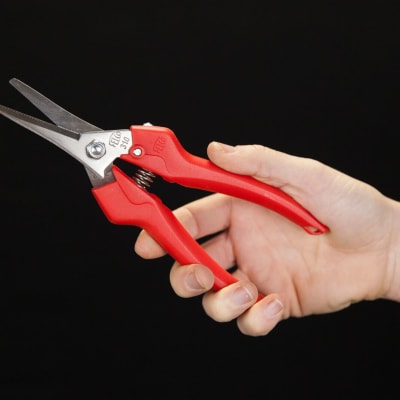
Lightweight shear with a narrow needle-nose head great for harvesting grapes, cutflowers, broccoli sideshoots, and other produce. Made with the same steel as the more expensive Felco tools.
Curcuma longa Golden orange skin, yellow flesh. (120 days) Vibrantly orange tuber is a potent spice and medicine fetching top dollar at markets. Suitable for high tunnel cultivation, even in Maine!
Malus spp.This is a twig for grafting. Winter, red-striped and blushed skin. One of the most famous of all 19th c. apples. Large, beautiful, red striped and blushed. Dry white flesh for eating, cooking and cider. Good keeper. Z4.
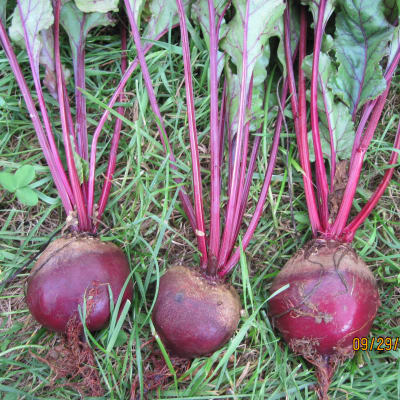
Beta vulgaris (48 days) Open pollinated. From 1911, beloved by commercial growers and home gardeners. Early beet greens and bunching beets. Quick cold soil emergence. Attractive purple tops.
Beta vulgaris (48 days) Open pollinated. From 1911, beloved by commercial growers and home gardeners. Early beet greens and bunching beets. Quick cold soil emergence. Attractive purple tops.
Vaccinium corymbosum Mid-Late. 5-7'. Beloved old standard from 1928. Productive, adapted to a wide range of soils, highly praised, easy to grow and suited to the New England climate. Vigorous erect hardy bush. Z4.
An approachable botany textbook and herbal field guide to North American plants with colorful illustrations on nearly every page. Regularly updated by the author since its release in 1996.
First published in 1973, this comprehensive guide to canning, freezing and drying the garden’s bounty has been updated and offers useful recipes and trustworthy food-safety protocols.